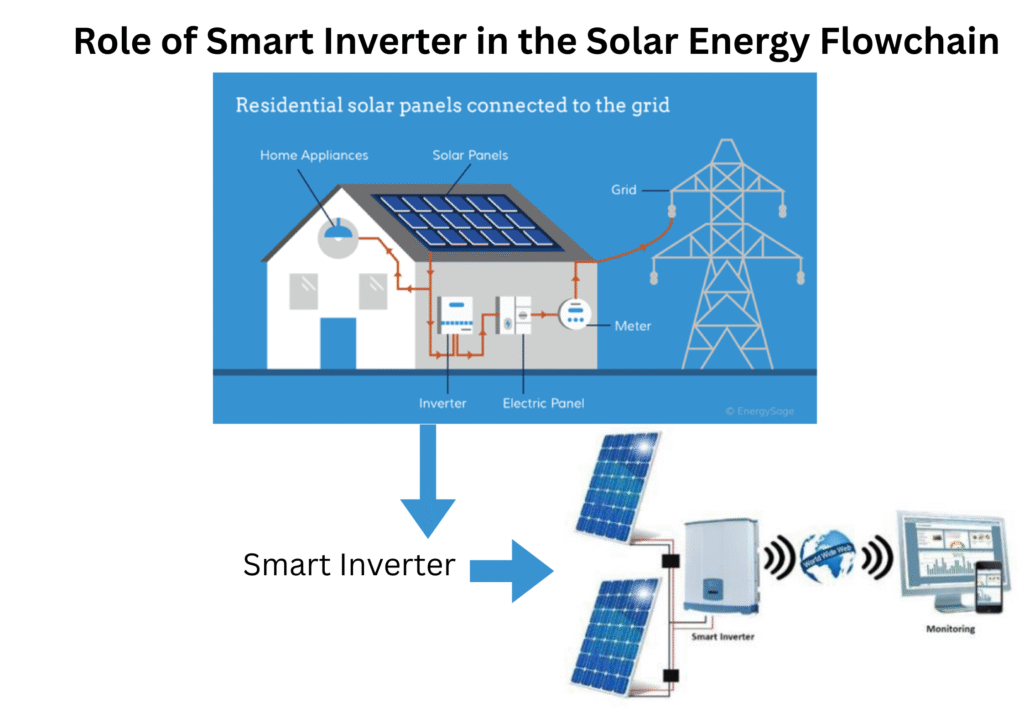
To address the unpredictable nature of solar energy, which fluctuates with sunlight, scientists have developed smart inverters. This advanced technology not only converts DC to AC but also manages solar power flows into the grid, with enhanced control, safety, and communication features. It makes the solar system highly efficient, reliable, and grid-friendly. Let’s explore its role, features, advantages, and how it helps balance solar power and grid supply.
What Is a Smart Inverter?
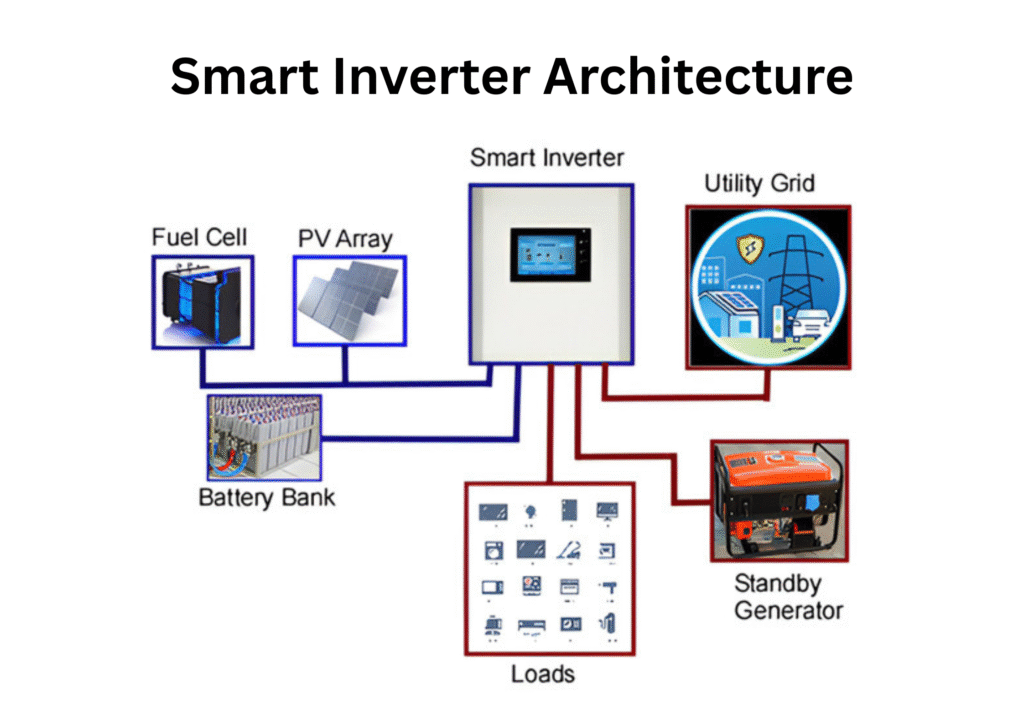
Solar panels produce direct current (DC) electricity. Traditional solar inverters convert direct current (DC) from solar panels to alternating current (AC). Smart inverters are the advanced version of traditional solar inverters. Whereas the smart inverters are capable of doing much more than regular ones.
The smart inverters are designed with built-in software, advanced control systems, communication systems, and grid-support features. Advanced smart inverters can manage power output, respond to voltage and frequency changes, communicate with the utility grid, and support energy storage systems and demand response.
The smart inverters are used in residential solar systems, commercial solar farms, battery storage systems, and microgrids.
Importance of Smart Inverter
1. Grid Stability
Smart inverters are used to balance the fluctuations created by solar panels. It controls the voltage and frequency of the power grid to make it stable. It also provides reactive power to reduce stress on the grid. The smart inverters communicate with the utilities to respond in real-time.
2. Prevents Power Disruptions:
The smart inverters are designed with a “ride-through capability” function. It means when the inverter detects any unusual grid behavior, it stays connected and stabilizes the grid instead of completely shutting it down.
3. Remote Monitoring:
Smart inverters are designed with built-in connectivity. This allows users and service providers to monitor power generation, detect faults in the system, and update system software remotely.
4. Improves the System’s Efficiency
The smart inverters manage the power output to balance between the energy usage and sunlight availability. It improves the overall efficiency of the system by minimizing energy loss and optimizing energy delivery. It also shifts loads when combined with batteries.
4. Safety and Protection
Smart inverters have built-in anti-islanding features. In case of grid power failure, this feature allows the system to automatically disconnect itself from the grid. This reduces the risk of fire, equipment damage, and protects line workers during a power outage.
5. Energy Storage Integration
A smart inverter is directly integrated with solar batteries and handles when to store and release energy. This provides backup power during outages and improves energy independence.
How Smart Inverters Help Balance Solar Power and Grid Supply?
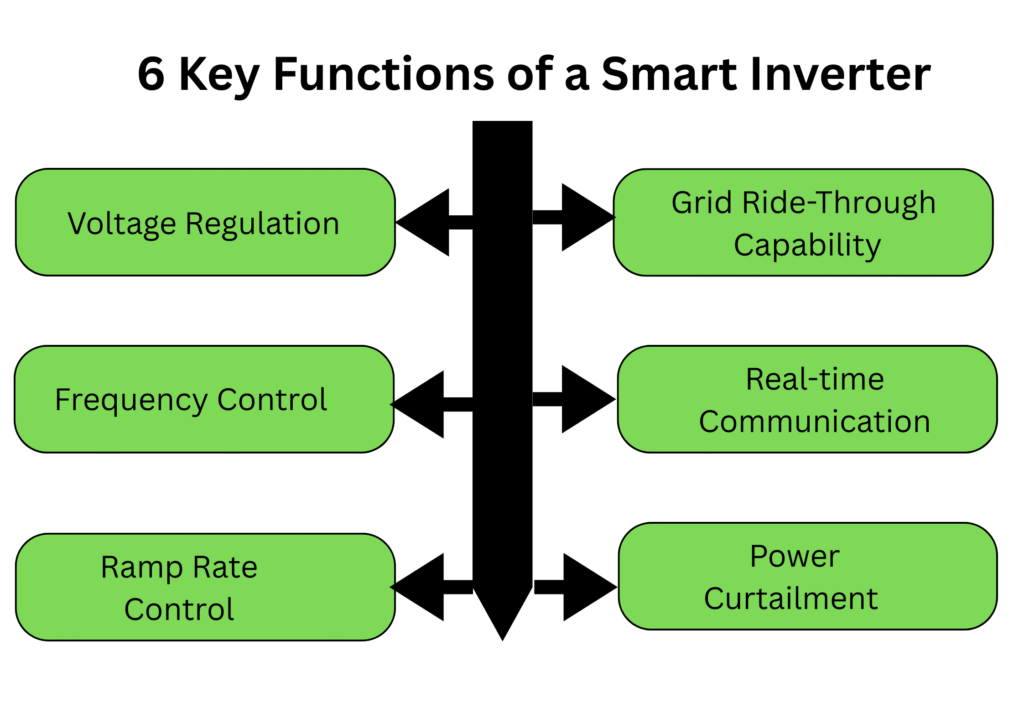
1. Voltage Regulation
A smart inverter monitors the voltage in real-time. If it detects that the voltage is fluctuating, i.e., becoming too high or too low, it automatically adjusts the reactive power to bring it within safe limits. It prevents damage to other equipment connected to the grid, equipment damage, and flickering lights.
2. Frequency Control
The solar output continuously varies in uncertain weather, which can disrupt frequency levels. As the grid operates at a constant frequency level, the grid frequency stability is an important factor. Smart inverters support grid frequency stability by increasing or decreasing power output for a short period and by matching the power generation with grid demand.
3. Ramp Rate Control
During sunrise and sunset, the solar output increases and decreases at a fast rate. Smart inverters can control this process, which is also known as ramp rate control. It avoids sudden power surges and makes the power delivery process smooth.
4. Grid Ride-Through Capability
Smart inverters do not shut off during voltage and frequency disturbances. In spite they stay connected and help the grid recover. This process is also known as low/high voltage ride-through or frequency ride-through. It prevents solar disconnection, unnecessary blackouts, and power loss.
5. Real-time Communication
The smart inverters are designed with two-way communication systems. This supports remote monitoring and control, and coordination between thousands of solar systems.
6. Power Curtailment
When power generation exceeds demand, the smart inverters reduce or stop output to prevent grid overload. This maintains a balance between energy supply and demand. This process is also known as export limiting or power curtailment.
Reference: Next-generation power inverter for grid resilience: Technology review
Future of Smart Inverters
1. In the future, smart inverters will also act as active grid participants, which will regulate the solar power flow to the grid.
2. In the future, the smart inverters will integrate with artificial intelligence (AI) and predictive algorithms to predict power production in advance.
3. To build a more adaptive energy infrastructure, the smart inverters will be integrated with cloud-based platforms.
4. Future designs of smart inverters will include advanced safety and cybersecurity features such as real-time threat detection and an encrypted communication protocol.
5. The future smart inverters will allow seamless connection between isolated systems and national grids.
Conclusion
The smart inverters are essential tools in modern solar systems. They not only convert power from DC to AC but also handle energy production, stabilize the grid, and maximize solar benefits. If you are installing a new solar system or upgrading your old one, then go for the smart inverter. This is a step towards a balanced energy future. This smart move will make your investment future-proof and highly efficient.
FAQS
- What are smart inverters?
The smart inverters are designed with built-in software, advanced control systems, communication systems, and grid-support features. Advanced smart inverters can manage power output, respond to voltage and frequency changes, communicate with the utility grid, and support energy storage systems and demand response.
2. How do smart inverters support grid frequency stability?
Smart inverters support grid frequency stability by increasing or decreasing power output for a short period and by matching the power generation with grid demand.
3. How do smart inverters regulate voltage?
Smart inverters monitor the voltage in real-time. If it detects that the voltage is fluctuating, i.e., becoming too high or too low, it automatically adjusts the reactive power to bring it within safe limits.
Also Read:
- Case Study: How Google Uses AI to Accelerate Grid Connections in the U.S.
- Case Study: How Duke Energy Uses AI for Grid Stability?
- How AI Strengthens Cybersecurity in Smart Grids? A Complete Guide
- How AI Is Used to Design the Perfect Rooftop Solar System? A Complete Guide
- How Is AI Used to Develop Advanced Materials for Renewable Energy Technologies?
- How AI is Revolutionizing Predictive Maintenance in Smart Grids? A Complete Guide
- How AI Is Powering Smart Grids for Efficient Energy Distribution?
- A practical case study: How AI Enhances Microgrid Performance in Rural Areas?
- Hidden Microcracks in Solar Panel? How does AI Detect Early?
- Floating Solar Panel: The New Way to Produce Clean Energy on Lakes and Reservoirs
- AI-Powered Forecasting: A Powerful Technique to Enhance Grid Stability
- Importance of an AI-Driven Energy Pricing Model in Pricing Optimization
- Building-Integrated Solar Panels: How They Turn Walls and Windows into Clean Energy Generators?
- AI-Driven Predictive Maintenance in Wind Energy Systems
- How AI Is Used in the Renewable Energy Sector?
- AI and Microgrids: Empowering Remote Communities with Smart Energy
- AI Applications in Renewable Energy Trading and Market Optimization
Pingback: How to Enhance Solar Panel Efficiency with AI-Based Analytics? - science2energy
Pingback: How to Optimize Energy Storage with AI Algorithms in Renewable Energy Systems? - science2energy
Pingback: Intelligent Solar Tracker: The Secret to More Solar Energy - science2energy
Pingback: A Practical Guide to Transparent Solar Panels: How Home Windows Can Produce Electricity? - science2energy
Pingback: Crystalline Vs Thin-Film Solar Panels: Which One Is The Best for Your Modern Smart Homes? - science2energy
Pingback: Performance of Tandem Solar Cells in Real Pilot Solar Farms: A Case Study - science2energy
Pingback: TOPCon Vs HJT Vs Tandem Solar Panels: Make The Best Purchase for Your Project - science2energy