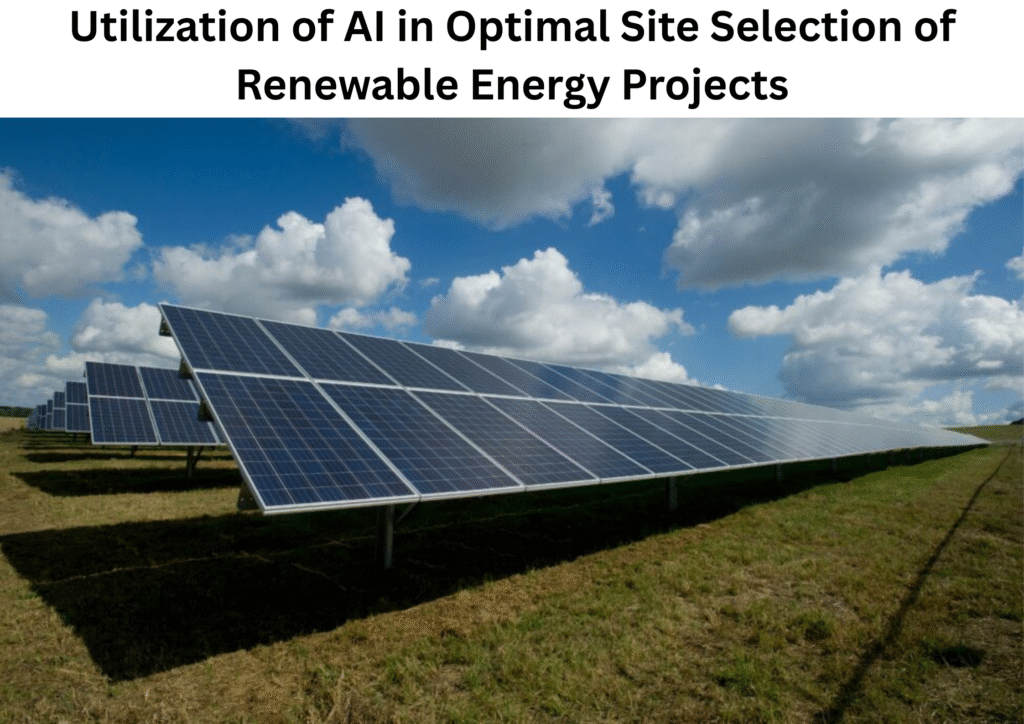
Do you know that selecting the right site is the most important thing for the success of any renewable energy project? The selection of an optimal site significantly influences the efficiency, cost, and impact of renewable energy systems such as solar plants, wind turbines, and hydro plants.
When choosing the right site, one must consider crucial factors such as land type, sunlight, wind patterns, proximity to the power grid, environmental impact, local laws, etc. This is where AI-powered tools come into play. The advanced AI-powered systems help the developers to select the best possible site for renewable energy projects and make the execution process faster, smarter, and cost-effective. Read the full article to get a detailed idea of “Utilization of AI in optimal site selection of renewable energy projects”.
Why Site Selection Is Important in Renewable Energy Projects?
Large industrial companies concentrate more on developing their own renewable power plants instead of buying clean power from others. By having their own, they are less dependent on the expensive market prices. It also helps them reach the sustainable goals at a faster rate. But selecting the right location is an important job for the owner.
- The natural resources vary by location. The location with plenty of sunlight is a perfect choice for solar farms. Whereas the coastal and plain areas are considered better places for wind turbine installation.
- The solar and wind farms need a lot of space, approximately hundreds of acres or more. So, while selecting the site, one must consider the total cost of the land, it must be easily accessible, and zoning laws must not restrict it.
- The location of the renewable energy project should be nearer to a grid, powerlines, or, substation. Otherwise, it would be a costlier and complex job to connect it to the grid.
- The renewable energy projects should have minimal impact on wildlife, residents, local communities, and water resources.
- An ideal site for a renewable energy project should have lower upfront costs and increase long-term profits.
Reference: Selecting the Optimal Site for Renewable Energy Projects
AI Technologies Used in The Site Selection
Machine Learning Models: These models are used to analyze patterns like seasonal shifts, cloud cover trends, or wind speed changes over time. These models can analyze a large database of weather data and climate patterns to predict weather conditions and climate patterns. This helps owners in selecting the best land with the most reliable energy potential.
Image Recognition Technology: With this advanced technology, AI tools can scan satellite images to find the best location with large open spaces. It can also detect the nearby infrastructure, grid proximity, water resources, and obstacles like buildings, protected wildlife zones, etc.
The advanced AI-powered tools can also read and process complex zoning laws, land use rules, and permit guidelines to help developers avoid legal issues.
Reference:Top Renewable Energy Site Selection Tools
Factors Considered by AI Models in Optimal Site Selection of Renewable Energy Projects
- Availability of Natural Resources:
The AI-powered tools analyze the historical data and current climate conditions to predict the amount of energy the plant can produce. These tools analyze the solar radiance, wind consistency across different seasons, and predict during optimal site selection of renewable energy projects.
- Land Suitability:
Usually, a flat area is considered suitable for a solar farm, and elevated regions with strong wind flow are considered the best place to build a wind farm. The AI tools analyze the elevation, slope, soil type, etc., to check the suitability of land to construct renewable energy projects.
- Sites closer to the Power grids:
With AI maps, the distance of the site to the nearby power grids, substations can be analyzed. The sites that are closer to the electricity transmission infrastructure are preferred.
- Social and Environmental Impact:
The advanced AI technology uses satellite data to analyze nearby wildlife habitats, flood-prone areas, distance from residential areas, and population density while selecting the optimal site for renewable energy projects.
- Legal Constraints and Economic Feasibility:
AI-powered tools scan the local laws, approved development zones, land cost, construction cost, etc., while selecting a site. This helps owners to decide whether the site is suitable legally and financially or not.
Utilization of AI in Optimal Site Selection of Renewable Energy Projects
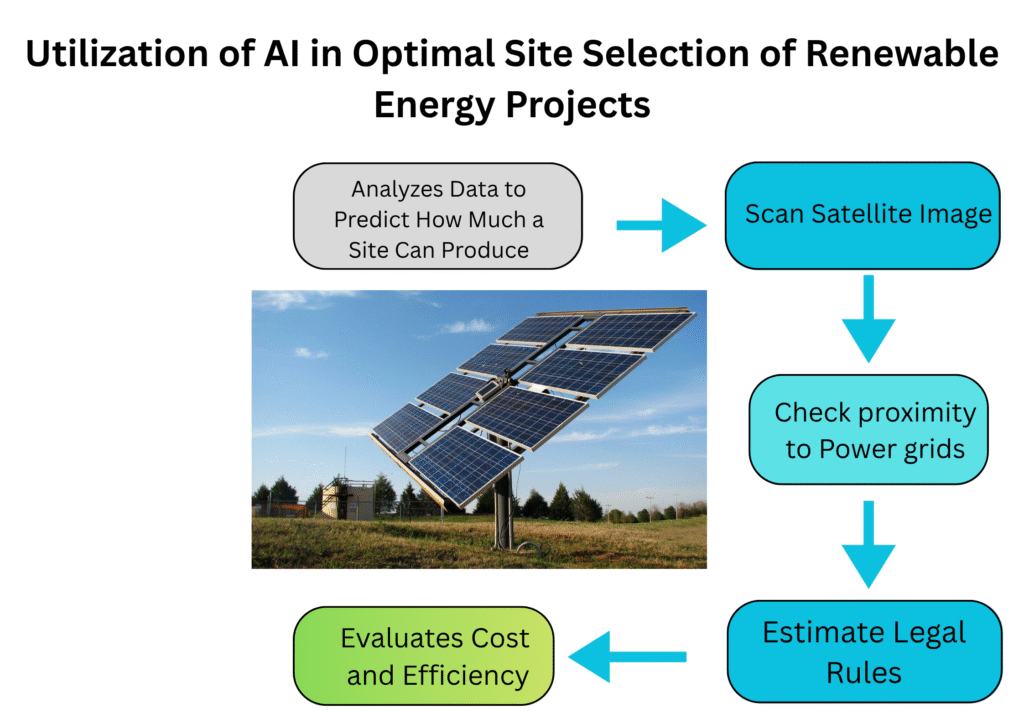
Analyzes Data to Predict How Much a Site Can Produce:
AI-powered tools are used to analyze a huge amount of historical and real-time weather and climate data. This helps the developers to analyze how much sunlight the site gets, the intensity of wind speed at that place, the direction of wind, the amount of rainfall, and the water flow in that specific site. Thus, AI algorithms predict how much energy a site can produce with the availability of natural resources.
Scan Satellite Image:
The advanced AI technology scans the satellite images to determine the land’s shape and use. It finds out whether the land is flat or open, if there is any forest, wildlife area, protected zone, rivers, or power grid near the site. This saves a lot of time and money.
Check proximity to Power grids:
After energy production, the most important thing is the transmission and distribution of energy. For this, the site must be close to any power infrastructure. The AI-powered tools identify if there are any power grids, substations, or power lines nearer to the site.
Estimate Legal Rules:
The AI tools can also analyze the legal rules, such as building permits, land use permits, and zoning laws, to prevent any legal issues and delays in the construction process.
Evaluates Cost and Efficiency:
The AI technology can also estimate the land prices, construction and manufacturing expenses, and the approximate amount of investment and return. It analyzes all these values and suggests the best site that offers the most energy for the lowest price.
Advantages of Using AI in Optimal Site Selection of Renewable Energy Projects
- The AI technology helps the developer to analyze hundreds of sites in less time and to make quicker and faster decisions.
- AI-powered tools can analyze real-time data, historical data, and satellite images to predict how much energy a site can produce.
- The use of AI makes the project less expensive by reducing the time spent locating optimal sites and avoiding investment in low-quality areas.
- The AI-powered renewable energy projects offer higher energy production and make the projects sustainable and profitable.
- AI tools can be used repeatedly for various projects across a region or, country, which makes the site selection process smooth and easier.
How AI Technology Is Helping in Choosing the Best Site for Solar Farms?
- The AI-powered tools first analyze the 10 years of weather and sunlight data.
- It uses the satellite data to check land slope and soil quality.
- It also collects information about nearby power grids and substations for smooth electricity transmission and distribution.
- Finally, AI suggests the most suitable site to develop the solar farm.
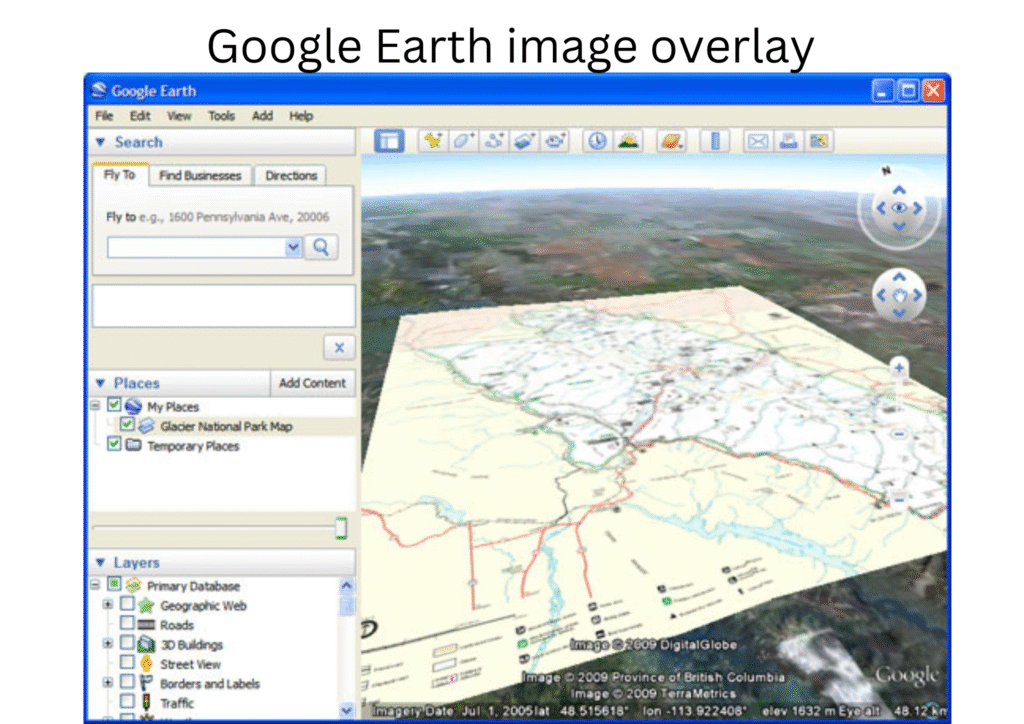
How AI Technology Is Helping in Choosing the Best Site for Wind Farms?
- The AI-powered software uses a machine learning algorithm to analyze the real-time data and historical data on wind speed and its consistency.
- It utilizes satellite images to evaluate the ocean depth and seabed conditions.
- By using all the information, the AI tools can predict the energy production level and suggest the best site to construct wind farms.
Conclusion
Optimal site selection is not about finding empty land; it’s all about finding the best suitable land. Selecting the right site for a renewable energy project is an essential step in making the system highly efficient, more profitable, and more sustainable. Smart site selection is the pillar of success for a successful renewable energy project. In this process, the advanced AI technology is revolutionizing and ensuring the project is efficient, cost-effective, and eco-friendly. The data-driven decisions made by AI technology lead to better energy production and a greener future.
FAQS
- What is the role of machine learning models in site selection for a renewable energy project?
These models are used to analyze patterns like seasonal shifts, cloud cover trends, or wind speed changes over time. These models can analyze a large database of weather data and climate patterns to predict weather conditions and climate patterns. This helps owners in selecting the best land with the most reliable energy potential.
2. How is image recognition technology used in site selection for a renewable energy project?
With image recognition technology, AI tools can scan satellite images to find the best location with large open spaces. It can also detect the nearby infrastructure, grid proximity, water resources, and obstacles like buildings, protected wildlife zones, etc.
Also Read:
- A Practical Guide to Transparent Solar Panels: How Home Windows Can Produce Electricity?
- Smart Meters for Solar: The New Real-Time Energy Monitoring System in Rooftop Solar Systems
- Intelligent Solar Tracker: The Secret to More Solar Energy
- How to Optimize Energy Storage with AI Algorithms in Renewable Energy Systems?
- How to Enhance Solar Panel Efficiency with AI-Based Analytics?
- How Smart Inverters Help Balance Solar Power and Grid Supply? A Complete Guide
- Case Study: How Google Uses AI to Accelerate Grid Connections in the U.S.
- Case Study: How Duke Energy Uses AI for Grid Stability?
- How AI Strengthens Cybersecurity in Smart Grids? A Complete Guide
- How AI Is Used to Design the Perfect Rooftop Solar System? A Complete Guide
- How Is AI Used to Develop Advanced Materials for Renewable Energy Technologies?
- How AI is Revolutionizing Predictive Maintenance in Smart Grids? A Complete Guide
- How AI Is Powering Smart Grids for Efficient Energy Distribution?
- A practical case study: How AI Enhances Microgrid Performance in Rural Areas?
- Hidden Microcracks in Solar Panel? How does AI Detect Early?
- Floating Solar Panel: The New Way to Produce Clean Energy on Lakes and Reservoirs
- AI-Powered Forecasting: A Powerful Technique to Enhance Grid Stability
Pingback: Graphene-Coated Solar Panels: The Next Big Thing in Residential Solar Panels - science2energy
Pingback: Anti-Reflective Solar Panels: A Smart Way to Maximize Rooftop Efficiency - science2energy
Pingback: HJT Solar Panels: A Right Solar Investment for Large Businesses - science2energy
Pingback: What Size Solar Panel Kit Do You Need? Find the Right Solar Kit for Your Home - science2energy
Pingback: Are DIY Solar Panel Kits Worth It? A Complete Guide - science2energy