
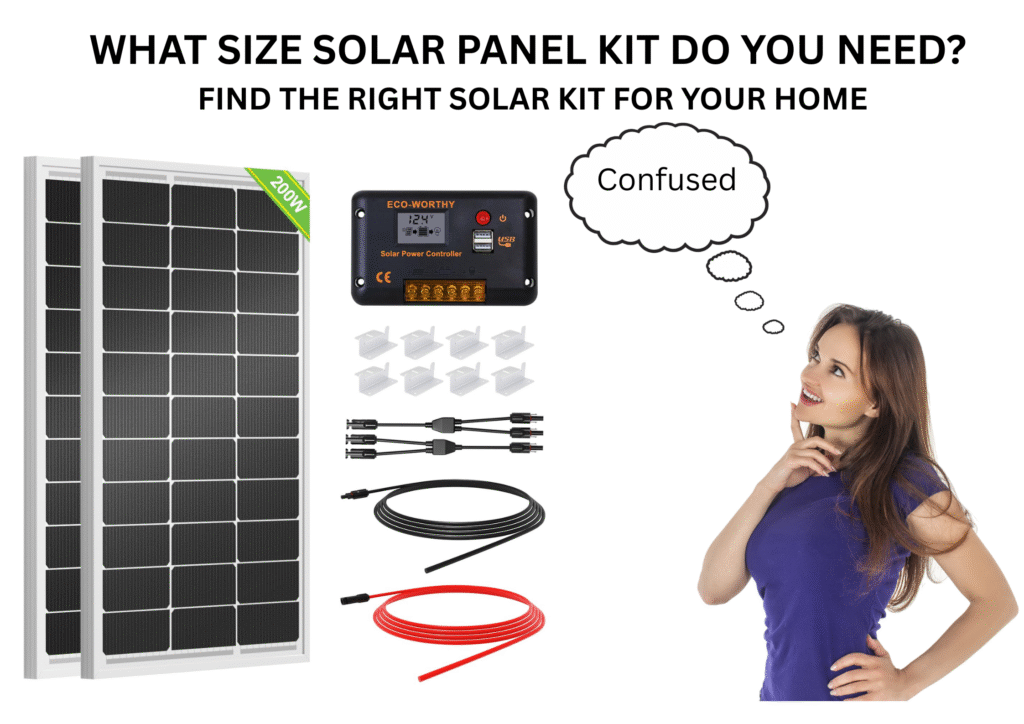
In setting up a new solar energy system, the most important step is to select the right size of solar panel kit. A small solar panel kit cannot meet your electricity needs, whereas a large one is a waste of money. So, What Size Solar Panel Kit Do You Need? It depends on the daily energy usage, the type of solar panel kit, and the location where you want to install the solar energy system. This article explains the solar panel kit, its types, what the kit includes, and what size solar panel kit you need.
What Is a Solar Panel Kit?
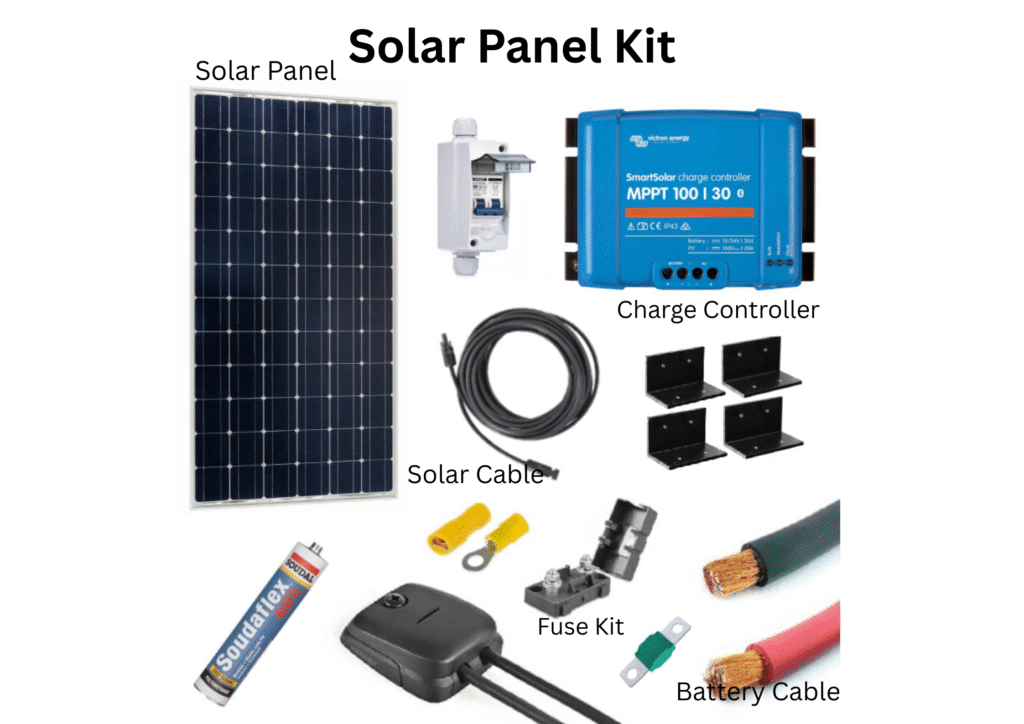
A solar panel kit is a comprehensive package that includes essential components for generating electricity from sunlight. This kit provides everything in one bundle to create a functional solar energy system. It is an easier way for homeowners, small businesses, travelers, and campers to set up their solar power systems.
The solar power kits are used for several purposes, such as
- To run household appliances
- To charge electronic devices on camping trips
- To provide electricity in boats
- To provide electricity in disaster relief situations
- To run small businesses
Types of Solar Panel Kits
Several types of solar panel kits are explained below.
- Grid-Tied Solar Panel Kit
The solar panel kits that are connected to the local power grid are known as grid-tied solar panel kits. These solar panels generate electricity during the day and send the unused electricity back to the grid. The initial cost of these solar kits is lower than that of off-grid systems. The grid-tied solar panel kits are ideal for places with a stable electricity supply, such as urban homes and commercial buildings.
- Off-Grid Solar Panel Kit
The off-grid solar panel kits work independently from the utility grid. They generate electricity during the day, store the energy using a battery storage system attached to it, and use it at night or during cloudy weather. These solar panel kits are ideal for remote areas with no grid access, cabins, rural homes, and farms.
- Hybrid Solar Panel Kit
Hybrid solar panel kits are designed by combining the features of both grid-tied and off-grid solar panel kits. These solar panel kits store excess power in energy storage systems while also connecting to the utility grid for backup. They provide energy independence with grid connectivity. The hybrid solar panel kits are ideal for homes in areas with unstable power supply or frequent outages.
- Portable Solar Panel Kit
Portable solar panel kits are lightweight, foldable, compact, and easy to carry, with simple plug-and-play setups. These solar panels generate electricity to charge phones, batteries, laptops, and small appliances. These are ideal for temporary setups and mobile use, like camping, boating, RVs, and hiking trips.
- Flexible Solar Panel Kit
The flexible solar panel kits are designed using thin-film or bendable solar panels. These are ideal for surfaces like vehicle roofs or tents. You can install these solar panels on curved or irregular surfaces such as outdoor setups, vans, boats, and mobile homes.
What Does a Solar Panel Kit Include?
- Solar Panels:
The solar panels are the main element of a solar panel kit that capture sunlight and generate DC electricity. These are made of monocrystallineor polycrystalline cells. The number of solar panels in a kit depends on the required power output.
- Charge Controller
The charge controllers are used to control power flow from solar panels to the batteries. Usually, solar panel kits consist of MPPT (Maximum Power Point Tracking) controllers. It protects the batteries from damage due to overcharging. It also ensures power is stored safely and efficiently.
- Inverter
The solar panels capture sunlight and generate DC electricity. The inverters are used to convert DC to AC electricity to power everyday appliances like lights, refrigerators, and televisions.
- Battery Bank
The off-grid solar panel kit consists of an energy storage system, such as a battery bank, to store excess electricity for use at night or during cloudy days. These are usually deep-cycle batteries, such as lithium-ionor AGM lead-acid, to handle continuous charging and discharging.
- Mounting Hardware
The mounting hardware ensures stability and enhances the panels’ exposure to sunlight. These are usually brackets, rails, and clamps needed to secure the panels to a roof or wall.
- Wiring
Cables and connectors are used to carry electricity between the solar panels, inverter, charge controller, and batteries.
- Installation Guide
The installation guide helps users connect all the components inside the kit in the correct order and maintain safety during installation.
Factors That Affect Solar Panel Kit Size
- The amount of electricity you consume (in kilowatt-hours (kWh)) per day
- The location of the installation area and the amount of direct sunlight it receives
- Efficiency of the solar panel
- Type of solar panel kit
- The battery storage capacity
- The availability of a roof or ground area where you plan to install solar panels
Reference: Solar Panel Kits: Complete Guide, Pros And Cons, Are They Worth It?
What Size Solar Panel Kit Do You Need?
- Calculate Your Daily Energy Usage
To check your monthly electricity bill to know your monthly usage in kilowatt-hours (kWh). To calculate the daily energy use, divide the monthly usage by 30.
For the off-grid type, check the number of appliances you use and their wattage. Multiply it by the number of hours you use them daily to know the daily energy usage.
- Peak Sun Hours in a Day
Peak sun hours are the hours when sunlight is strong enough to produce maximum power. The required system size depends on the amount of sunlight you get each day.
Required System Size (kW) = Daily Energy Usage (kWh) / Peak Sun Hours
- Account for System Losses
The solar power system loses energy due to wiring, shading, and dirt. So, while calculating the solar panel kit size, always add 10–20% extra capacity to cover these losses.
If you have calculated the system size as 7kW, then add the system losses
7kW + 1 (10% extra) = 8kW
- Type of Solar Panel Kit
If you plan to install an off-grid solar panel kit, ensure the system size is large enough to meet all your needs. Whereas, if you are planning to purchase a grid-tied type, the system size can be smaller. In this type, the grid serves as a backup.
- Plan for Future Expansion
Consider a slightly larger size if, in the future, you are planning to add any extra electric vehicles or more household appliances.
Reference: Everyday Activities and Energy Consumption: How Families Understand the Relationship
Points to Remember While Purchasing a Solar Panel Kit
You must remember the following points while purchasing a solar panel kit.
- Calculate Your Energy Needs
While purchasing a solar panel kit, first calculate your daily power consumption. This depends on all the devices you want to run. So, to calculate the power consumption, check the device’s wattage and multiply it by the number of devices. So, calculating your energy needs helps you select a solar panel kit with the right capacity.
- Select the Right Kit Type
There are various types of solar panel kits available in the market, including grid-type, off-grid type, and hybrid type. Select the suitable kit type according to your requirements.
- Check Panel Efficiency
The solar panel’s efficiency represents how much sunlight it can convert into electricity. The monocrystalline solar panels are more efficient than the polycrystalline panels. A solar panel with higher efficiency should be selected to make your investment worth it.
- Check the Components Inside the Kit
While purchasing a solar panel kit, you must check the components it contains. A good solar panel kit includes high-quality panels, a reliable charge controller, a well-rated inverter, strong mounting hardware, and weather-resistant wiring.
- Check for Battery Storage
If you are planning to purchase an off-grid type solar panel kit, ensure the kit includes a battery bank with enough capacity. Lithium-ion batteries are highly efficient compared to lead-acid batteries.
- Check for Expansion Option
A good solar panel kit should allow you to add extra panels, batteries, or a larger inverter without replacing the whole system.
- Warranty
Select a solar panel kit with a warranty of at least 20-25 years for the panel and 5-10 years for the inverter.
- Compare Prices
While purchasing a solar panel kit, it is advisable to compare prices based on features, durability, and brand. Always compare the prices, but do not compromise on quality, because poor quality can lead to reduced efficiency.
Conclusion
An accurate calculation of daily energy usage, local sunlight, and the type of solar panel kit can help you select the right size solar panel kit you need. Consider all these factors before purchasing a solar panel kit to get a reliable and clean source of energy while avoiding unnecessary costs.
FAQS
- What is a grid-tied solar panel kit?
The solar panel kits that are connected to the local power grid are known as grid-tied solar panel kits. These solar panels generate electricity during the day and send the unused electricity back to the grid.
- What is an off-grid solar panel kit?
The off-grid solar panel kits work independently from the utility grid. They generate electricity during the day, store the energy using a battery storage system attached to it, and use it at night or during cloudy weather.
- Which type of solar panel kit is ideal for remote areas with no grid access?
The off-grid solar panel kits are ideal for remote areas with no grid access.
Also Read:
- Perovskite Solar Panels: The Future of Home Solar
- High-Wattage 450W Solar Panels: Are They Worth It for Your Home Roof Space?
- The Rise of 600W+ High-Power Panels in Commercial Solar Farms
- HJT Solar Panels: A Right Solar Investment for Large Businesses
- N-Type TOPCon Solar Panel: A Complete Guide
- TOPCon Vs HJT Vs Tandem Solar Panels: Make The Best Purchase for Your Project
- Case Study: How Bifacial Solar Panels Improved Output in the Nevada Desert?
- Performance of Tandem Solar Cells in Real Pilot Solar Farms: A Case Study
- Flexible Solar Panels: The Ideal Solution for Small and Irregular Spaces
- Crystalline Vs Thin-Film Solar Panels: Which One Is The Best for Your Modern Smart Homes?
- Tandem Solar Panels: The Future of Rooftop Solar
- Self-Cleaning Solar Panels: No More Manual Cleaning from Now On
- Dual Glass Solar Panel: A Simple and Long-Lasting Investment for Homeowners
- Anti-Reflective Solar Panels: A Smart Way to Maximize Rooftop Efficiency
- Graphene-Coated Solar Panels: The Next Big Thing in Residential Solar Panels
- Utilization of AI in Optimal Site Selection of Renewable Energy Projects: A Complete Guide
- A Practical Guide to Transparent Solar Panels: How Home Windows Can Produce Electricity?
- Smart Meters for Solar: The New Real-Time Energy Monitoring System in Rooftop Solar Systems
- Intelligent Solar Tracker: The Secret to More Solar Energy
Pingback: Breaking Down Each Component of a 5kW Solar Panel Kit - science2energy
Pingback: Portable Solar Panel Kits: Best Uses for RVs and Camping - science2energy
Pingback: Are DIY Solar Panel Kits Worth It? A Complete Guide - science2energy
Pingback: Can a Small Wind Turbine System Power Your Entire House? A Practical Guide - science2energy
Pingback: A Technical Look at Offshore Wind Farms - science2energy
Pingback: How Smart Wind Turbine Blades Are Redefining the Future of Wind Energy? - science2energy
Pingback: Solar Farms on Old Landfills: How Unused Lands Are Powering Solar Energy Projects? - science2energy