
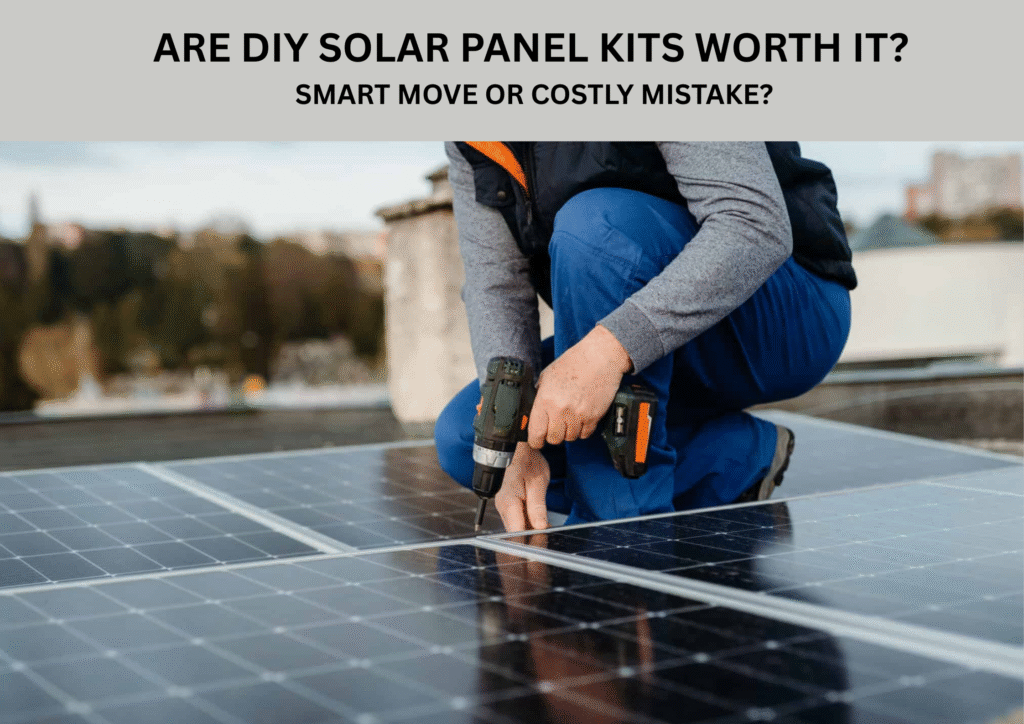
The DIY solar panel kits are an affordable way to switch to solar power. The DIY solar panel kits allow users to install their own solar systems without hiring professional installers. While the professionally installed solar panel systems are ideal for large homes and commercial sectors with high energy demands, the DIY solar panel kits are a great option for smaller and specific applications. This article explains everything about DIY solar panel kits, including their applications, advantages, disadvantages, technical specifications, and cost analysis. It also explains whether DIY solar panel kits are worth it.
What Is a DIY Solar Panel Kit?
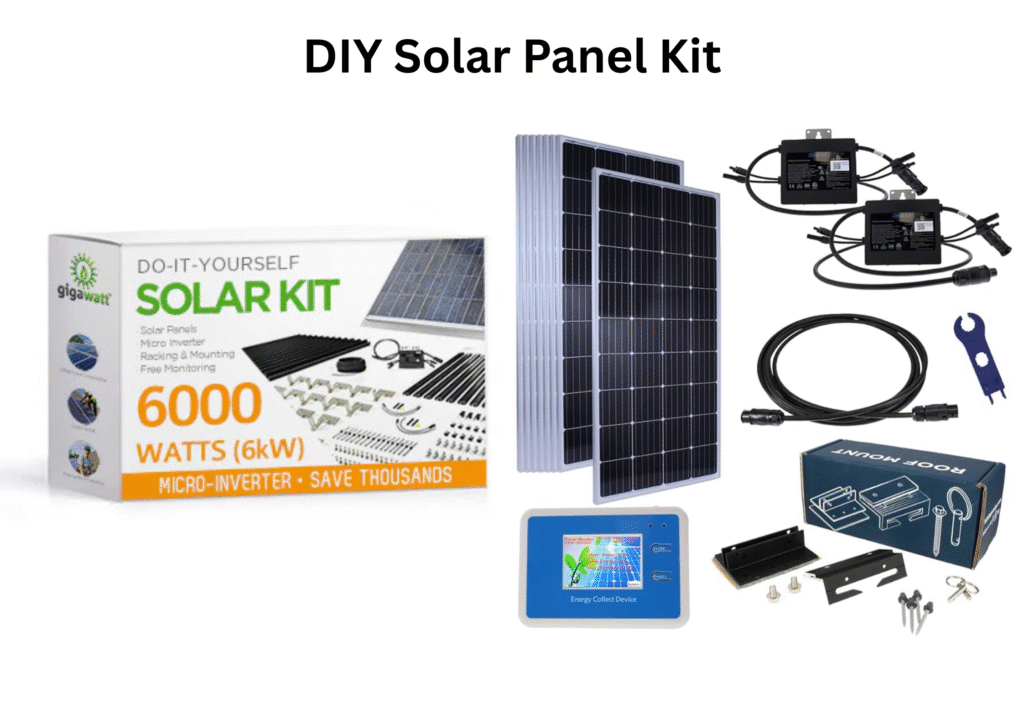
A DIY solar panel kit is a pre-packaged system that comprises vital components to capture, convert, and use solar energy. It allows users to assemble and install their own solar power system without hiring a full installation team. These solar panel kits are ideal for small homes, boats, RVs, cabins, and as backup power solutions.
A DIY solar panel kit includes:
Solar Panels: The solar panels are the most important component of a solar panel kit. When sunlight hits the panel’s surface, it captures the sunlight and converts it into DC electricity. There are mainly two types of solar panels available, i.e., monocrystalline panels, which are highly efficient, and polycrystalline panels, which are lower in cost.
Inverter: The inverter converts the DC electricity generated by the solar panel to alternating current (AC) that can be used by most appliances and devices in homes. There are two types of inverters available, i.e., string inverters and microinverters.
Charge Controller: The charge controller is used to prevent the batteries from getting overcharged. It regulates the power flow between the solar panels and the batteries. There are two types of charge controllers used in the kit: PWM (Pulse Width Modulation) and MPPT (Maximum Power Point Tracking).
Batteries: The batteries are used for energy storage purposes. The two main categories of batteries available are lead-acid batteries and Lithium-ion Batteries.
Mounting Hardware: The mounting hardware secures the solar panels to the surface and ensures the panels face the sun at the right angle.
Wiring and Connectors: These are used to connect the solar panels to the inverter, batteries, and other components.
Monitoring System: Some solar panel kits also include monitoring systems that track the system’s performance and battery status in real-time.
Advantages of a DIY Solar Panel Kit
- Cost Saving Option:
In the case of a DIY solar panel kit, you only need to pay for the equipment and handle the setup yourself. It eliminates the installation cost.
- Provides energy independence
In remote areas where grid electricity is not available, a DIY solar panel kit allows you to generate your own energy.
- Easy Installation
The DIY solar panel kits are designed for convenience. With pre-wired cables, connectors, and mounting structures, it is to be installed with the help of detailed instructions.
- Available in Different Sizes
From a 100W portable kit to 5kW systems, the DIY solar panel kits are available in various ranges. This helps you select one with an exact energy requirement.
- Lower Utility Costs
Over a longer period, the DIY solar panel kits can pay for themselves by lowering utility costs.
- Environmentally Friendly
A DIY solar panel helps reduce carbon emissions and dependence on fossil fuels. It is a clean source of energy.
- Emergency Backup System
DIY solar panel kits are lightweight and portable in size. These are an ideal option for outdoor activities or as an emergency backup system during power outages.
Disadvantages of a DIY Solar Panel Kit
- DIY solar panel kits have limited capacity. They cannot run an entire household with high energy needs.
- One requires basic electrical knowledge to install a DY solar panel kit by themselves.
- This kit does not cover a professional installation warranty.
- These are less efficient than professionally installed solar systems.
- As the installation of a solar panel system deals with high-voltage electricity, it can be dangerous if mishandled.
- Its limited scalability makes it difficult for future expansion.
- Maintenance is difficult. It is not easy to identify faults in wiring, inverters, or batteries. All these require technical skills that not all users have.
Are DIY Solar Panel Kits Worth It?
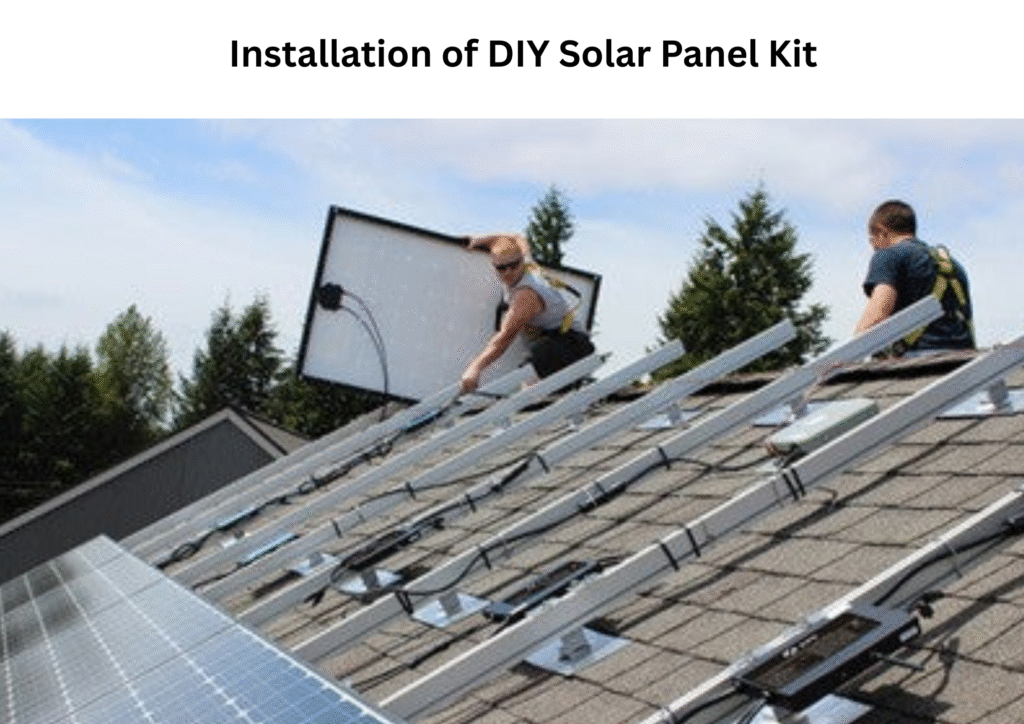
DIY Solar Panel Kits can be an affordable option if you need power for a small business, small household loads, a cabin, a boat, or an RV. It is a practical option if you are comfortable with basic installation.
However, if you want to power a large home with high energy demand, this is not an ideal option. For a long-term investment with warranty-backed installation, you should go for a professionally installed system.
Technical Specification of a DIY Solar Panel Kit
| Solar Panel | Inverter | Charge Controller | Battery | Wiring/ Connectors |
| Wattage Ratings = 100W to 450W Voltage Ratings = 18V to 40V Current Ratings = 5A to 12A Efficiency = 18% to 22% (Monocrystalline) | Wattage Ratings = 500W (Small Kit) to 5kW (Home system) Voltage Ratings = 120V or 240V AC Conversion Efficiency = 90% – 96% | Voltage Ratings = 12V, 24V, and 48V Current Ratings = 20A, 40A, 60A | Capacity = 100Ah – 200Ah Voltage = 12V, 24V, or 48V Cycle Life = 3,000 – 5,000 cycles (Lithium Ion Batteries) | Cable Size = 10 AWG or 12 AWG Connector Type = MC4 |
Cost Breakdown: DIY Vs Professional Solar Panel Installation
| Cost of DIY Solar Panel Installation | Cost of Professional Solar Panel Installation | |
| Equipment Cost | Small Kit (1kW – 3kW): $1500 – $5000 Medium kits (5kW – 6kW): $6000 – $9000 Large kits (10kW+): $10,000 – $15,000 | residential system (5kW – 6kW): $12,000 – $18,000 Larger homes (8kW – 10kW): $20000 – $30000 |
| Installation Cost | $0 | Labor Charge: $2000 – $5000 |
Also Check: DIY Solar Panel Installation: Step-by-Step Guide
DIY Solar Panel Kit Is Ideal for
- RVs and Motorhomes
A DIY solar panel kit is an ideal option for people travelling in RVs. These portable kits are available in the range of 100W to 400W.
- Off-grid Cabins
A DIY solar panel kit is a cost-effective option for off-grid cabins or vacation homes where grid connectivity is expensive.
- Boats and Marine Use
Marine solar kits are used to charge batteries for navigation systems, radios, and onboard equipment.
- Camping and Outdoor Events
The foldable and easy-to-carry solar panel kits are an ideal option for campers and hikers to charge batteries, phones, laptops, small appliances, and GPS devices.
- Emergency Backup
The DIY solar kit can provide essential backup electricity. So these are helpful in power outages or natural disasters to power emergency lighting, medical equipment, and communication devices.
- Educational Projects
Students and researchers who want hands-on experience with solar technology, a DIY solar panel kit is a great option.
A DIY Solar Panel Kit Is Not Ideal for
- Large households with energy demands
- Business and commercial properties that need a high-capacity solar system
- Homeowners without basic electrical knowledge
- People who expect full warranty coverage, including installation warranty
- Areas with harsh weather conditions such as heavy snow, strong winds, extreme heat, etc.
How to Choose the Right DIY Solar Panel Kit?
- Calculate Your Energy Requirements
First, calculate how much energy you need on a daily basis, and then evaluate the monthly energy usage.
- If you just want to power lights, fans, and charge your laptops, phones, etc., then you should buy a small load DIY solar panel kit between 200W and 500W.
- To power refrigerators, televisions, and small appliances, you need a kit with ratings ranging between 1kW and 3kW.
- To run multiple appliances, you need a kit rated more than 5KW.
- Select between On-Grid or Off-Grid Kit
On-grid kits are designed to connect directly to the grid and help reduce the electricity bill. Whereas off-grid kits are ideal for RVs, cabins, boats, etc. It includes batteries to store energy.
- Check for Wattage Ratings, Efficiency, and Durability
Select a solar panel kit according to your energy requirements. The monocrystalline solar panels are more efficient than polycrystalline panels with an energy efficiency of 18% to 22%. Also, check for the warranty card. Select one with a warranty of 20 to 25 years.
- Evaluate the inverter type, whether it is a pure sine wave inverter or a modified sine wave inverter, and its capacity.
- If you need to store a charge, check the battery type. The lead-acid batteries are affordable, whereas the lithium-ion batteries offer longer lifespan and are highly efficient.
- Review the charge controller type. For small systems, PWM controllers are ideal, and for variable weather conditions, MPPT controllers are more efficient.
- To ensure stability, go for strong mounting hardware and UV-resistant and outdoor-rated wiring.
- To track the system’s performance and energy output, select a solar panel kit that includes a monitoring system.
Conclusion
If your goal is to set up an off-grid system or power small appliances in a remote location, then a DIY solar panel kit is a smart move. Make sure you have basic electrical knowledge, as you have to install it on your own. It is an affordable option for hands-on projects and for small-scale power needs. But powering a large home or a large-scale project can be a costly mistake. So, select wisely.
FAQS
- What is a DIY solar panel kit?
A DIY solar panel kit is a pre-packaged system that comprises vital components to capture, convert, and use solar energy. It allows users to assemble and install their own solar power system without hiring a full installation team.
- What is the installation cost of a DIY solar panel kit?
The installation cost of a DIY solar panel kit is $0 because you have to install it by yourself.
- Who should buy DIY Solar Panel Kits?
DIY Solar Panel Kits can be an affordable option if you need power for a small business, small household loads, a cabin, a boat, or an RV. It is a practical option if you are comfortable with basic installation.
Also Read:
- Portable Solar Panel Kits: Best Uses for RVs and Camping
- Breaking Down Each Component of a 5kW Solar Panel Kit
- What Size Solar Panel Kit Do You Need? Find the Right Solar Kit for Your Home
- Perovskite Solar Panels: The Future of Home Solar
- High-Wattage 450W Solar Panels: Are They Worth It for Your Home Roof Space?
- The Rise of 600W+ High-Power Panels in Commercial Solar Farms
- HJT Solar Panels: A Right Solar Investment for Large Businesses
- N-Type TOPCon Solar Panel: A Complete Guide
- TOPCon Vs HJT Vs Tandem Solar Panels: Make The Best Purchase for Your Project
- Case Study: How Bifacial Solar Panels Improved Output in the Nevada Desert?
- Performance of Tandem Solar Cells in Real Pilot Solar Farms: A Case Study
- Flexible Solar Panels: The Ideal Solution for Small and Irregular Spaces
- Crystalline Vs Thin-Film Solar Panels: Which One Is The Best for Your Modern Smart Homes?
- Tandem Solar Panels: The Future of Rooftop Solar
- Self-Cleaning Solar Panels: No More Manual Cleaning from Now On
- Dual Glass Solar Panel: A Simple and Long-Lasting Investment for Homeowners
- Anti-Reflective Solar Panels: A Smart Way to Maximize Rooftop Efficiency
- Graphene-Coated Solar Panels: The Next Big Thing in Residential Solar Panels
- Utilization of AI in Optimal Site Selection of Renewable Energy Projects: A Complete Guide
Pingback: Microinverters vs String Inverters: Which Solar Inverter Should You Pick for Your Rooftop Solar System? - science2energy
Pingback: Can Solid-State Batteries Keep the Lights on at Night? A Complete Guide - science2energy
Pingback: A Complete Guide to How a Wind Turbine Turns Air into Electricity: From Blades to Grid - science2energy
Pingback: How Wind Direction and Speed Affect Wind Turbine Performance? A Complete Guide - science2energy
Pingback: AI-Powered Wind Turbine: How It Optimizes Power Output? - science2energy
Pingback: Payback Period for Residential Wind Power: What Homeowners Can Expect - science2energy
Pingback: Bikaner 1.4 GW Solar Project by Tata Power in Rajasthan - science2energy