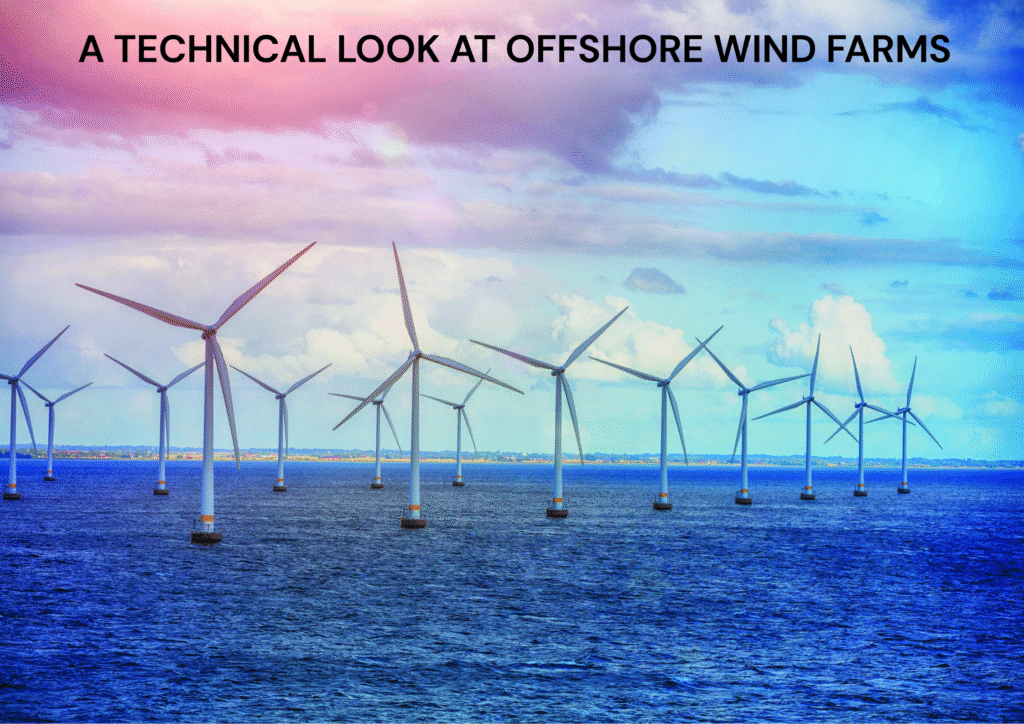
Offshore wind farms play a crucial role in delivering clean electricity at a large scale. These offshore wind turbines harness the steady and stronger ocean winds, converting them into sustainable energy. But how are hundreds of turbines installed miles from the shoreline?
One advanced offshore wind turbine with a tower height of 850–900 ft can generate power of 12–16 MW. This is enough to power thousands of homes. This article provides a technical overview of offshore wind farms, including their design and the installation process that unfolds at sea. It also describes some practical case studies and how larger turbines and improved technology reduce the cost per kWh. Read the full article to learn more about it.
What Are Offshore Wind Farms?
The Offshore wind farms are large groups of wind turbines installed in the ocean to produce clean electricity. The wind over the ocean is steady and stronger than on land. This is why these wind turbines operate efficiently and generate more power.
The offshore wind turbines are installed several miles from the shoreline to reduce noise, avoid obstacles found on land, and conserve land space. The turbines are placed on strong foundations in shallow or deep water.
How Offshore Wind Farms Work?
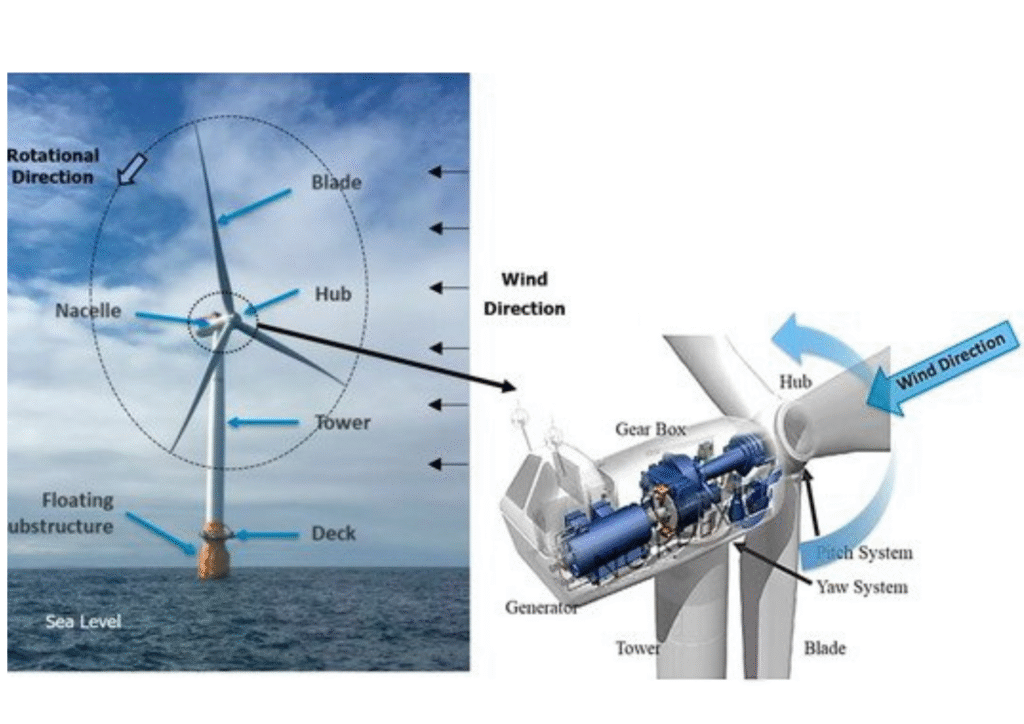
- As there are no obstacles present over the ocean, such as trees, buildings, hills, etc., the wind is steady, stronger, and moves faster. When the air hits the blades, it creates rotational force, and the blades start rotating.
- The spinning blades rotate the rotor connected to a generator present inside the nacelle. The generator converts the mechanical rotation into electrical power.
- Once the electricity is produced at the top (Inside the nacelle), it moves down the tower through insulated cables and reaches an offshore substation.
- The substation increases the voltage to reduce energy losses during long-distance transmission. After that, the electricity is transmitted to the land-based substation through high-voltage underwater cables.
Reference: Review of the current status, technology and future trends of offshore wind farms
Components of an Offshore Wind Farm
The key components of an offshore wind farm are explained below.
- Wind Turbines: The most visible part of an offshore wind farm is the wind turbine. The wind turbine consists of 3 main sections, i.e., rotor blades, nacelle, and tower.
Rotor Blades: The longer rotor blades are designed like an airplane wing, which allows them to spin even at lower wind speeds. The rotor blades of offshore wind turbines are often more than 300 feet long
Nacelle: The nacelle is placed at the top of the tower, consisting generator, gearbox, and control systems. It protects these major components from saltwater corrosion and harsh weather.
Tower: It supports both the rotor blades and the nacelle. Some modern offshore wind turbine towers reach over 850 feet in height.
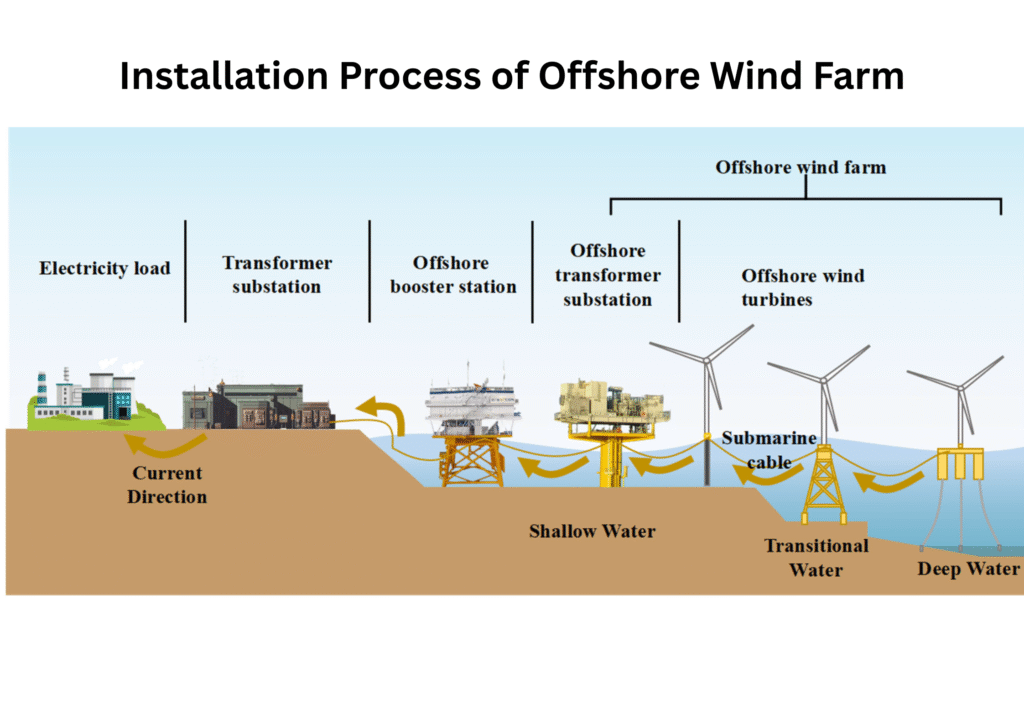
- Foundation System: A strong foundation is an important factor in installing offshore wind turbines. It ensures the turbine can operate safely for 20–25 years. The types of foundation systems are:
- Monopile: These foundations are usually used in shallow water. A monopile is a single steel tube driven deep into the seabed.
- Jacket Structure: These are ideal for rough seas. The jacket structure is a steel lattice frame used in deeper locations.
- Floating Platforms: These are ideally used in very deep water where fixed foundations aren’t possible. These systems use anchors and mooring lines for stability.
3. Subsea Cables: The subsea cables are used to carry electricity generated from each offshore wind turbine. There are two main types of subsea cables.
1. Array Cables: These cables link multiple turbines together and send power generated from each wind turbine to the offshore substation.
2. Export Cables: These cables carry high-voltage electricity from the offshore substation to the onshore grid.
4. Offshore Substation: The offshore substationcollects electricity from all wind turbines. It steps up the voltage to reduce energy losses over long distances. This substation comprises control equipment, transformers, and switchgear.
5. Onshore Substation: In the onshore substation,the voltage is adjusted again so that the power can be safely delivered to homes, industries, and city grids.
6. Control and Monitoring System: For smooth operation, the offshore wind farms highly depend on control and monitoring systems. The engineers use the data collected from the sensors to operate remotely from remote control centers.
Factors influencing site choice for Offshore Wind Farm
- Wind Quality: An ideal location for an offshore wind farm is one with steady and strong wind. This reduces power fluctuation and enhances overall efficiency.
- Water Depth: Shallow water needs a monopile foundation, whereas deeper areas may need jacket structures or floating platforms.
- Distance from The Shore: The location should be far enough from the coast to access strong winds. However, it should not be too far, as a longer distance needs more expensive underwater cables and increases energy losses over transmission lines.
- Wave Height: The offshore wind farms operate in harsh conditions such as high waves and storms. So, to maintain the stability and for smooth maintenance operations, the location must withstand extreme conditions.
- Grid Connection: A location with existing transmission infrastructure can lower the project cost. It also makes it easy to connect the offshore substation to the onshore grid.
- Environmental Assessment: It helps identify sensitive zones, marine life, bird migration paths, and local ecosystems. Protecting marine habitats is an important consideration for project approval.
- Shipping Routes: The offshore wind farm location cannot interfere with commercial shipping lanes or fishing areas.
- National and Regional Permitting Requirements: A location with clear and predictable regulations makes it easy to construct wind farms. It must follow national and regional permitting processes.
Installation Process of an Offshore Wind Farm
- The first step is to carry out a detailed survey about water depth, seabed type, average wind speed, wave data, etc.
- After the survey, select the correct foundation type, such as monopile foundation, jacket structure, or floating platform.
- Transport all the important components such as turbines, towers, blades, etc. Preferably, carry these components from ports to the offshore construction site.
- Place the foundation into the seabed. The monopile type requires a large hydraulic hammer to drive the pile deep into the ocean floor. The jacket structures are fixed using steel piles, and the floating platforms are anchored with chains and mooring lines.
- Once the foundation is secured, the towers and nacelles are installed using cranes.
- To ensure proper aerodynamic performance, secure the rotor blades using high-strength bolts and perform safety inspections.
- Specialized cable-laying vessels are used to bury the cables under the seabed. These cables carry electricity from the substation to the shore.
- The offshore substation containing transformers, switchgear, and communication systems is lifted onto its own foundation.
- After that grid connection and onshore work are done.
- At the final stage, each turbines are tested. Cable connections are checked, and communication systems are verified.
How do larger turbines and improved technology reduce the cost per kWh?
- Large Turbines Capture More Wind Energy
Larger turbines with longer blades sweep a wider area. The swept area increases with the blade length, and this allows the turbine to capture more energy. The cost of energy per kWh reduces as more electricity is generated.
- Taller Tower Gets More Wind
The taller wind turbines get smoother and faster wind than near the surface. Stronger winds improve the turbine’s capacity factor. This leads to a higher energy output and a lower cost per unit of electricity.
- Advanced Generator and Aerodynamic Blades
A wind turbine with an advanced generator can convert mechanical rotation into electricity with minimal losses. Thus, improved blade aerodynamics help the rotor spin more efficiently. These advanced technologies increase energy production and reduce the cost of energy per kWh.
- High-Capacity Turbines
A few units of high-capacity turbines can generate the same total energy. Fewer turbines mean less foundation work, less cable requirement, and lower maintenance costs. This reduces the cost of energy per kWh.
- Advanced Control Systems and Enhanced Performance
A wind turbine system with advanced control technology can capture maximum energy. Higher operational efficiency leads to longer operating life. The extension of the turbine’s lifespan lowers the cost per kWh.
Future Growth of Offshore Wind Farm
- In the future, the wind farm will use extremely large turbines. Modern wind turbines with ratings above 15 MW and blade lengths longer than 350 feet are now being tested. These turbines can capture more energy and produce more electricity even during moderate wind conditions.
- Floating platforms will be used to build wind farms in locations once considered unreachable. These platforms use buoyancy and mooring lines to support turbines in water depths of several hundred meters.
- New high-voltage direct current (HVDC) technology allows offshore wind farms to transmit electricity over longer distances with fewer losses.
- To reduce environmental impacts, advanced wind turbine systems are designed with new blade shapes and quieter installation techniques. The marine-friendly foundation designs help protect wildlife.
Case Studies
Case Study 1: Hornsea One Offshore Wind Farm, United Kingdom
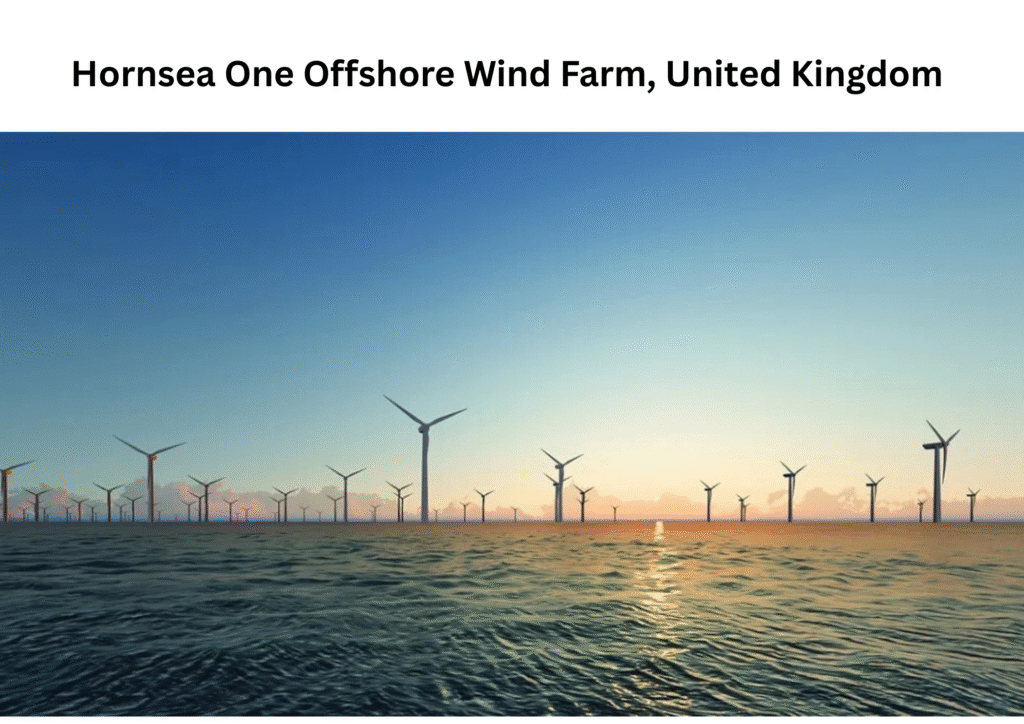
Hornsea One is one of the world’s largest offshore wind farms. It is located nearly 75 miles off the Yorkshire coast. This project covers an area of more than 400 square kilometers. It uses turbines rated around 7 MW each. Most turbines here stand on monopile foundations driven deep into the seabed. This project supplies electricity to over a million homes.
Reference: Hornsea 1 Wind Farm
Case Study 2: Block Island Wind Farm, United States
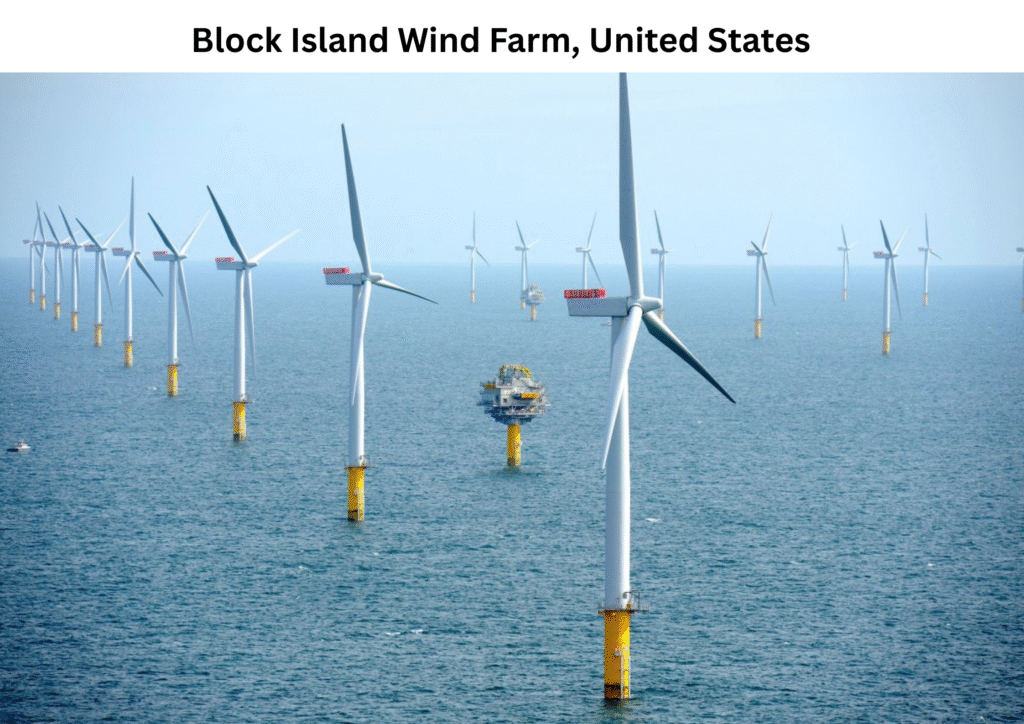
This project is America’s first operational offshore wind project. It is located off the coast of Rhode Island. It consists of five offshore turbines installed in moderate water depth. It uses 6-MW class turbines mounted on jacket-style foundations. It operates efficiently due to the reliable Atlantic winds and modern monitoring systems.
Reference: Block Island Wind Farm
Conclusion
As nations push for stronger energy security and cleaner electricity, the offshore wind farms will play a significant role and become one of the most important power sources of the coming decades. The offshore wind farms represent how advanced engineering technology and natural wind power can work together to deliver reliable, clean electricity for millions of homes for many years. These wind farms are designed for strong ocean winds, powerful turbine technology, and proactive maintenance. The global offshore wind capacity is expected to multiply by six by 2035.
FAQS
- What are offshore wind farms?
The Offshore wind farms are large groups of wind turbines installed in the ocean to produce clean electricity. The wind over the ocean is steady and stronger than on land. This is why these wind turbines operate efficiently and generate more power.
Also Read:
- Can Wind Turbines Operate Efficiently in Low-Wind Regions? What You Need to Know?
- Why Taller Wind Turbines Produce More Power? The Real Reason Behind It
- A Step-by-Step Guide to Design a Small Wind Turbine System
- Can a Small Wind Turbine System Power Your Entire House? A Practical Guide
- The Evolution of Wind Power: How Wind Power Is Shaping the Future of Renewable Energy Grids?
- How Wind Direction and Speed Affect Wind Turbine Performance? A Complete Guide
- A Complete Guide to How a Wind Turbine Turns Air into Electricity: From Blades to Grid
- Importance of AI-Driven Predictive Maintenance in Wind Energy Systems
- Are DIY Solar Panel Kits Worth It? A Complete Guide
- Portable Solar Panel Kits: Best Uses for RVs and Camping
- Breaking Down Each Component of a 5kW Solar Panel Kit
- What Size Solar Panel Kit Do You Need? Find the Right Solar Kit for Your Home
- Perovskite Solar Panels: The Future of Home Solar
- High-Wattage 450W Solar Panels: Are They Worth It for Your Home Roof Space?
- The Rise of 600W+ High-Power Panels in Commercial Solar Farms
- HJT Solar Panels: A Right Solar Investment for Large Businesses
- N-Type TOPCon Solar Panel: A Complete Guide
- TOPCon Vs HJT Vs Tandem Solar Panels: Make The Best Purchase for Your Project
Pingback: How Smart Wind Turbine Blades Are Redefining the Future of Wind Energy? - science2energy
Pingback: Machine Learning in Wind Energy Forecasting: The Future of Smart Grids - science2energy
Pingback: The U.S. Power Shift: Solar Takes the Lead in New U.S. Power Generation - science2energy
Pingback: Europe’s Clean Energy: How Wind Deals Are Reshaping Europe