
Global wind energy is expected to grow by more than 70% in the next decade. The smart wind turbine blades are playing a significant role in this. These blades are no longer just curved structures catching the wind. The smart wind turbine blades are designed with sensors, advanced materials, and intelligent control features. It helps the turbines to generate more energy, to adapt to varying weather conditions, and protects them from getting damaged.
Do you know that even a 1% improvement in blade aerodynamics can enhance the overall energy production of a wind farm by millions of kilowatt-hours per year? Blade monitoring can reduce maintenance costs by up to 30% through early detection of micro-cracks and structural stress.
Smart wind turbine blades are becoming the technology that will define the next generation of renewable power. This article explains in detail how smart wind turbine blades are redefining the future of wind energy. Read the full article to know the future of smart wind turbine blade innovations.
What Are Smart Wind Turbine Blades?
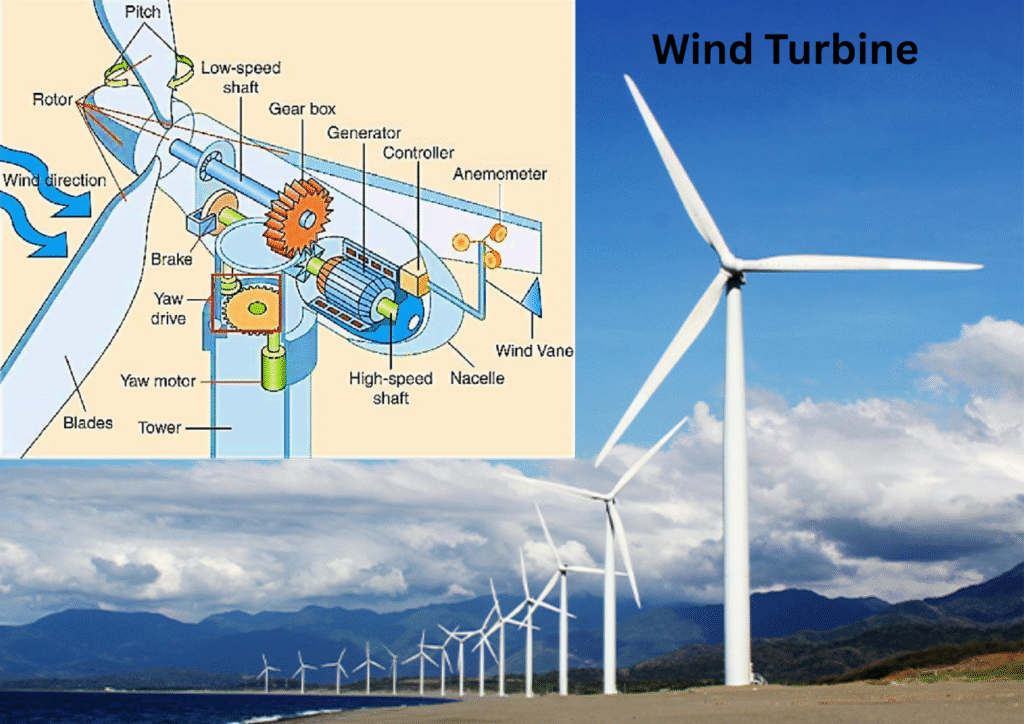
Rotor blades designed with advanced technology that sense the wind environment and adjust their performance in real time are known as smart wind turbine blades. These blades are built with sensors, advanced control systems, and adaptive materials.
The smart rotor blades can handle both harsh weather conditions and low-wind conditions more efficiently. They operate according to the changing wind speeds, turbulence, and load conditions to generate maximum energy. This advanced technology improves safety and the lifespan of the blades.
The key components of smart wind turbine blades are:
- Sensors: The sensors measure wind pressure, vibration, blade bending, temperature, and strain. It helps the turbine understand the present operating conditions of the clades.
- Advanced Control Systems: This system adjusts the blade pitch angle, rotational speed, and load distribution according to the data collected from the sensors.
- Adaptive Materials: These materials can adapt or change their shape or properties according to the external conditions to maximize energy production.
Some important features of smart wind turbine blades are
- Real-time monitoring can detect early signs of fatigue or imbalance.
- Adaptive pitch control systems automatically adjust blade pitch angle to optimize the blades’ performance.
- Smart blades can sense turbulence and adjust blade behavior.
- The improved aerodynamics help blades maintain the best aerodynamic performance.
Technologies Used in Smart Wind Turbine Blades
- Sensor Technology:
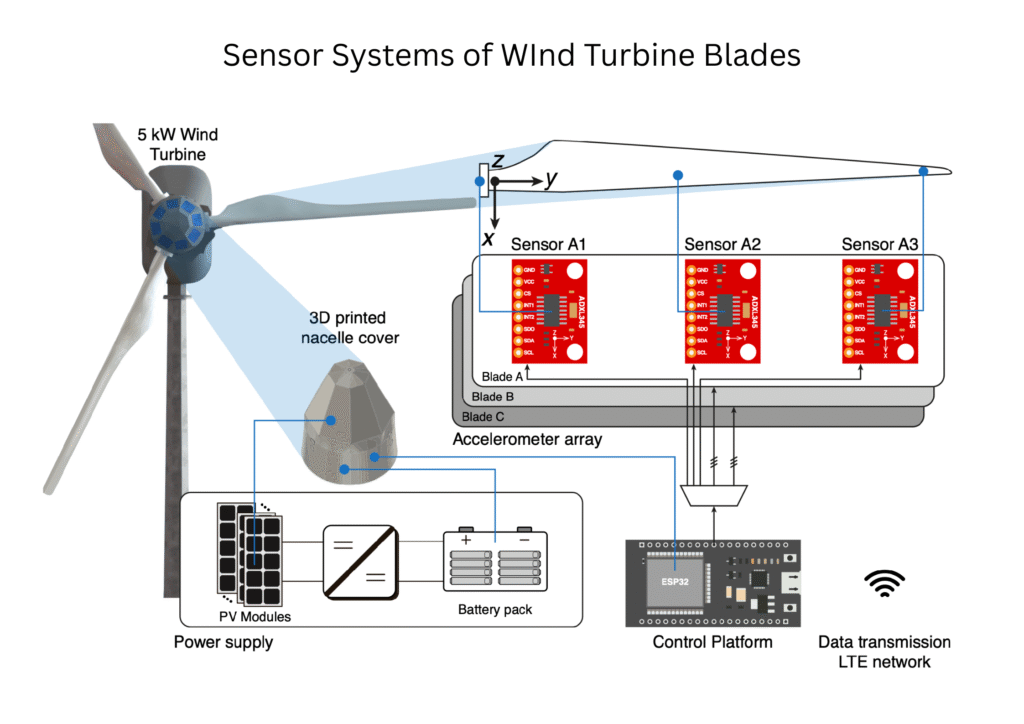
Advanced sensor technology is used to track the blade’s behavior in varying wind conditions. According to the data provided by the sensors, the turbine adjusts its operations accordingly. Various types of sensors used in wind turbine systems are:
Strain Sensors: Measure the stress on the blades.
Pressure sensors: Detect the changes in wind pressure along the blade’s surface.
Temperature Sensors: Measure temperature and prevent overheating.
Vibration Sensor: Detect turbulence and imbalance.
- Fiber optic cables:
Smart wind turbine blades use fiber optic cables inside the blade structure that can sense small changes in pressure and strain. It offers high accuracy and long-term stability.
- Adaptive Materials:
The smart wind turbine blades use adaptive materials such as shape-memory materials and flexible composites that can change shape slightly under wind pressure. These materials make blades lighter, safer, and capable of adjusting to unpredictable wind patterns.
- Pitch Control Systems:
The smart blades utilize a pitch control system that adjusts the blade’s angle to capture maximum energy. This pitch control system increases pitch angle during strong winds, reduces pitch angle in low winds, and maintains steady rotation under turbulence.
- Ice Detection Technology:
The wind turbines in cold regions are designed with ice detection technology that detects ice buildup early. It ensures smooth operation even in harsh winter climates.
- Digital Twin Systems:
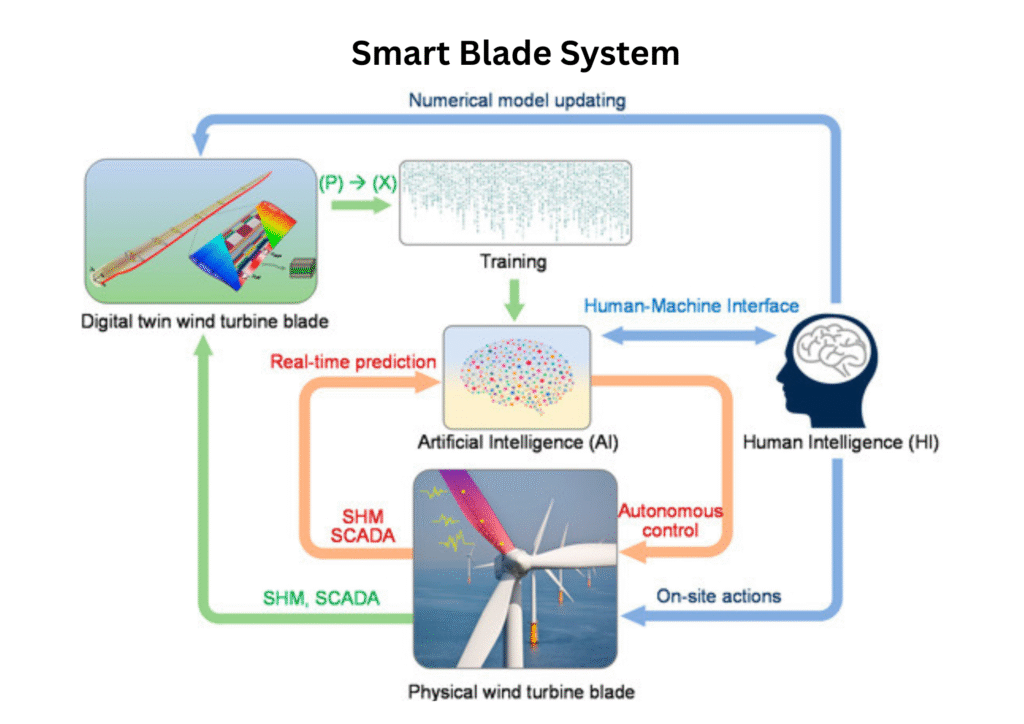
Digital models, known as digital twins, are used to analyze the large amount of data generated by the smart blades. The digital twin represents the real-time performance of the system, current load conditions, and future maintenance needs.
How Smart Blades Improve Wind Turbine Performance?
- Adaptive Aerodynamics
The smart wind turbine blades can change their aerodynamic shape according to the varying wind conditions. For efficient rotation, it helps the blade maintain the best lift-to-drag ratio. With smart blades, the wind turbine system offers enhanced performance during low and moderate winds and even in gusty or turbulent conditions.
- Real-Time Load Reduction
During high wind speeds, the wind turbines face heavy mechanical loads. The smart wind turbine blades can detect those loads instantly by using strain sensors and control systems. When high loads are detected, the smart blades automatically adjust their pitch angle, and they slightly twist or bend to reduce wear on the turbine’s mechanical components.
- Optimized Pitch Control
The smart blades use advanced sensor technology and a pitch control system to adjust pitch angle more accurately. It improves power production at variable wind speeds.
- Improved Safety During Harsh Weather Conditions
With advanced sensors, the smart blades can detect vibration or excessive bending. They send a signal to the central control room to take immediate action. The control system reduces rotor speed or changes blade pitch angle to prevent blade damage and protect the entire structure.
- Enhanced Performance in Low-Wind Regions
Smart blades are designed with advanced features such as pitch controllers, optimized blade curvature, and vortex generators. These advanced technologies allow the wind turbine to start rotating at lower speeds and generate maximum power.
- Consistent Blade Health Monitoring
Smart blades are designed with sensors that continuously monitor the blade’s health, including micro-cracks, unusual vibration, pressure changes, etc. Early detection and timely maintenance reduce downtime and avoid costly repairs.
Aerodynamic Advantages of Smart Blade Design
- The smart blades are capable of maintaining a higher lift-to-drag ratio. Lift helps the blade rotate, while drag slows it down. A small improvement in lift-to-drag ratio can significantly increase annual energy output.
- The adaptive blade shape technology allows the blades to slightly bend or twist depending on wind pressure. It protects the blades from stress during storms, reduces sudden loads, and keeps airflow stable.
- The boundary layer is a thin layer of air that sticks to the blade surface as it spins. The smart blades use a vortex generator, micro-tabs, and trailing-edge flaps to keep the boundary layer attached for longer. This offers better aerodynamic performance.
- Smart blades handle airflow more effectively. It prevents the sudden pressure changes that cause oscillation and reduce acoustic noise.
- The optimized shape of smart blades allows the blades to rotate at lower wind speeds. It helps maximize the turbine’s performance during low-wind hours.
- The advanced pitch control technology helps prevent stall by keeping air attached to the blade even at high angles. It offers higher efficiency at rated wind speeds.
Explanation of Digital Twins for Blade Health Monitoring
Smart Wind Turbine Blades
A digital twin is a virtual model that represents the real blade in real time. It shows the actual condition of the blade during operation. It collects the sensor data and uses engineering simulations and predictive analytics to represent the real-time performance of the blades.
The sensors on the blades are installed inside and on the surface of the blades. The sensors measure various factors such as temperature changes, pressure differences, vibration levels, strain, etc. The data is then sent to software that updates the virtual blade model. The digital twin changes in the same way as the real blades change according to the varying wind conditions.
With the digital twin, the operators can track the real-time data about the blades. They can see how each blade responds to gusts, turbulence, and heavy loads in real-time.
By comparing current data with historical performance, the digital twins can predict when a blade is likely to need maintenance. With continuous monitoring, digital twins help ensure blades stay in their best aerodynamic shape. It offers a smart way to track blade health without interrupting power generation.
Reference: An advanced structural health monitoring IoT platform for offshore wind turbine blades
How Do Smart Blades Communicate with Wind Turbine Control Systems?
Smart blades communicate with the wind turbine control system by using some advanced technologies, which are discussed below.
- Blade Sensors: The blade sensors measure the key operating conditions of the blades. The measured data are continuously transmitted to the turbine’s central controller. Some common blade sensors are:
- Temperature sensors
- Vibration Sensors
- Strain Sensors
- Pressure Sensors
- On-Blade Microcontrollers: The data collected from the sensors is processed by small embedded microcontrollers inside the blade before sending it to the central control room. The embedded microcontrollers on the blades filter raw data, remove noise, and convert signals into digital formats that the control system can understand.
- Wired or Wireless Networks: Wired and wireless networks are used to communicate between the smart blades and the turbine control system.For wired communications,fiber optic cables are inside the hub to transfer data from the rotating blades to the stationary nacelle. The modern wind turbines use low-latency wireless networks to send data from sensors directly to the control unit.
- Turbine Control System: The turbine control system analyzes all the data collected, such as blade pitch angle, rotor speed, power output levels, etc. It allows the turbine to adapt instantly to gusts, turbulence, or sudden direction changes.
- Feedback Loop: The control system also sends commands back to the blades. This creates a continuous feedback loop. The two-way communication keeps the turbine balanced, productive, and safe under all operating conditions.
Reference: Knowledge is power: Blade condition monitoring’s powerful insight with web-based visualization
Challenges of Smart Blades Technology
- Smart blades are expensive than regular blades.
- Smart blades need precise installation to function correctly.
- The long-term sensor durability in harsh weather conditions is another major challenge faced by smart blade technology.
- Managing the large amounts of real-time data is also a tedious task.
- Any disruption in wired or wireless systems can affect blade performance.
- The risk of cyber intrusions is another major challenge in smart blade technology.
The Future of Smart Wind Turbine Blade Innovation
- Future smart blades will use highly accurate sensors that will be smaller, more energy-efficient, and capable of monitoring a wider range of variables.
- Self-healing blades will be used in the future. These blades will be capable of automatically healing small cracks, which extends the lifespan of the blades and reduces maintenance needs.
- The future wind turbine systems will rely heavily on predictive decision-making tools. The turbines will react faster and more efficiently to changing wind patterns.
- The morphing blade designs will be used that can be shifted according to wind pressure to maintain the best aerodynamic performance.
- The future fully integrated digital twin ecosystems may offer high-resolution fatigue forecasting, Lifetime performance modeling, and automatic maintenance scheduling.
- The future smart blades will use standardized components and scalable designs to make them more accessible.
Conclusion
With innovative technologies, the smart blades are shaping the future of wind energy. These are a major upgrade over traditional blade designs. The smart blades are using better materials, advanced control systems, real-time monitoring, and smarter sensors to generate clean energy and operate more efficiently in challenging environments. These blades also help in reducing mechanical stress and maintenance costs. They are making wind power more reliable and cost-effective.
FAQS
- What is digital twin technology?
A digital twin is a virtual model that represents the real blade in real time. It shows the actual condition of the blade during operation. It collects the sensor data and uses engineering simulations and predictive analytics to represent the real-time performance of the blades.
2. What are smart wind turbine blades?
Rotor blades designed with advanced technology that sense the wind environment and adjust their performance in real time are known as smart wind turbine blades. These blades are built with sensors, advanced control systems, and adaptive materials. These blades can handle both harsh weather conditions and low-wind conditions more efficiently. They operate according to the changing wind speeds, turbulence, and load conditions to generate maximum energy.
Also Read:
- A Technical Look at Offshore Wind Farms
- Can Wind Turbines Operate Efficiently in Low-Wind Regions? What You Need to Know?
- Why Taller Wind Turbines Produce More Power? The Real Reason Behind It
- A Step-by-Step Guide to Design a Small Wind Turbine System
- Can a Small Wind Turbine System Power Your Entire House? A Practical Guide
- The Evolution of Wind Power: How Wind Power Is Shaping the Future of Renewable Energy Grids?
- How Wind Direction and Speed Affect Wind Turbine Performance? A Complete Guide
- A Complete Guide to How a Wind Turbine Turns Air into Electricity: From Blades to Grid
- Importance of AI-Driven Predictive Maintenance in Wind Energy Systems
- Are DIY Solar Panel Kits Worth It? A Complete Guide
- Portable Solar Panel Kits: Best Uses for RVs and Camping
- Breaking Down Each Component of a 5kW Solar Panel Kit
- What Size Solar Panel Kit Do You Need? Find the Right Solar Kit for Your Home
- Perovskite Solar Panels: The Future of Home Solar
- High-Wattage 450W Solar Panels: Are They Worth It for Your Home Roof Space?
- The Rise of 600W+ High-Power Panels in Commercial Solar Farms
- HJT Solar Panels: A Right Solar Investment for Large Businesses
- N-Type TOPCon Solar Panel: A Complete Guide
- TOPCon Vs HJT Vs Tandem Solar Panels: Make The Best Purchase for Your Project

Pingback: AI-Powered Wind Turbine: How It Optimizes Power Output? - science2energy
Pingback: Machine Learning in Wind Energy Forecasting: The Future of Smart Grids - science2energy
Pingback: Solar Rebates Explained: How Solar Rebates Can Save You Money? - science2energy
Pingback: Solar Panels: Latest Technology and Current Price Trends - science2energy
Pingback: How Hybrid Solar-Battery Systems Are Changing Renewable Energy? - science2energy