
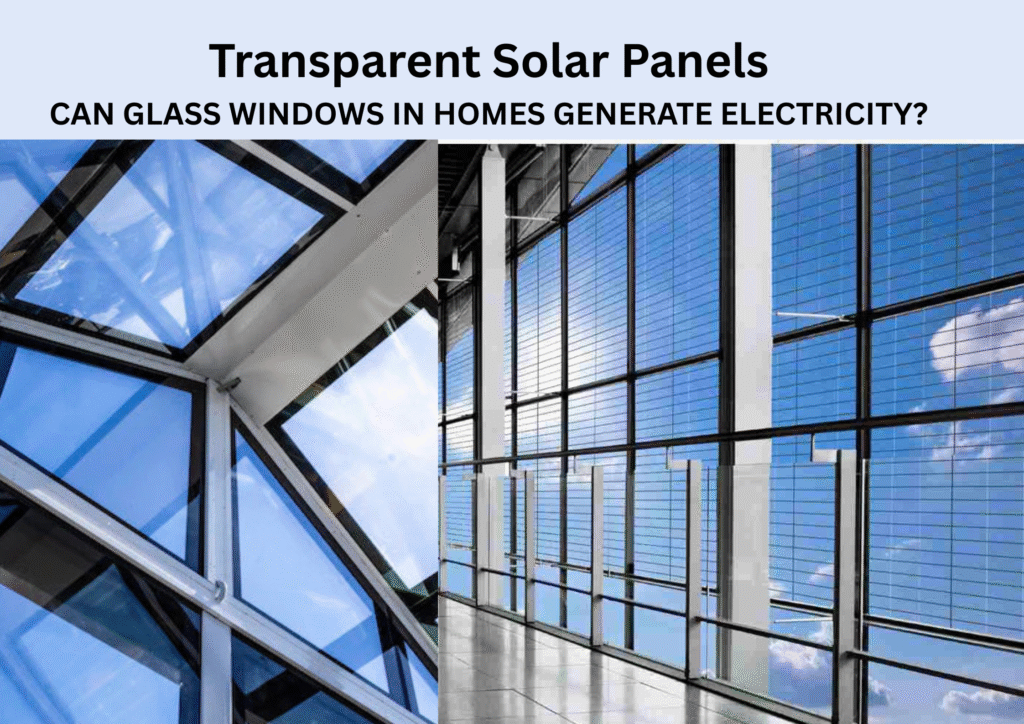
Transparent solar panels are a modern innovation in solar technology. These panels look like glass and can generate power while allowing visible light to pass through them. Transparent panels offer new possibilities for energy production in urban areas, commercial spaces, and modern architecture. These solar panels can be used in windows, glass facades, and other surfaces where visibility and light are important. Let’s explore how glass windows in homes generate electricity.
What Are Transparent Solar Panels?
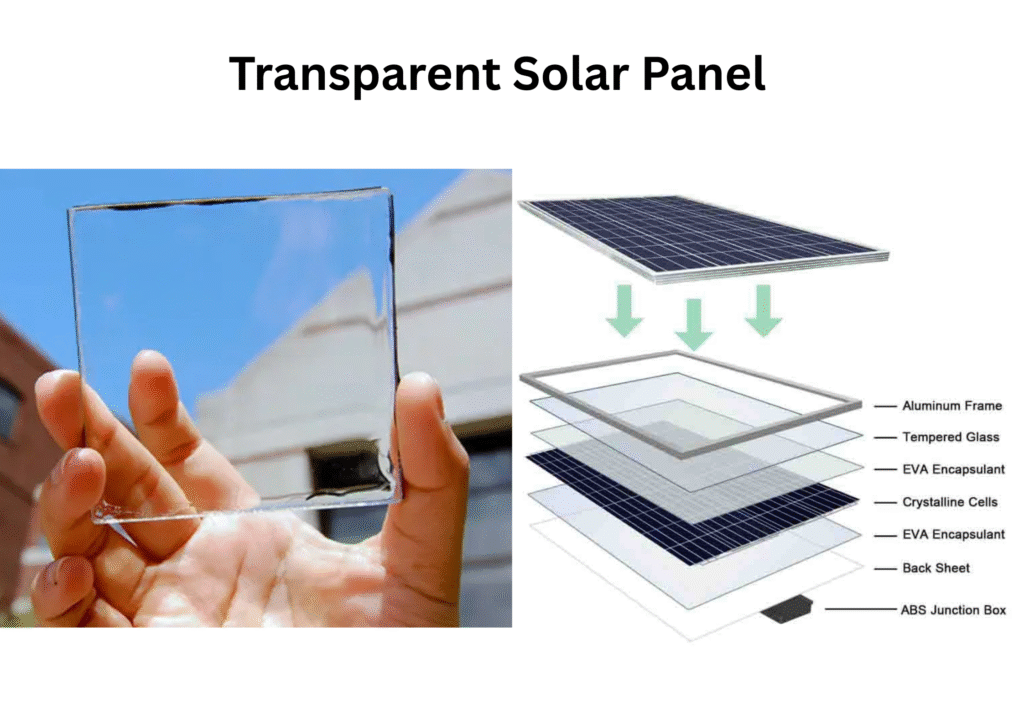
Transparent solar panels are the advanced version of photovoltaic technology. It uses organic photovoltaic cells or thin-film technologies to absorb part of the light spectrum that is invisible to the human eye, such as ultraviolet (UV) and infrared (IR) light, and convert it into electricity. It allows the visible light to pass through and gives the material a clear or slightly tinted appearance.
The traditional solar panels are dark and opaque, whereas the transparent solar panels look like regular windows or glass surfaces. There are mainly two types of transparent solar panels.
1. Partially Transparent Solar Panel: It uses spaced-out traditional cells or semi-transparent materials to allow some visible light to pass through.
2. Fully Transparent Solar Panel: It utilizes advanced materials that can absorb only non-visible wavelengths and provides a fully transparent appearance.
The applications of transparent solar panels are seen in commercial and residential windows, automotive glass in electric vehicles, greenhouses, bus shelters, glass railings, skylights, smartphone screens, etc.
How Do Transparent Solar Panels Work?
The sunlight is composed of various types of light, including daylight, which is visible to the human eye, ultraviolet (UV) rays, and infrared (IR) rays, which are invisible to the human eye. The traditional solar panels capture the sunlight of all wavelengths and convert it into electricity. Whereas, the transparent solar panels are designed to absorb only UV and IR rays and allow the visible light to pass through.
The advanced technologies used to design transparent solar panels are
1. Organic Photovoltaics (OPVs): The OPVs are flexible and lightweight materials that use carbon-based components to absorb non-visible light.
2. Transparent Luminescent Solar Concentrators (TLSC): It uses special materials to absorb UV and IR light and then re-emit it as a different wavelength.
3. Perovskite Thin Films: These are new, highly efficient materials that can be made partially transparent.
4. Quantum Dots: These are tiny particles that can absorb specific wavelengths of light, such as IR or UV light.
The working principle of a transparent solar panel is discussed below.
1. When the sunlight hits the panel, it receives full-spectrum sunlight, which includes both visible and invisible light, such as UV and IR wavelengths.
2. The transparent solar panels are designed in such a way that they absorb only UV and IR rays and let the visible light pass through the panel.
3. The photovoltaic cells convert the absorbed invisible light into direct current (DC) electricity. The photovoltaic cells are present either inside the transparent material or at the edges of the glass.
4. The DC electricity is sent to the inverter, which converts DC to alternating current (AC). The AC is then used to power various domestic and industrial appliances, buildings, or sent to the grid.
Reference: Transparent Solar Panels: The Future of Renewable Energy?
Where Can Transparent Solar Panels Be Installed in Your Home?
Transparent solar panels can be installed in
1. Windows of living rooms, sunrooms, and glass corridors
2. Skylights in the kitchens, hallways, bathrooms, and attics
3. Glass railings in balconies and terraces
4. Greenhouses
5. Home entrance, porch roofs, and outdoor canopies
6. Sunrooms that are designed to receive a high amount of sunlight
7. Garage doors and windows
Advantages of Transparent Solar Panels
1. Dual Functionality:
Transparent solar panels are advanced systems that can perform dual functions, i.e., they can generate electricity and transmit natural light to make the interior brighter. The building windows, skylights, and glass walls are usually made from transparent solar panels.
2. Does Not Need Any Extra Space:
The installation of transparent solar panels does not need any extra space. They can be installed on vertical spaces like glass facades and curtain walls. So, these are an ideal choice for buildings in urban areas with less space.
3. Modern Look:
The transparent solar panels enhance both the energy performance and appearance of the building. They offer a clean and modern look to the building.
4. Improves Energy Efficiency:
The transparent solar panels absorb the UV and IR light and reduce heat buildup. This improves energy efficiency by reducing air conditioning load and lowering the building energy consumption.
5. Sustainable Urban Development:
The buildings with transparent solar panels can produce as much energy as the building consumes. It reduces carbon emissions and is a great step toward a sustainable future.
6. Multi-purpose Use:
Rather than being used in buildings, the transparent solar panels can also be used in electric vehicle sunroofs, greenhouses, smartphone screens, etc.
7. Environmentally Friendly:
The materials used in designing transparent solar panels are non-toxic and recyclable, which makes them safe and environmentally friendly.
Limitations
1. In comparison to traditional solar panels, the transparent solar panels have lower energy conversion efficiency. The traditional solar panels offer 15% to 22% of energy efficiency, whereas transparent solar panels can convert only 5% to 10%.
2. The advanced technology and materials increase the upfront cost.
3. Transparent solar panels are still not widely available in the retail market.
4. It needs custom design and careful integration with the existing building framework, which is challenging work.
5. The incorrect placement of transparent solar panels leads to poor performance.
Should You Consider Transparent Solar Panels for Your Home?
1. If you want to generate solar energy without losing light, then you should install a transparent solar panel in your home. You can use it in your sunroom, hallways, and glass windows.
2. If your home has many glass windows and doors, then transparent solar panels are a great option to generate electricity.
3. Homeowners who are very specific about clean and modern aesthetics, transparent solar panels offer power without visual clutter.
4. If you are focusing on sustainable home design and want to reduce your long-term electricity bills, you must consider transparent solar panels for your home.
Case Studies
Case Study 1: Michigan State University (U.S.A)
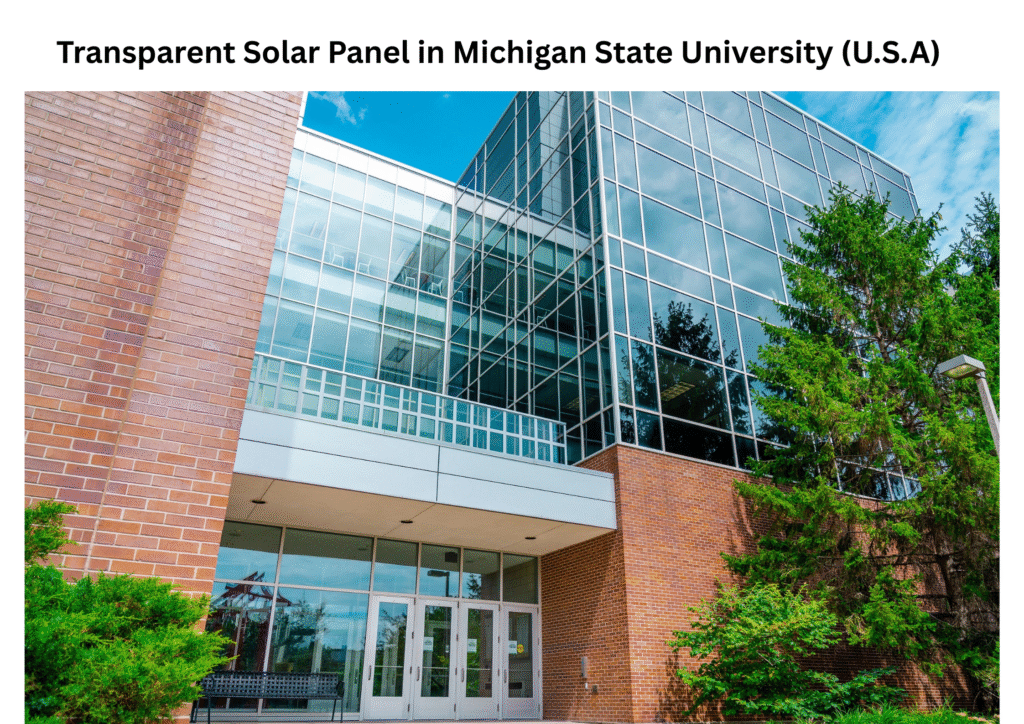
The “Transparent Solar Glass Research & Demonstration” project has used Transparent luminescent solar concentrators (TLSC) technology to install transparent solar panels in building windows. The project aims to generate electricity for building use while maintaining clear window views. It proved that the installation of transparent solar panels could supplement energy use in educational buildings while blending into existing architecture.
Reference: Transparent solar technology represents ‘wave of the future’
Case Study 2: Copenhagen International School (Denmark)
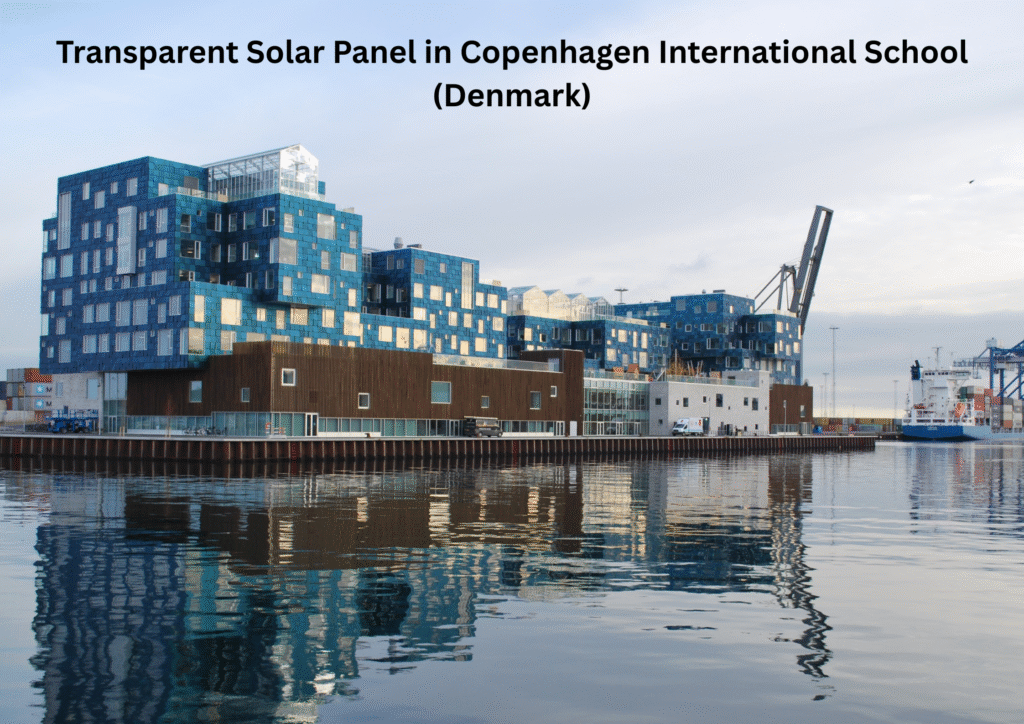
The “Solar Glass Building Façade” project has used 12000 solar panels, including transparent and semi-transparent panels, as part of the outer façade of the school’s building. The solar panels can generate 300MWh of solar energy and also give a clean and modern look to the building.
Reference: Copenhagen International School (Denmark)
Conclusion
The buildings with transparent solar panels could become a standard part of a sustainable future. This advanced solar technology can generate electricity by capturing the invisible light and letting visible light pass through the panel. Without sacrificing the design, this smart technology can turn everyday glass into a power-generating surface. The transparent solar panels are a great option for urban environments where aesthetics, space, and sustainability go hand in hand. It provides a new way to embrace clean energy without compromise.
FAQS
- What Are Transparent Solar Panels?
Transparent solar panels are the advanced version of photovoltaic technology. It uses organic photovoltaic cells or thin-film technologies to absorb part of the light spectrum that is invisible to the human eye, such as ultraviolet (UV) and infrared (IR) light, and convert it into electricity.
2. What are Fully Transparent Solar Panels?
Fully transparent solar panel utilizes advanced materials that can absorb only non-visible wavelengths and provides a fully transparent appearance.
Also Read:
- Smart Meters for Solar: The New Real-Time Energy Monitoring System in Rooftop Solar Systems
- Intelligent Solar Tracker: The Secret to More Solar Energy
- How to Optimize Energy Storage with AI Algorithms in Renewable Energy Systems?
- How to Enhance Solar Panel Efficiency with AI-Based Analytics?
- How Smart Inverters Help Balance Solar Power and Grid Supply? A Complete Guide
- Case Study: How Google Uses AI to Accelerate Grid Connections in the U.S.
- Case Study: How Duke Energy Uses AI for Grid Stability?
- How AI Strengthens Cybersecurity in Smart Grids? A Complete Guide
- How AI Is Used to Design the Perfect Rooftop Solar System? A Complete Guide
- How Is AI Used to Develop Advanced Materials for Renewable Energy Technologies?
- How AI is Revolutionizing Predictive Maintenance in Smart Grids? A Complete Guide
- How AI Is Powering Smart Grids for Efficient Energy Distribution?
- A practical case study: How AI Enhances Microgrid Performance in Rural Areas?
- Hidden Microcracks in Solar Panel? How does AI Detect Early?
- Floating Solar Panel: The New Way to Produce Clean Energy on Lakes and Reservoirs
- AI-Powered Forecasting: A Powerful Technique to Enhance Grid Stability
Pingback: Utilization of AI in Optimal Site Selection of Renewable Energy Projects: A Complete Guide - science2energy
Pingback: The Rise of 600W+ High-Power Panels in Commercial Solar Farms - science2energy
Pingback: Breaking Down Each Component of a 5kW Solar Panel Kit - science2energy