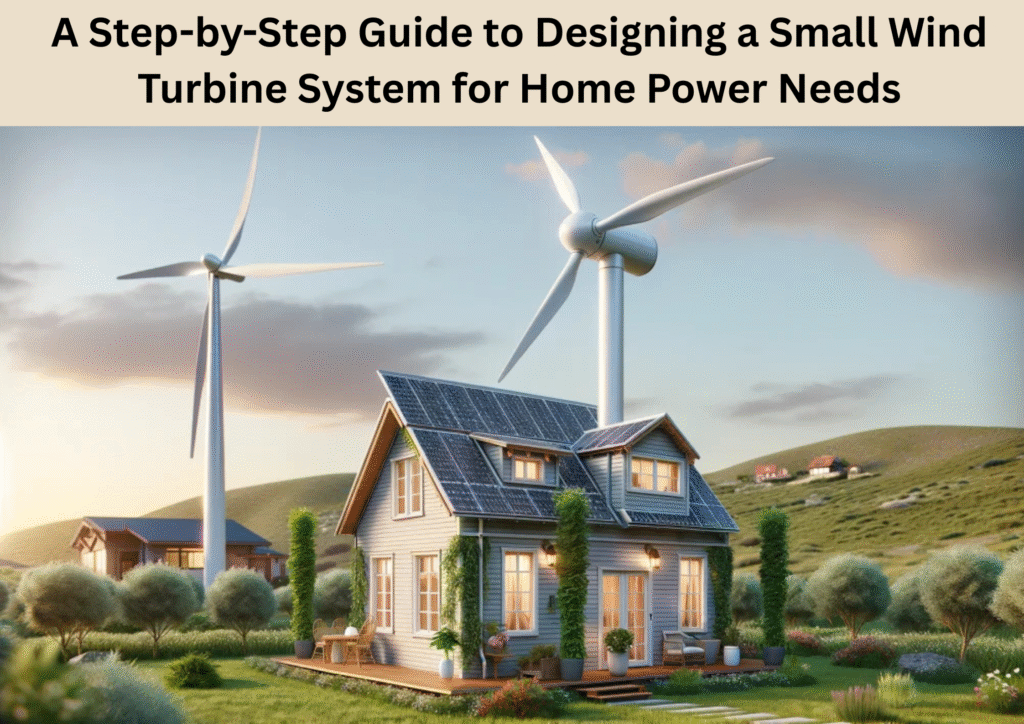
Installing a small wind turbine system for a home involves assessing the wind resource, calculating the home’s energy usage, selecting the ideal site, determining the appropriate turbine capacity, and considering other considerations. You must follow a proper process while installing a wind turbine system. This ensures that your investment in a wind turbine will deliver the expected energy output and long-term savings. This article provides you with a step-by-step guide on designing a small wind turbine system for home power needs. Read the full article to get a clear idea.
Small Wind Turbine System
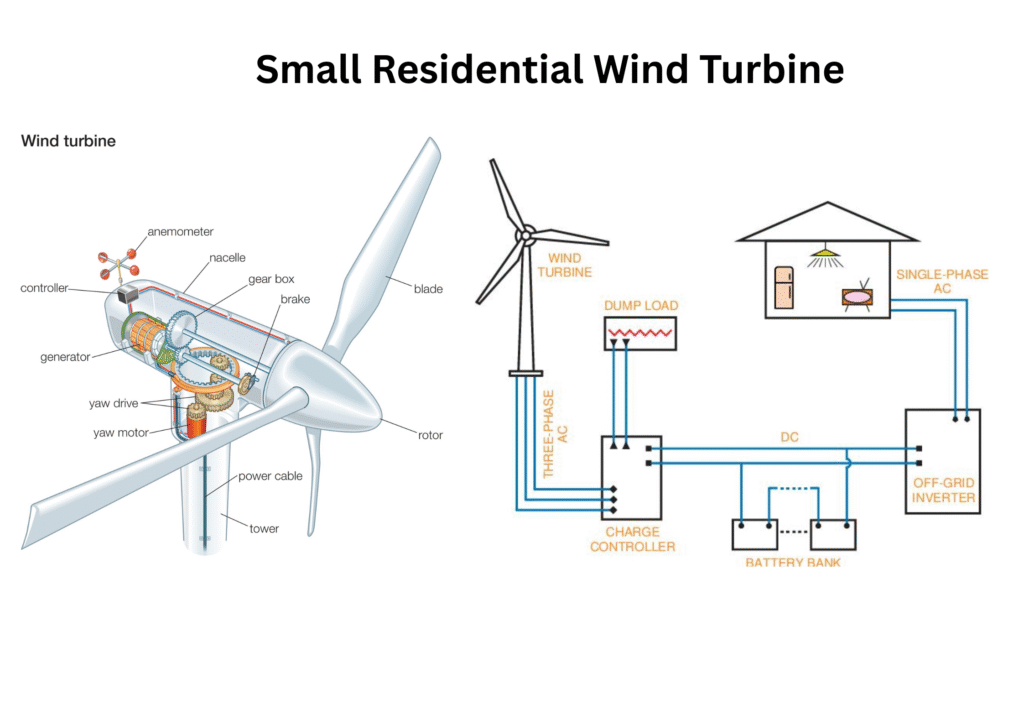
A small wind turbine system operates on a small scale and is designed to produce electricity for homes, small businesses, and remote locations. These wind turbines usually generate power between 100 watts and 100 kilowatts.
When the wind flows over the turbine blades, the blades start rotating. Thus, the kinetic energy of moving air is converted into mechanical energy. This rotation turns the shaft connected to a generator. The mechanical energy is again converted into electrical energy through this electrical generator. The produced electricity can be used directly or fed into the power grid.
The efficiency of the small wind turbine system depends on various factors, including wind speed, tower height, rotor size, and site location. These wind turbines operate efficiently in wind speeds ranging from 5 to 25 miles per hour.
Reference: Small Wind Turbines: A 2025 Guide (vs. Solar Panels)
A Step-by-Step Guide to Designing a Small Wind Turbine System for Home
Step-1: Wind Resource Assessment
How much energy a wind turbine system can generate depends on the average wind speed at that location. The power output increases exponentially with wind speed, and even small changes in wind speed can lead to significant variations in power.
There are 3 methods to estimate the wind potential at your site.
- Local weather station: From the meteorological stations, you can get the historical wind data of the location.
- Online Wind Maps: Some online tools and maps also provide information about the wind data.
- On-site Measurement: For more accurate results, you can install an anemometer at the height where the turbine will be mounted. Collect data for at least 6 to 12 months to know about the seasonal changes in wind speed.
Site Condition: Usually, places like flat, open areas or hilltops get strong and more consistent wind. The tower should be at least 30 feet higher than any object within a 300-foot radius. For maximum exposure, install the wind turbine in the direction of the wind.
Tools and Software: For wind analysis, various tools and software are used, such as HOMER Energy, RETScreen, etc. These tools use your site’s data to estimate the performance and energy output.
Step 2: Calculate Your Home’s Power Requirement
Method 1:
To estimate your home’s power needs, you should check your monthly electricity bills. In the electricity bill, the monthly energy consumption is written in kilowatt-hours (kWh).
To calculate the average monthly usage, add them all from January to December and divide by 12. This value indicates the monthly energy consumption of your home.
Method 2:
Create a list of all the electrical equipment, including kitchen appliances, laundry equipment, lighting, entertainment devices, and small appliances. Then note the power rating of each appliance.
To calculate how much energy each appliance consumes per day, use this formula:
Energy (kWh) = (Power (Watts) x Operating Hours)/ 1000
This indicates the total daily energy consumption. Add all the values to find out the daily energy consumption, and multiply this by 30 to find out the monthly energy usage.
Always add 10 – 20% extra capacity to your calculation for energy usage in peak months.
Step 3: How to Select the Right Turbine Capacity?
- After calculating your home’s annual power requirement, you can use it as a reference for selecting the right turbine size. How much power a wind turbine system can generate depends mostly on the wind speed in that area.
So, based on the annual power requirement and wind speed, you can select the right wind turbine system for your home. For high energy requirements, you need a high-capacity wind turbine system. Also, an area with strong and steady winds can generate more power. You can also follow a general rule, i.e., given in the table.
| Home Size | Wind Turbine Size |
| Small Homes | 1kW to 3 kW |
| Average-sized homes | 5kW to 10 kW |
| Large Homes | 10kW to 20 kW |
- A wind turbine system larger rotor diameter can capture more power. Placing the turbine on a taller tower can enhance the performance of the system.
- For a grid-tied system, you can go for a smaller wind turbine, as you can draw extra power from the grid when needed. Whereas, for an off-grid system, a large wind turbine offers energy independence.
Step 4: Site Selection to Install Small Wind Turbine System
- For wind turbine system installation, select an open area or elevated terrain where the wind can move freely without any obstruction. The position of the turbine should be 30 feet above the nearby obstacles.
- To capture the strongest and most frequent wind pattern, place the turbine in the prevailing wind.
- Select a location that is close enough to the home to reduce wiring loss but far enough to ensure safety and minimal noise disturbance.
- Before installing a wind turbine system, check the zoning rules, height limits, and noise guidelines of that area.
Step 5: How to Design the Tower and Structural Layout of a Wind Turbine System?
- The wind speed increases with height. So, the tower height should be high to capture consistent wind flow and to improve the turbine’s performance. The turbine should be placed 30 feet above any obstacle within a 300-foot radius.
- There are various types of towers available in the market, such as a guyed tower supported by tensioned steel cables, lattice towers made from steel framework, and monopole towers that have a solid and single-piece pole. Select according to your budget and requirements.
- Structural stability of the tower is important to withstand strong gusts and storms. For this, the base foundation and ground support should be strong, and the material strength of the tower should be high.
Step 6: Designing the Electrical System
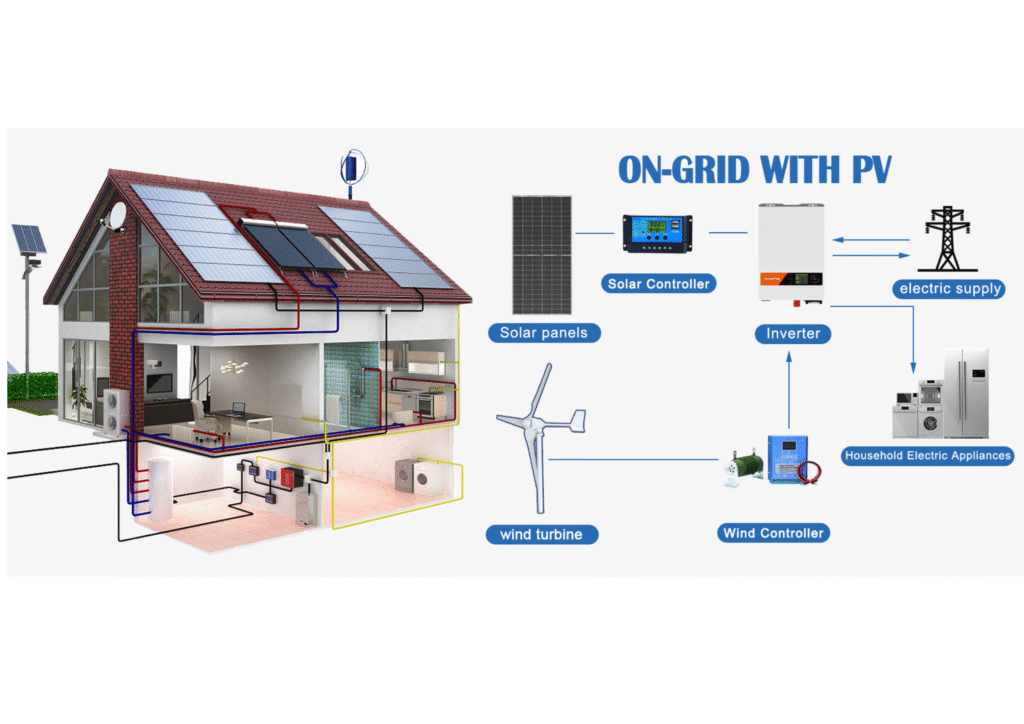
- The generator generates electricity usually in the form of DC (Direct Current). The DC is then converted into alternating current (AC), regulated, and distributed this power in a controlled manner.
- The charge controller manages the power produced by the turbine. It prevents overcharging the battery bank, sudden voltage fluctuation, and damage during high wind speeds.
- The battery storage systems are used to store excess electricity. There are mainly 2 types of batteries available in the market: lead-acid batteries, which are affordable and widely used, and Lithium-ion batteries, which are highly efficient and have a longer lifespan.
- Power inverters convert DC power stored in the batteries into AC power that your home appliances can use. Pure sine wave inverters are recommended because they provide stable and clean electricity for electronic devices.
- For safety and reliability, the electrical system has various safety components such as fuses, circuit breakers, a grounding system, surge protection, etc.
- In a grid-tied system, the inverter synchronizes with the grid and sends the excess electricity back to the grid. An off-grid system requires batteries and backup sources to store excess energy for later use. Whereas a hybrid system integrates wind, solar, and the grid for improved reliability.
Step 7: Integrating Energy Storage and Backup Systems
- Battery is one of the main elements in energy storage systems. There are generally two types of batteries available in the market.
Lead-acid Batteries: These batteries are the best and affordable option for medium and low-budget systems.
Lithium-ion Batteries: These are expensive, but offer better efficiency and longer lifespan.
- The battery management system, or charge controller, ensures the batteries are charged safely.
- There are 3 types of backup options. The backup options are used when the wind and stored energy are not enough to meet your home’s electricity needs.
Grid Power: A grid-connected system can draw electricity from the grid when required.
Diesel or gas generator: These are used in remote off-grid systems where grid connections are not available.
Solar Panels: Pairing wind with solar ensures more consistent energy production throughout the year.
Reference: Building a wind turbine for rural home
Common Mistakes to Avoid When Designing a Home Wind System
- Every location does not have enough wind to generate power. So, before installing a wind turbine system, always measure the average wind speed at that location.
- Don’t select a turbine that is too small or very large. Select it according to your energy usage and local wind conditions.
- Don’t mount the turbine at a lower height. It degrades the system’s performance.
- A location with obstacles such as trees, buildings, hills, etc., can block or disturb wind flow.
- Inadequate foundation is another mistake to avoid while installing a wind turbine system. A properly reinforced concrete foundation is necessary to withstand mechanical stress.
- Poor electrical system planning can lead to energy loss. A proper electrical plan is required to match the turbine output and household needs.
- A wind turbine system without any storage or backup system may lead to power interruptions.
Conclusion
Proper planning is essential to install a small wind turbine system for home power needs. Selecting a proper site is important to enhance the overall lifespan and reliability of the turbine. A planned electrical system is necessary to ensure the generated power is stable, usable, and safe. A stable tower and structural layout not only offers improved performance but also offers safety and longevity of the entire system. Thus, a well-designed system brings stability, efficiency, and long-term energy independence.
FAQS
- How much can a small wind turbine generate?
A small wind turbine can usually generate power between 100 watts and 100 kilowatts.
Also Read:
- Can a Small Wind Turbine System Power Your Entire House? A Practical Guide
- The Evolution of Wind Power: How Wind Power Is Shaping the Future of Renewable Energy Grids?
- How Wind Direction and Speed Affect Wind Turbine Performance? A Complete Guide
- A Complete Guide to How a Wind Turbine Turns Air into Electricity: From Blades to Grid
- Importance of AI-Driven Predictive Maintenance in Wind Energy Systems
- Are DIY Solar Panel Kits Worth It? A Complete Guide
- Portable Solar Panel Kits: Best Uses for RVs and Camping
- Breaking Down Each Component of a 5kW Solar Panel Kit
- What Size Solar Panel Kit Do You Need? Find the Right Solar Kit for Your Home
- Perovskite Solar Panels: The Future of Home Solar
- High-Wattage 450W Solar Panels: Are They Worth It for Your Home Roof Space?
- The Rise of 600W+ High-Power Panels in Commercial Solar Farms
- HJT Solar Panels: A Right Solar Investment for Large Businesses
- N-Type TOPCon Solar Panel: A Complete Guide
- TOPCon Vs HJT Vs Tandem Solar Panels: Make The Best Purchase for Your Project
- Case Study: How Bifacial Solar Panels Improved Output in the Nevada Desert?
- Performance of Tandem Solar Cells in Real Pilot Solar Farms: A Case Study
- Flexible Solar Panels: The Ideal Solution for Small and Irregular Spaces
- Crystalline Vs Thin-Film Solar Panels: Which One Is The Best for Your Modern Smart Homes?