
Solid-state batteries are the next big step in the world of modern energy storage. With high energy density, higher safety, and longer lifespan, solid-state batteries are a game-changing solution. As renewable energy continues to grow, it is a major step in making clean power available 24/7. Again, nighttime energy storage is crucial for balancing energy supply and demand, reducing costs, and encouraging a renewable-powered world. Solid-state batteries store energy by moving ions into a dense, solid structure and deliver it via an efficient discharge process. So, these batteries are considered a promising alternative to conventional lithium-ion batteries. This article presents a technical insight into solid-state batteries. Read the full article to know “Can solid-state batteries keep the lights on at night?”
What Are Solid State Batteries?
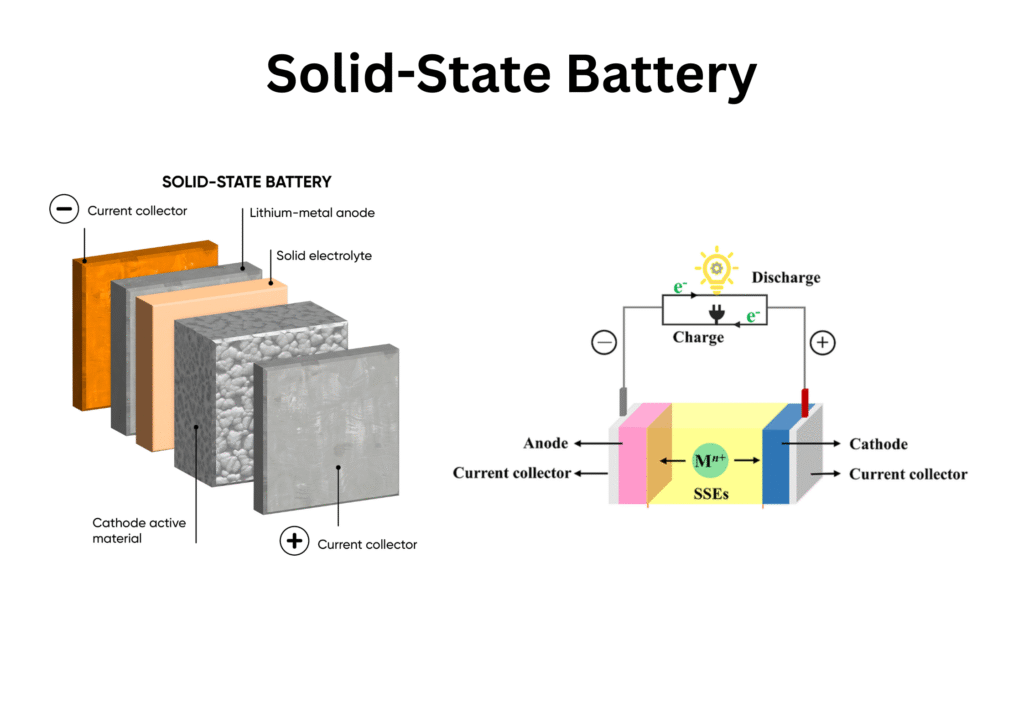
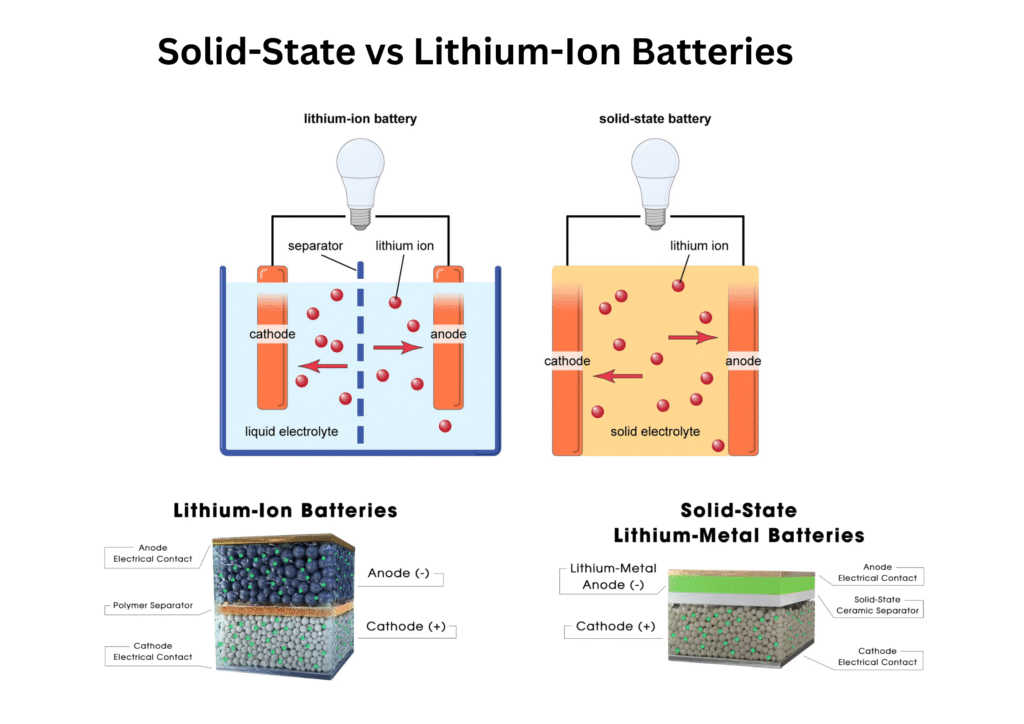
A battery consists of three important parts: the negative side, known as the anode, the positive side, known as the cathode, and the medium that carries ions between the anode and cathode, known as the electrolyte. The normal lithium-ion batteries consist of a liquid or gel-type electrolyte, whereas in solid-state batteries, the liquid electrolyte is replaced with a solid material.
So, a solid-state battery consists of a solid electrolyte that conducts ions between the anode and the cathode. To store more energy, it uses lithium metal as an anode. Solid-state batteries are safer than traditional lithium-ion batteries, as they don’t contain flammable liquids that can generate fire.
Importance of Night-Time Energy Storage
- To reduce dependency on fossil fuels at night, one needs to store the excess solar energy collected during the day. The stored energy is used to provide a steady power at night.
- The nighttime energy storage ensures smooth energy flow and prevents blackouts. IT helps maintain a stable voltage level to avoid power fluctuations at night.
- Energy prices usually rise in the evening due to high electricity demand. By using stored power at night, users can reduce their electricity bills.
- By storing more renewable energy during the day, the users don’t have to be dependent on coal, oil, or gas plants at night. This helps in reducing carbon emissions and supports the growth of sustainable energy.
Can Solid-State Batteries Keep the Lights on at Night?
Yes, solid-state batteries can keep the lights on at night, but not yet at scale.
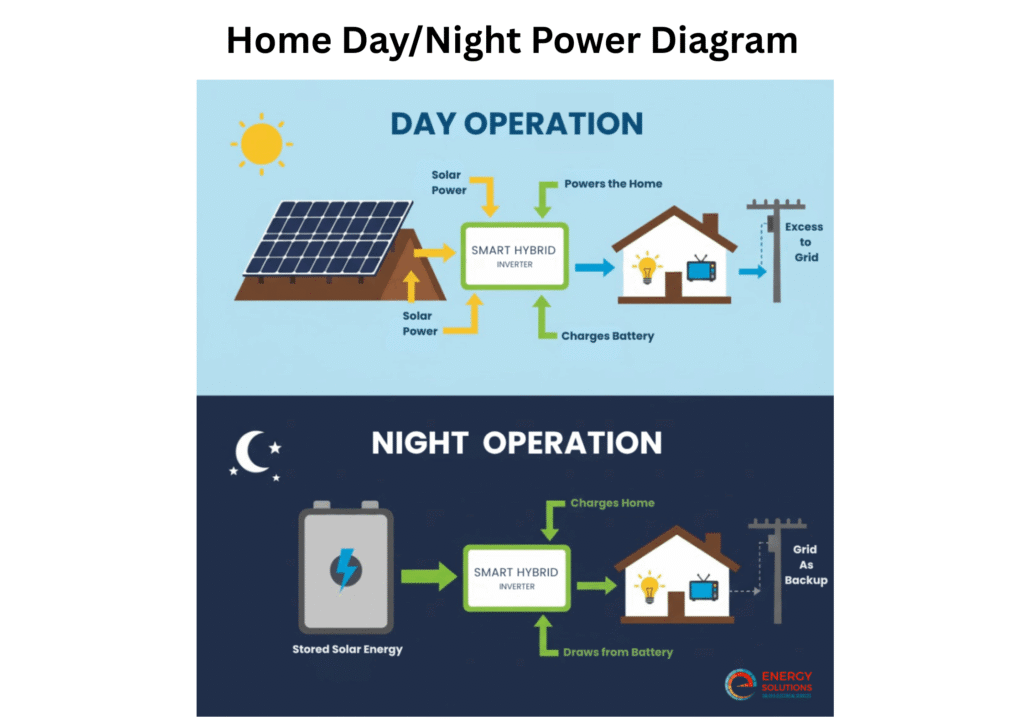
With high energy density, the solid-state batteries can store more power in a limited space. It stores the excess energy generated from the solar panels during the day and releases it at night to keep the home and business powered. As compared to traditional batteries, the solid-state batteries offer longer backup times.
But due to some major challenges, solid-state batteries are not yet widely used for nighttime storage. The mass production is still not possible because of the expensive manufacturing process. Research and development are in progress to make the production of large numbers for grid-level storage easy and affordable.
How Solid-State Batteries Store and Deliver Power at Night?
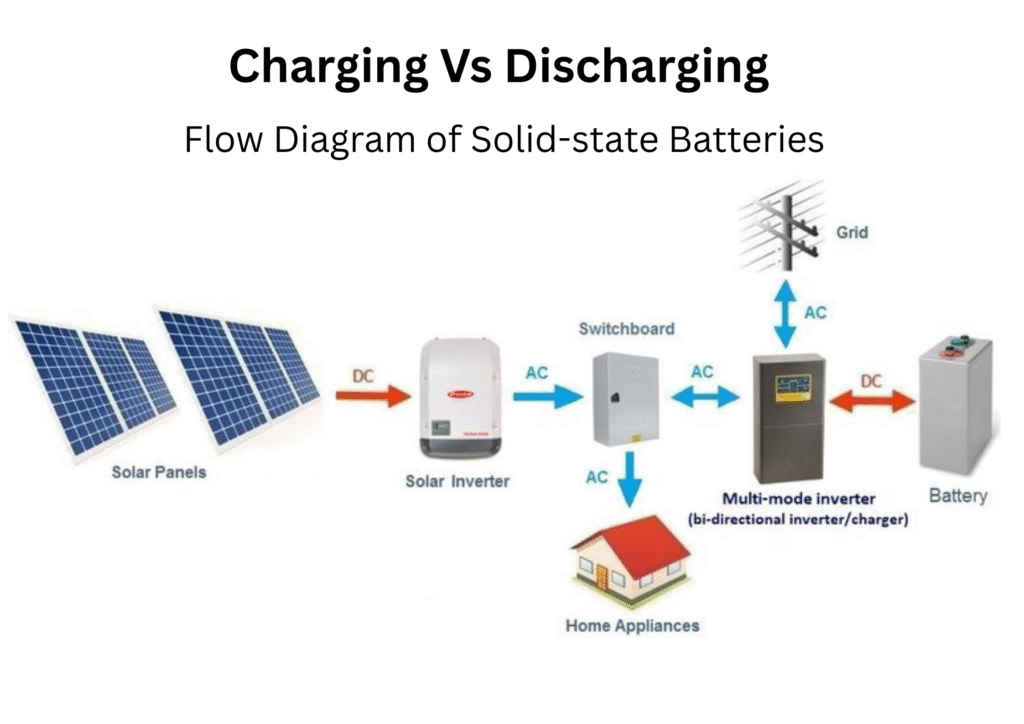
In solar panels, when electricity is generated during the day, the excess power needs to be stored in energy storage systems to ensure steady energy access throughout the day and at night. The electricity flows into the solid-state batteries to be stored.
How do Solid-State Batteries Store Energy?
The electricity generated from renewable energy sources charges the battery by moving lithium ions from the cathode to the anode. The ions move from the cathode to the anode through the solid electrolyte while blocking electrons, preventing short circuits. The solid-state batteries use a lithium metal anode that stores more energy than the graphite anodes used in traditional batteries. The high energy density allows more power to be stored inside a small battery.
How Solid-State Batteries Deliver Power?
The above process is reversed to deliver power when electricity is needed. While discharging, the lithium ions move from the anode back to the cathode through the solid electrolyte. When the ions move, electrons are released into the external circuit and generate usable electric current.
Thus, solid-state batteries help maintain a steady supply of electricity by holding excess power from the day and releasing it later when electricity is needed.
A Technical Insight into Solid-State Batteries
A solid-state battery has three main components.
- Anode: The negative electrode of the battery is called the anode. It is often made from lithium metal.
- Cathode: The positive electrode of the battery is known as the cathode. It is made from materials such as lithium cobalt oxide, lithium iron phosphate, or nickel-rich compounds
- Electrolyte: A solid-state battery has a solid electrolyte that carries ions between the anode and cathode. It usually uses ceramic, glass, or sulfide-based solid electrolytes.
The energy density of solid-state batteries is usually 2-3 times higher than that of traditional lithium-ion batteries. The total amount of energy a battery can store is measured in Ampere-hour or Watt-hour.
If a home has solar panels and a solid-state battery system, the solar panels generate electricity during the day. The excess power charges the solid-state battery. In a charged battery, the ions are stored in the anode. At night, when the panels stop generating electricity, the battery releases its stored energy through the discharging cycle to power the lights, appliances, and also the electric vehicles. Thus, a setup with renewable resources and a solid-state battery provides renewable energy around the clock.
Reference: Technological Advances and Market Developments of Solid-State Batteries: A Review
Conclusion
Solid-state batteries are the future of energy storage systems. It is a powerful technology that combines high capacity, innovative composition, and reliable charge-discharge performance. Some major companies and research institutions like Toyota and Samsung are investing heavily in solid-state battery research to make it commercially available worldwide. But there are some major challenges, like cost, capacity, and scalability. Once these challenges are addressed, solid-state batteries are expected to reshape the energy landscape. It may take some years before solid-state batteries are affordable and available for everyday nighttime storage. But yes, they hold the promise of keeping the lights on at night with clean, reliable power.
FAQS
- What are solid-state batteries?
A battery consists of three important parts, i.e., the negative side, known as the anode, the positive side, known as the cathode, and the medium that carries ions between the anode and cathode, which is known as the electrolyte. In solid-state batteries, the liquid electrolyte is replaced with a solid material. The solid electrolyte moves ions between the anode and the cathode.
- Can Solid-State Batteries Keep the Lights on at Night?
Yes, solid-state batteries can keep the lights on at night, but not yet at scale.
- How do Solid-State Batteries Store Energy?
The electricity generated from renewable energy sources charges the battery by moving lithium ions from the cathode to the anode. The ions move from the cathode to the anode through the solid electrolyte while blocking electrons, preventing short circuits. The solid-state batteries use a lithium metal anode that stores more energy than the graphite anodes used in traditional batteries.
Also Read:
- Microinverters vs String Inverters: Which One Is the Best Solar Inverter for Your Rooftop Solar System?
- Are DIY Solar Panel Kits Worth It? A Complete Guide
- Portable Solar Panel Kits: Best Uses for RVs and Camping
- Breaking Down Each Component of a 5kW Solar Panel Kit
- What Size Solar Panel Kit Do You Need? Find the Right Solar Kit for Your Home
- Perovskite Solar Panels: The Future of Home Solar
- High-Wattage 450W Solar Panels: Are They Worth It for Your Home Roof Space?
- The Rise of 600W+ High-Power Panels in Commercial Solar Farms
- HJT Solar Panels: A Right Solar Investment for Large Businesses
- N-Type TOPCon Solar Panel: A Complete Guide
- TOPCon Vs HJT Vs Tandem Solar Panels: Make The Best Purchase for Your Project
- Case Study: How Bifacial Solar Panels Improved Output in the Nevada Desert?
- Performance of Tandem Solar Cells in Real Pilot Solar Farms: A Case Study
- Flexible Solar Panels: The Ideal Solution for Small and Irregular Spaces
- Crystalline Vs Thin-Film Solar Panels: Which One Is The Best for Your Modern Smart Homes?
- Tandem Solar Panels: The Future of Rooftop Solar
- Self-Cleaning Solar Panels: No More Manual Cleaning from Now On
- Dual Glass Solar Panel: A Simple and Long-Lasting Investment for Homeowners
- Anti-Reflective Solar Panels: A Smart Way to Maximize Rooftop Efficiency
Pingback: Thermal Stability of Solid-State Batteries in Harsh Renewable Energy Environments - science2energy