
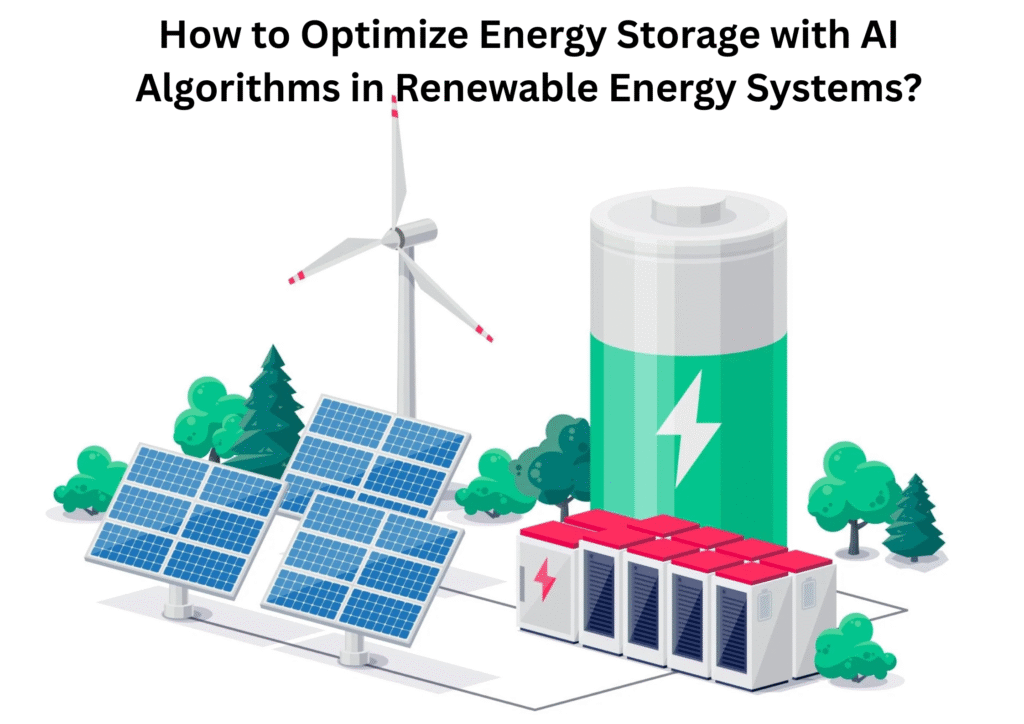
Renewable energy offers cleaner sources of energy and plays a significant role in the net-zero carbon emission journey. As energy demand increases daily, there is a growing need for energy storage systems to capture and store energy. These systems act as a bridge between fluctuating renewable energy production and constant energy demand.
The artificial Intelligence (AI) technology is evolving as a dominant tool and providing solutions to optimize energy storage in renewable energy systems. So, how to optimize energy storage with AI algorithms? This article will describe the ways AI algorithms and tools are used for energy storage optimization. It will also explain some real-life case studies and the advantages of AI technology in the optimization of energy storage in renewable energy systems.
What Is an Energy Storage System?
Electrical energy can not be stored directly. It has to be transformed into other forms, such as mechanical, chemical, thermal energy, etc., and when needed, these forms of energy can be reconverted into electricity. Energy storage means capturing and storing the intermittently produced energy in reserve for later use.
An energy storage system (ESS) is a device or group of devices that is capable of storing energy generated from various sources for future use. These systems enhance the stability, reliability, and flexibility of electrical grids.
Energy storage systems are used to capture energy during low-demand and maximum energy production periods and store it for future use when the energy demand increases and production degrades.
Types of energy storage systems include:
- Batteries (Electrochemical)
- Pumped hydro storage
- Flywheels
- Thermal and phase transition energy storage
- Hydrogen storage
- Mechanical energy storage
Role of Energy Storage in Renewable Energy Systems
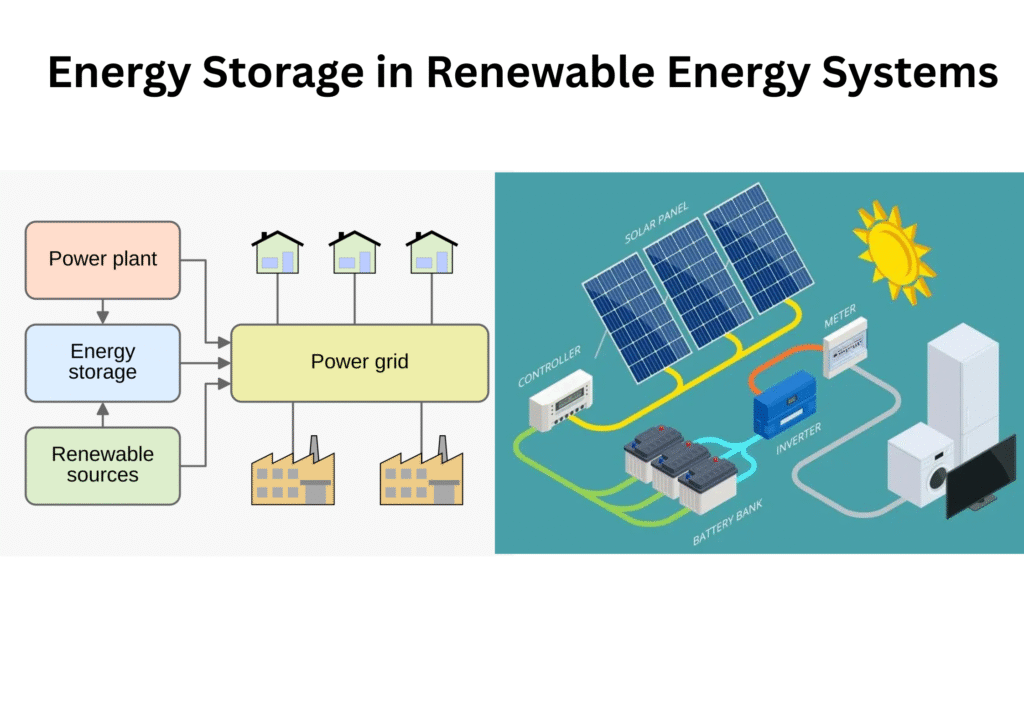
An energy storage system plays a significant role in modern electricity systems, and especially in renewable energy sectors. It lowers the power fluctuations, enhances reliability, and improves the flexibility of the system. It is used to store energy generated from various renewable energy sources and to dispatch the electricity when it is needed the most.
The energy storage system helps in handling the hourly and seasonal variation in renewable electricity output. Sometimes, the electricity generated by the renewable energy sources is much higher than the demand at that time. In such a situation, the energy storage systems play an important role and save the renewable resources from going to waste.
Energy storage systems allow these renewable energy resources to continue to produce electricity by capturing and storing it for future use.
How to Optimize Energy Storage with AI Algorithms in Renewable Energy Systems?
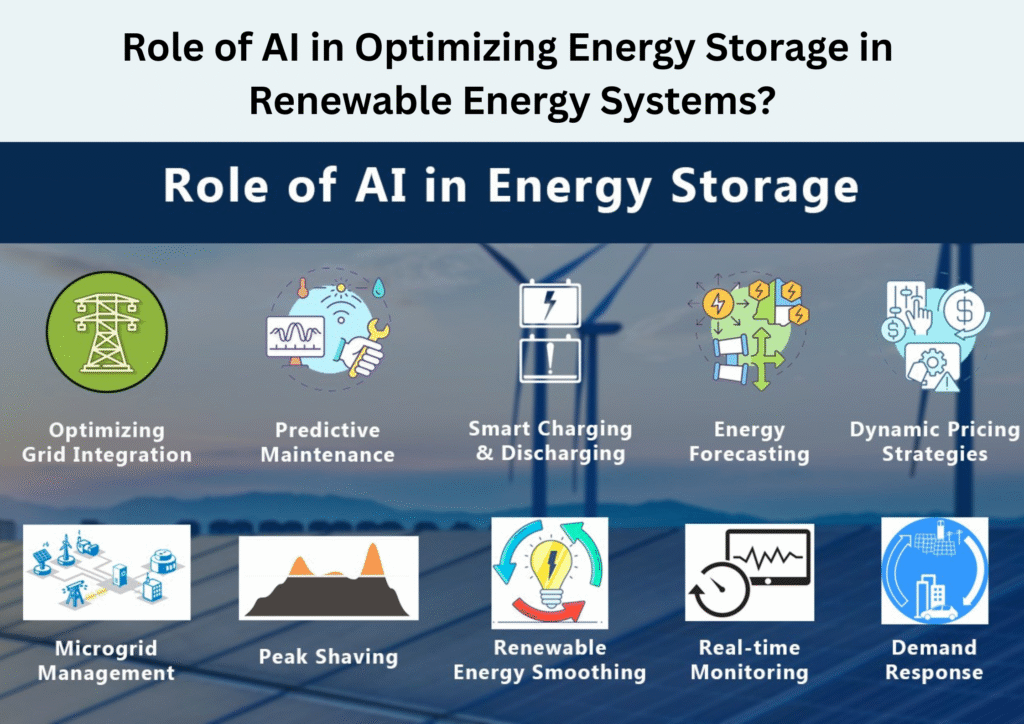
AI algorithms are evolving as a powerful tool in optimizing, monitoring, and handling energy storage systems integrated with renewable energy systems. It enhances the predictive capability, increases energy production, lowers the operational cost, and improves the grid stability of the system.
AI algorithms can analyze a large amount of data, such as temperature, weather conditions, performance of the grid, etc. After analyzing the real-time data and comparing it with historical data, the AI algorithms can identify the abnormalities present in the system. The historical data are accumulated from meteorological agencies and satellite databases, which provide information about seasonal variations and trends.
The appropriate AI algorithms are then selected for dynamic decision-making by utilizing the real-time data. The state space model is then outlined, which includes various parameters such as energy demand, generated energy, and energy storage levels. The other important parameters used in optimizing the energy storage system are
- State of charge: Present energy level
- Depth of discharge
- The rate of charge/discharge
- Battery capacity
- Number of charge/discharge cycles
- Round-trip Efficiency
The AI algorithms are trained based on real-time and historical data to find optimal strategies for energy storage optimization. The simulations are then run for a specific time period to observe the system’s performance under varying weather conditions and energy demands.
The performance of the system is evaluated based on the total energy production, cost analysis, environmental effect, and sensitivity analysis.
The integration of AI algorithms with the energy storage system of the renewable energy system is a great way to improve the reliability, robustness, and performance of the system.
AI Tools Used for Storage Optimization
- Machine Learning Algorithms:
Support Vector Machines (SVM) and Artificial Neural Networks (ANN) are used as machine learning algorithms in energy storage optimization of renewable energy systems. These algorithms play a crucial role in predictive modelling and pattern recognition tasks.
2. Deep Learning Techniques
Convolutional and recurrent neural networks are used to evaluate a complex, high-dimensional data set. These deep learning techniques are implemented for complex tasks such as image recognition, speech recognition, etc.
3. Optimization Algorithms
To find optimal solutions to complicated optimization problems, various optimization techniques are used, such as particle swarm optimization, grey wolf optimization, genetic algorithm, etc.
Case Studies
Capalo AI:
In Finland, it has developed virtual power plants by integrating battery storage systems with power plants. The AI algorithms predict the consumption and production of renewable energy, and enable optimal scheduling of battery charging and discharging.
Reference: Capalo AI
Sigenergy:
In the UK, Sigenergy has developed an AI-based energy management system that integrates solar panels and battery storage. Here, AI algorithms are developed to optimize energy flows by charging batteries during low-price periods and discharging during peak demand.
Reference: Sigenergy
Community Energy Management in Morocco:
In Morocco, an AI-based Home Energy Management System (HEMS) has been developed in a smart building. The AI algorithms are implemented to schedule and control power dispatch among generation, consumption, and storage of renewable energy.
Advantages of Energy Storage Optimization with AI Algorithms
- Smarter charge and discharge decisions improve the overall efficiency of the system
- Real-time analytics reduces energy loss by forecasting the energy demand and energy production on a particular day
- Enhances the life span of the energy storage system
- Offers a smooth and uninterrupted experience
- Lowers operational cost by preventing issues before they get completely damaged
- Regular maintenance ensures optimal performance
- Increases energy production
- Improves grid stability
- AI algorithms can track battery condition and help improve its reliability
- It prevents grid overload and energy shortfall
Conclusion
This research focuses on the transformative potential of AI algorithms to optimize energy storage systems in renewable energy sources. It describes several steps to execute AI algorithms in the energy storage optimization technique. The optimization of energy storage systems using AI models offers exceptional opportunities for efficiency gains. This is one of the best techniques used in creating a sustainable energy future. It offers new prospects for operational cost reduction, energy optimization, and environmental sustainability.
FAQS:
- What is an Energy Storage System (ESS)?
An energy storage system (ESS) is a device or group of devices that is capable of storing energy generated from various sources for future use. These systems enhance the stability, reliability, and flexibility of electrical grids.
2. What is the role of an energy storage system in the renewable energy sector?
An energy storage system (ESS) lowers the power fluctuations, enhances reliability, and improves the flexibility of the system. It is used to store energy generated from various renewable energy sources and to dispatch the electricity when it is needed the most.
Also Read:
- How to Enhance Solar Panel Efficiency with AI-Based Analytics?
- How Smart Inverters Help Balance Solar Power and Grid Supply? A Complete Guide
- Case Study: How Google Uses AI to Accelerate Grid Connections in the U.S.
- Case Study: How Duke Energy Uses AI for Grid Stability?
- How AI Strengthens Cybersecurity in Smart Grids? A Complete Guide
- How AI Is Used to Design the Perfect Rooftop Solar System? A Complete Guide
- How Is AI Used to Develop Advanced Materials for Renewable Energy Technologies?
- How AI is Revolutionizing Predictive Maintenance in Smart Grids? A Complete Guide
- How AI Is Powering Smart Grids for Efficient Energy Distribution?
- A practical case study: How AI Enhances Microgrid Performance in Rural Areas?
- Hidden Microcracks in Solar Panel? How does AI Detect Early?
- Floating Solar Panel: The New Way to Produce Clean Energy on Lakes and Reservoirs
- AI-Powered Forecasting: A Powerful Technique to Enhance Grid Stability
- Importance of an AI-Driven Energy Pricing Model in Pricing Optimization
- Building-Integrated Solar Panels: How They Turn Walls and Windows into Clean Energy Generators?
- AI-Driven Predictive Maintenance in Wind Energy Systems
- How AI Is Used in the Renewable Energy Sector?
- AI and Microgrids: Empowering Remote Communities with Smart Energy
- AI Applications in Renewable Energy Trading and Market Optimization
Pingback: Intelligent Solar Tracker: The Secret to More Solar Energy - science2energy
Pingback: Smart Meters for Solar: The New Real-Time Energy Monitoring System in Rooftop Solar Systems - science2energy
Pingback: Tandem Solar Panels: The Future of Rooftop Solar - science2energy
Pingback: Flexible Solar Panels: The Ideal Solution for Small and Irregular Spaces - science2energy
Pingback: TOPCon Vs HJT Vs Tandem Solar Panels: Making the Right Call for Your Solar Business Project - science2energy