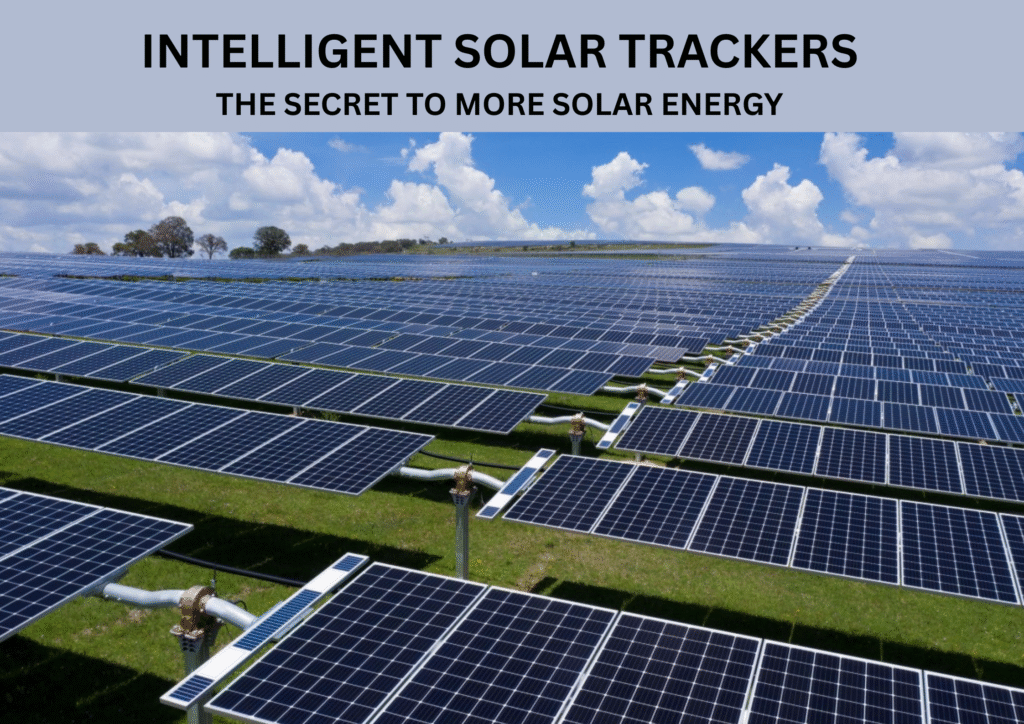
Implementing an intelligent solar tracker in a solar panel system is a smart way to capture maximum sunlight. It helps the solar panel follow the sun’s movement across the sky, adjusts the panel’s angle in real time, and generates maximum power. The regular solar tracker only helps the solar panel to move with the sun, but the intelligent solar tracker uses smart controls and advanced technologies to maximize performance. It makes the solar energy system more dependable and efficient. Let’s take a closer look at the intelligent solar tracker, how it is different from the traditional trackers, its types, advantages, and the advanced technologies used in it.
What is an Intelligent Solar Tracker?
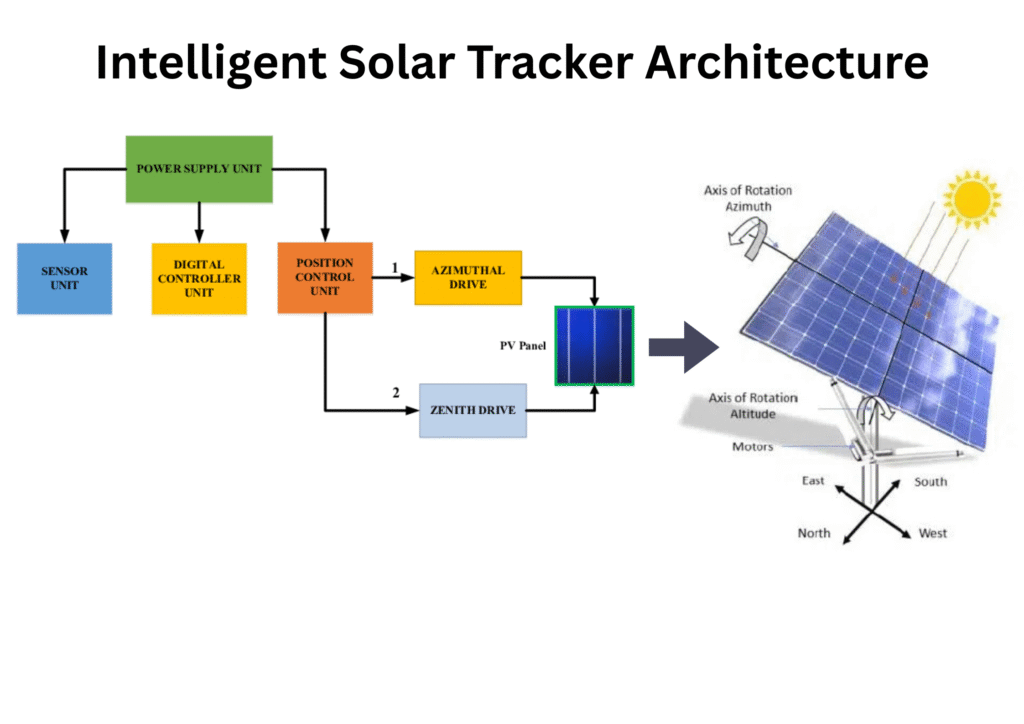
A solar tracker helps a solar panel to follow the sun’s movement as the sun moves from east to west during the day. It helps boost energy production by allowing the solar panel to stay at the best angle for capturing sunlight.
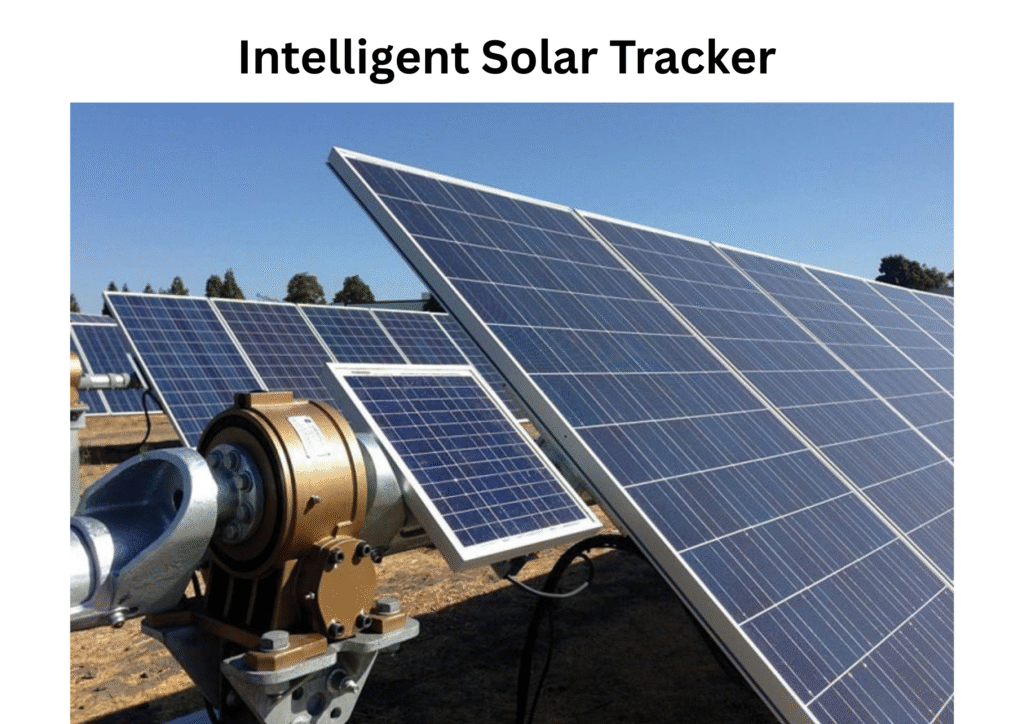
The intelligent solar trackers are the advanced version of regular solar trackers. It is designed with advanced technology, including sensors, control systems, and artificial intelligence (AI), and can make decisions based on real-time data.
The key features of an intelligent solar tracker are:
1. Position sensor: It detects the actual position of the sun and, according to it, changes the panel’s angle to capture maximum sunlight.
2. Energy Optimization Algorithm: This algorithm is designed to utilize advanced algorithms that leverage past and present data to calculate the optimal angle for the panel, thereby maximizing energy production.
3. Weather monitoring: It continuously monitors the weather conditions and automatically adjusts itself based on cloud cover, wind speed, and temperature variation. During strong winds, it tilts the panels flat to avoid damage.
4. Remote monitoring: The owners can track the system’s condition remotely by using a mobile app or through a dashboard.
5. Self-Correction Ability: If anything goes wrong, the intelligent solar tracker can automatically fix it by itself.
Reference: Solar tracking systems: Advancements, challenges, and future directions: A review
Difference Between Traditional and Intelligent Solar Tracker
| Traditional Solar Tracker | Intelligent Solar Tracker |
| 1. It moves solar panels to follow the sun by using a fixed schedule and a preset angle. | 1. It adjusts solar panel position by using advanced technology, including sensors, control systems, AI tools, and weather inputs. |
| 2. It does not use the real-time data. | 2. It uses real-time data to adjust the solar panel’s position. |
| 3. It adjusts the solar panel’s position by following a programmed path that mimics the sun’s general movement. | 3. It uses sensors, GPS, and advanced algorithms to track the actual position of the sun. |
| 4. It cannot adapt to cloudy skies, shadows, or seasonal changes. | 4. It uses real-time data and can adapt to the shadows, cloudy skies, or seasonal changes. |
| 5. It is designed with motors and gears. | 5. It is equipped with microcontrollers, data loggers, IoT-based sensors, and cloud monitoring tools. |
| 6. It does not respond to weather changes like heavy wind or a storm. | 6. It can detect changes in the weather conditions and automatically adjust panels to a safe horizontal position. |
| 7. Implementing a regular solar tracker can boost energy output by 15% to 20%. | 7. Implementing a regular solar tracker can boost energy output by 30% to 45%. |
| 8. It faces more wear and tear due to repeated movement without real-time feedback. | 8. Smart diagnostics and predictive maintenance reduce breakdowns and downtimes. |
| 9. Lower initial Cost. | 9. Higher upfront cost. |
Types of Smart Solar Trackers
1. Single Axis Solar Tracker: This type of solar tracker moves the solar panel in a single axis. It typically moves from east to west and follows the daily path of the sun across the sky. It is designed with smart sensors to track the sun’s position in real-time.
2. Dual-Axis Solar Tracker: It moves panels across both horizontal and vertical axes and offers the highest level of tracking efficiency. It can adjust the panels’ movement according to the sun’s daily and seasonal movements. It is a GPS-based sun tracking system and can adjust tilt and rotation in real-time.
3. Vertical Solar Tracker: This moves the solar panel around a vertical pole. This type of solar tracker is used for off-grid or pole-mounted systems such as street lighting, parking lots, and agricultural solar setups.
4. Backtracking Solar Trackers: These types of trackers use smart technologies to avoid panel-to-panel shading. These solar trackers are used in densely packed solar fields.
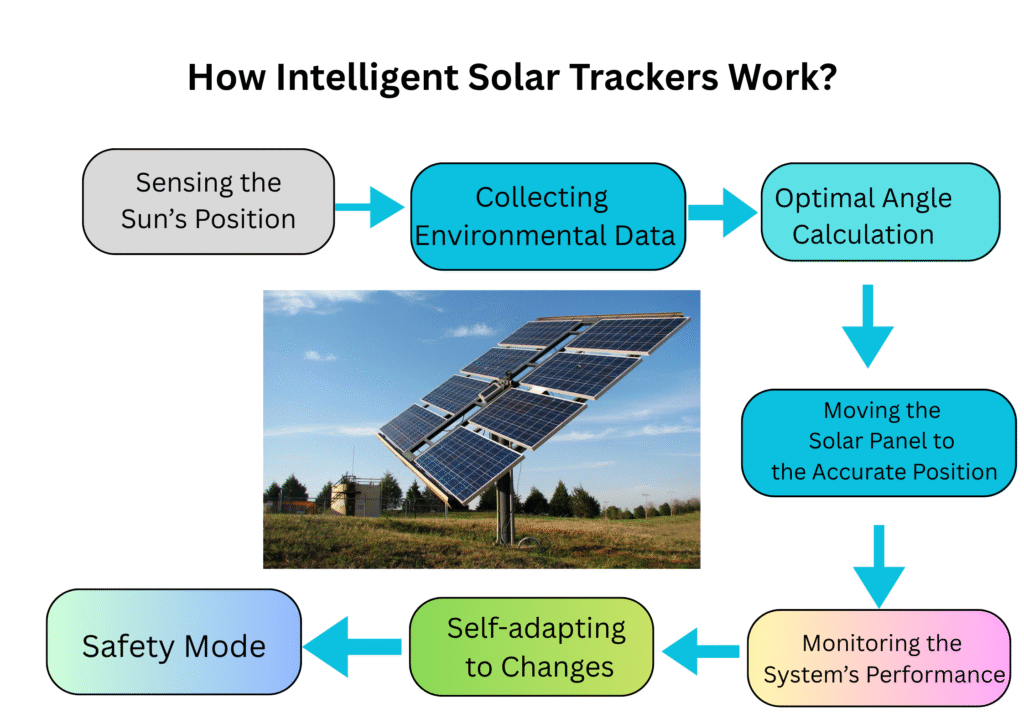
How Intelligent Solar Trackers Work?
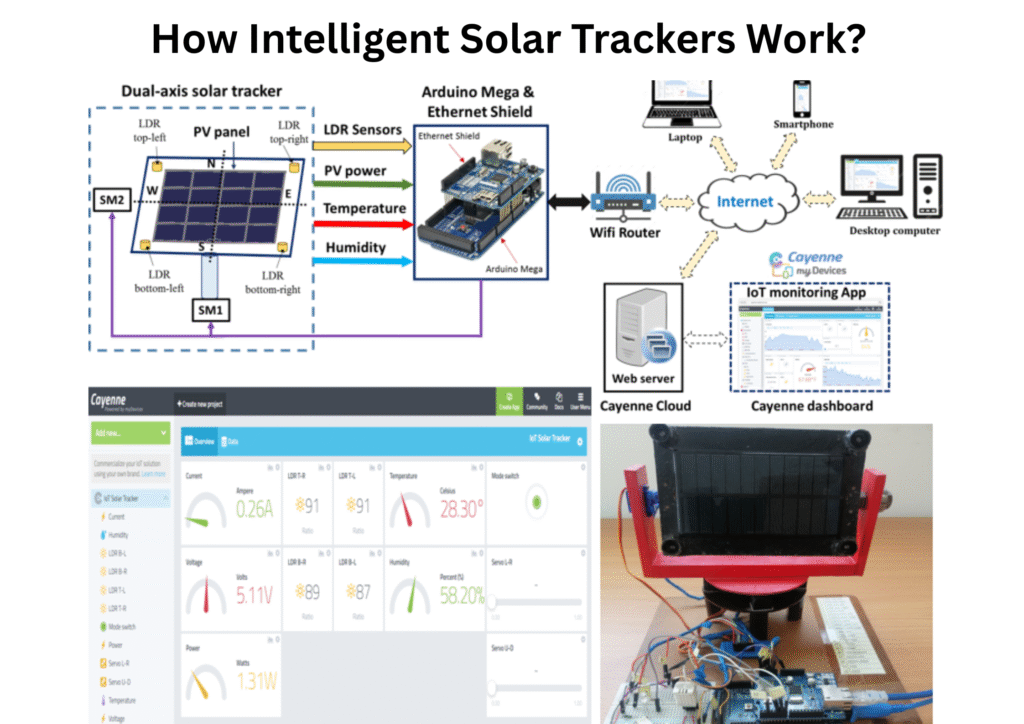
A step-by-step process is described below on how intelligent solar trackers work.
1. Sensing the Sun’s Position
To locate the Sun’s position, the solar trackers are equipped with a sun-tracking sensor and GPS modules. These components collect the real-time data about the current position of the sun, the time of the day, and the geographical location. All this real-time data is used to calculate the ideal tilt and orientation of the solar panel.
2. Collecting Environmental Data
To monitor and collect data about weather and environmental conditions, the solar tracker is equipped with wind sensors, temperature sensors, cloud detectors, and irradiance sensors. All these components are used to measure wind speed, ambient temperature, cloud cover, and rainfall. This analysis helps the solar tracker decide whether it is safe to adjust the panel’s position or if it needs to be adjusted to a protective position to avoid damage.
3. Optimal Angle Calculation
After collecting the real-time data, the optimal angle for sunlight capture is calculated. The decision is based on the real-time solar position, historical data on the sun’s position, weather conditions, and the system-specific performance goal. This optimal angle calculation is done continuously to ensure that the panel is always at the ideal position to capture maximum sunlight.
4. Moving the Solar Panel to the Accurate Position
Once the optimal angle is calculated, the information is sent to the motorized actuators or drive systems, which physically rotate or tilt the panels. Another major component used in this step is servo motors, gear assemblies, and hydraulic or electric actuators. The solar panels move either on a horizontal axis, a vertical axis, or on a dual axis.
5. Monitoring the System’s performance
The intelligent solar tracker keeps monitoring the panel’s performance throughout the day. It checks whether the output from each panel is matching with the expected results or not. For performance monitoring, the solar panel is equipped with solar power meters, performance analytics software, and monitoring dashboards.
6. Self-adapting to Changes
The intelligent solar tracker can self-adjust to improve tracking accuracy with time. For this, it uses machine learning algorithms that make decisions based on past data. It continuously adapts to sudden cloud cover, shifting sun angles, unusual weather, and panel alignment issues.
7. Safety Mode
When the sun sets or in harsh weather conditions, the solar tracker enters the rest or safety mode. It tilts the panels to a flat position to prevent damage, minimize stress on the component, and prepare for the next day.
Technologies Used in Designing an Intelligent Solar Tracker
Some major tools and technologies used in designing an intelligent solar tracker are explained below.
Sensors: Sensors are the heart of a solar tracking system. It provides real-time data about the sun’s position, weather conditions, and environmental data. Various sensors used in designing an intelligent solar tracker are
Sun position sensor: It detects the direction and intensity of sunlight.
GPS sensor: Calculate the sun’s angle by using the tracker’s actual location.
Wind speed sensor: Monitors wind speed.
Temperature sensor: Measures temperature.
Motors and Actuators: These components receive signals from the control unit and adjust the panel’s tilt and orientation accordingly.
Microcontrollers and PLCs: These are parts of a controller unit and work as the brain of the system. They process all the incoming data and send commands to the actuators.
Communication Modules: To monitor and control the system remotely, communication technology is used. The technologies include Wi-Fi, Ethernet, Zigbee, cellular networks, etc.
Software Algorithms: The software makes the regular solar tracker intelligent. The common software used to optimize the system’s performance includes machine learning algorithms, weather-adaptive algorithms, backtracking algorithms, etc.
Cloud-based monitoring system: To analyze the data online, the data is sent to online platforms.
Advantages of Using Intelligent Solar Trackers
1. It increases the solar energy generation, around 20% to 30% in the case of single-axis trackers and 35% to 45% with dual-axis trackers.
2. The real-time tracking and continuous adjustment help the solar system to maximize production in varying weather conditions.
3. It helps align with the sun’s angle more accurately.
4. The smarter panel positioning reduces energy loss.
5. Its smart protection features improve safety and extend lifespan. It protects the system from harsh weather conditions.
6. Its adaptive learning feature helps the system to adapt based on past performance and weather patterns.
7. It offers a faster payback period and better return on investment.
Conclusion
If you are planning to install a solar energy system for long-term results and greater energy output, the intelligent solar tracker is a smarter choice. This smart system uses smart controls and advanced technologies to keep the system’s performance at peak and to provide better insights for users. For both residential and commercial installations, the use of an intelligent solar tracker is a valuable investment for long-term energy savings.
FAQS:
- What is an intelligent solar tracker?
The intelligent solar trackers are the advanced version of regular solar trackers. It adjusts solar panel position by using advanced technology, including sensors, control systems, AI tools, and weather inputs. It can also make decisions based on real-time data.
2. What is a dual-axis solar tracker?
It moves panels across both horizontal and vertical axes and offers the highest level of tracking efficiency. It can adjust the panels’ movement according to the sun’s daily and seasonal movements. It is a GPS-based sun tracking system and can adjust tilt and rotation in real-time.
Also Read:
- How to Optimize Energy Storage with AI Algorithms in Renewable Energy Systems?
- How to Enhance Solar Panel Efficiency with AI-Based Analytics?
- How Smart Inverters Help Balance Solar Power and Grid Supply? A Complete Guide
- Case Study: How Google Uses AI to Accelerate Grid Connections in the U.S.
- Case Study: How Duke Energy Uses AI for Grid Stability?
- How AI Strengthens Cybersecurity in Smart Grids? A Complete Guide
- How AI Is Used to Design the Perfect Rooftop Solar System? A Complete Guide
- How Is AI Used to Develop Advanced Materials for Renewable Energy Technologies?
- How AI is Revolutionizing Predictive Maintenance in Smart Grids? A Complete Guide
- How AI Is Powering Smart Grids for Efficient Energy Distribution?
- A practical case study: How AI Enhances Microgrid Performance in Rural Areas?
- Hidden Microcracks in Solar Panel? How does AI Detect Early?
- Floating Solar Panel: The New Way to Produce Clean Energy on Lakes and Reservoirs
- AI-Powered Forecasting: A Powerful Technique to Enhance Grid Stability
- Importance of an AI-Driven Energy Pricing Model in Pricing Optimization
- Building-Integrated Solar Panels: How They Turn Walls and Windows into Clean Energy Generators?
- AI-Driven Predictive Maintenance in Wind Energy Systems
- How AI Is Used in the Renewable Energy Sector?
- AI and Microgrids: Empowering Remote Communities with Smart Energy
- AI Applications in Renewable Energy Trading and Market Optimization
Pingback: Smart Meters for Solar: The New Real-Time Energy Monitoring System in Rooftop Solar Systems - science2energy
Pingback: Graphene-Coated Solar Panels: The Next Big Thing in Residential Solar Panels - science2energy
Pingback: Performance of Tandem Solar Cells in Real Pilot Solar Farms: A Case Study - science2energy
Pingback: Case Study: How Bifacial Solar Panels Improved Output in the Nevada Desert? - science2energy