
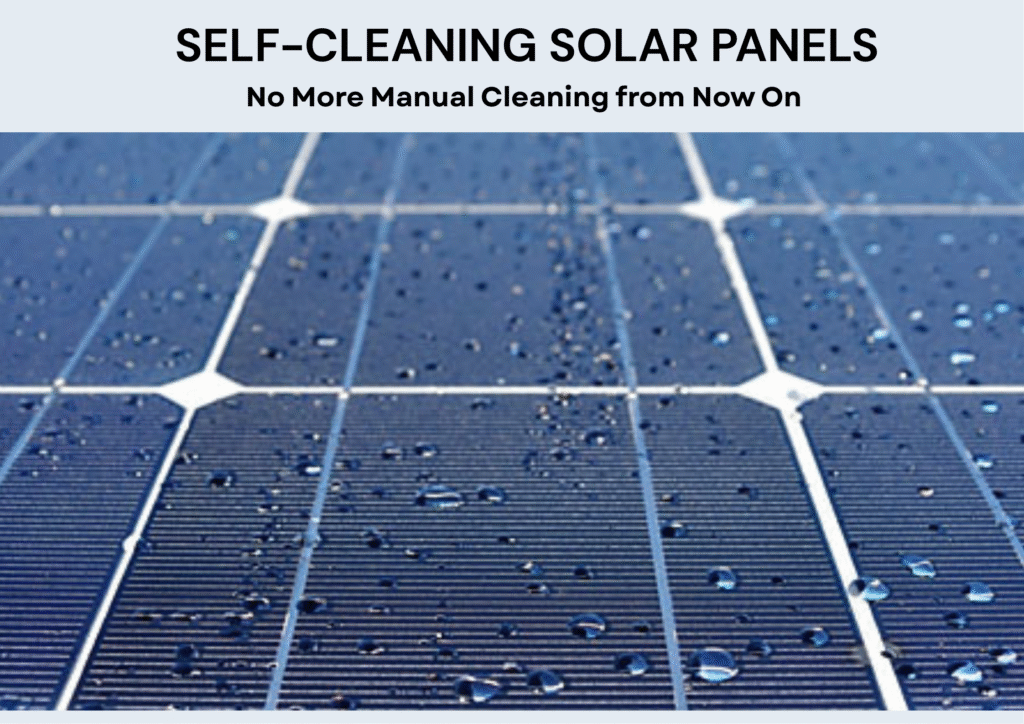
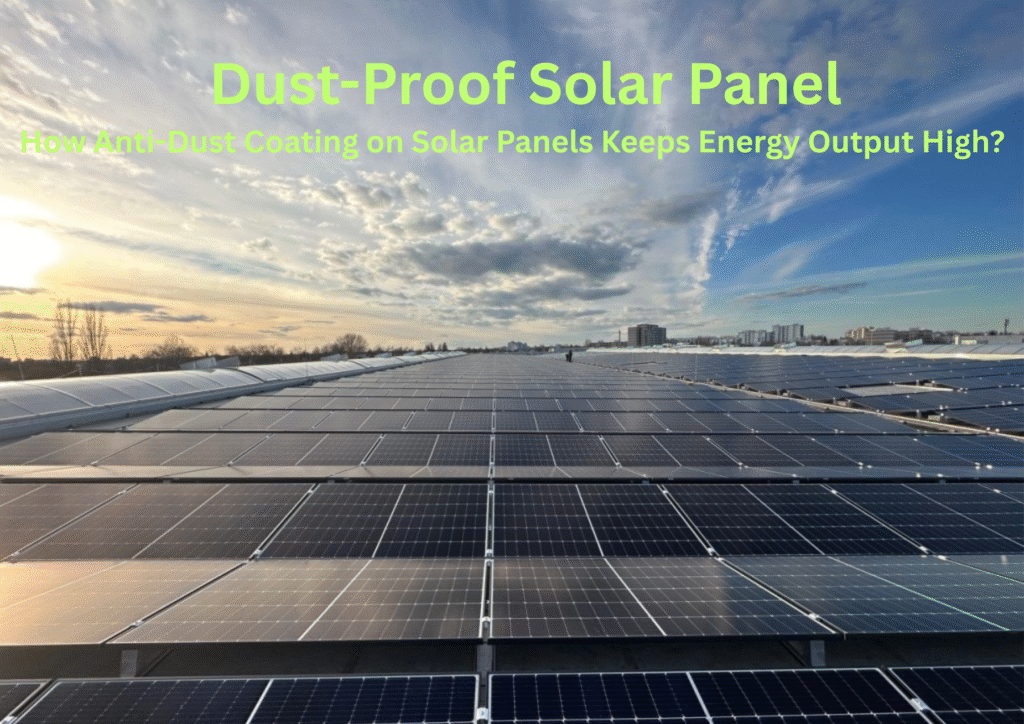
A thin layer of dust and dirt particles on the solar panel’s surface can reduce its efficiency by up to 30%. So, to maintain its efficiency and performance, it is necessary to keep it clean all the time. But regular cleaning is not always practical and safe. It is time-consuming, requires labor, a large amount of water, and may damage the panel. For all these problems, self-cleaning solar panels are a game-changing solution. It automatically keeps the solar panel’s surface clean without any manual effort. In this blog, we are going to discuss everything about self-cleaning solar panels, their advantages, working principles, and why they are important to homeowners.
The Importance of Cleaning Solar Panels
When the sunlight hits the solar panel’s surface, it activates the photovoltaic effect. Sunlight converts into power, and thus, electricity is generated. If any types of dust, debris, leaves, or bird droppings accumulate on the surface, they block the sunlight from reaching the solar cells. This reduces the efficiency of the solar panel and also lowers the energy output.
The Problem of Manual Cleaning of Solar Panels
- Manual cleaning wastes a significant amount of water. So, it is not suitable for areas with water restrictions.
- It involves labor costs, which are expensive and also have safety concerns, including slips, falls, and electrical risks.
- The use of hard brushes, detergents, and high-pressure water can scratch the surface or damage the panel frame and wiring.
- Manual cleaning often leads to uneven results.
- Manual cleaning involves labor cost, water, and expensive which is expensive. It leads to the wastage of both time and money.
What is a Self-Cleaning Solar Panel?
Self-cleaning solar panels are photovoltaic panels designed with advanced technology, such as built-in systems or surface treatments, to automatically remove all the dust, debris, water, or other contaminants from the panel’s surface area. For this, these types of solar panels use smart coatings, nanotechnology, and built-in mechanisms. The self-cleaning technology is a cost-effective and efficient way to keep solar panels clean, helping to maintain consistent power output over time.
The self-cleaning solar panels are ideal for large-scale solar farms, cities, and industrial areas with high air pollution, and remote installation areas such as rooftops, deserts, and satellites. Investing in this advanced technology can lead to higher energy output and a longer system life.
How Does a Self-Cleaning Solar Panel Work?
Various techniques are used to design a self-cleaning solar panel, which are discussed below.
- Hydrophobic and Superhydrophobic Coatings
The hydrophobic and superhydrophobic coatings work based on the concept of repelling water and dust, just like lotus leaves stay clean inside the muddy water. These are nanocoatings applied to the solar panel’s surface.
When water falls on the panel’s surface with nanocoatings, round droplets are formed. These droplets roll across the surface and collect all the dust, debris, and dirt particles on them and finally slide off. This process keeps the solar panel clean.
The hydrophobic coatings also work passively with natural rainfall. These are less costly and have no moving parts.
- Electrostatic Dust Removal
This technique uses electrostatic forces to remove dust from the solar panel’s surface. In this technique, a transparent conductive layer is placed over the surface. When this layer is activated, it creates an electric field and charges the dust particles present on it. The charged dust particles are repelled and pushed off the surface to keep the surface clean. This water-free dust removal technique is ideal for dry regions with less rainfall.
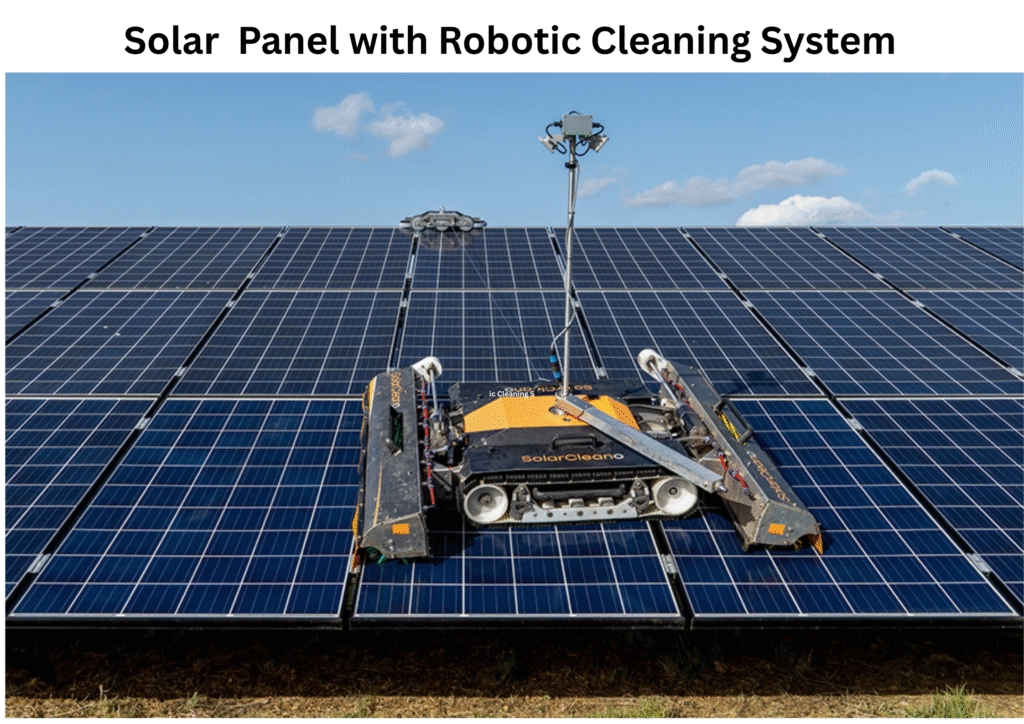
- Robotic Cleaning Systems
In this process, small solar-powered robots or mechanical arms are mounted on or near the panels, which move along the surface. This technique uses a soft brush, controlled water spray, or air blower to clean off the dust from the panel’s surface. Some advanced robots also use sensors to detect the amount of dust present on the surface.
The robotic cleaning systems are fully automated and require no human labor. This technique is ideal for large solar farms.
- Waterless Vibration System
In this technique, micro-vibration motors are attached beneath the panel. When the motors are activated, the vibration mechanism shakes loose particles off the surface and causes them to fall away. No water is required in this process, and it results in minimal wear on the panel’s surface.
- Rainwater Channeling System
Some solar panels are tilted and shaped to guide rainwater across the surface. In this process, rainwater flows evenly over the surface and allows water to carry away dirt efficiently. These systems are easy to install and are ideal for places with regular rainfall.
Advantages of Self-Cleaning Solar Panels
- Consistent Power Production: As the dust accumulates on the panel’s surface, it degrades the panel’s ability to absorb sunlight. A self-cleaning solar panel ensures maximum exposure to sunlight and automatically removes the dust and dirt particles present on it. This enhances the efficiency of the solar panel and offers consistent power production.
- Less Maintenance Required: The self-cleaning solar panels avoid regular cleaning with their automated system. This saves both time and labor costs. So, these types of solar panels are ideal for dusty and dry areas, and especially for elderly people who can’t clean the panels themselves.
- Saves Water: The hydrophobic coatings or electrostatic dust removal process requires little or no water. So, this eco-friendly solution is ideal for regions with drought or water restrictions.
- Longer Lifespan: Self-cleaning systems are softer and reduce physical contact, which reduces scratches and cracks. It reduces wear and tear and improves the lifespan of the solar system.
- Saves Money in the Long Run: With a self-cleaning system, one needs to spend less on labor, equipment, water, and cleaning services. With a one-time investment, it offers a long-term return.
- Ideal for Remote or Large Installations: In remote solar farms, industrial rooftops, or solar arrays in the desert, self-cleaning solar panels are an ideal option.
- Enhance Safety Standards: Cleaning solar panels on rooftops is not safe due to falls, electrical hazards, and hot surfaces. Self-cleaning systems offer safety by eliminating the need for people to climb up and clean panels.
Reference: Recent advances in superhydrophobic polymers for antireflective self-cleaning solar panels
5 Reasons You Should Go for a Self-Cleaning Solar Panel
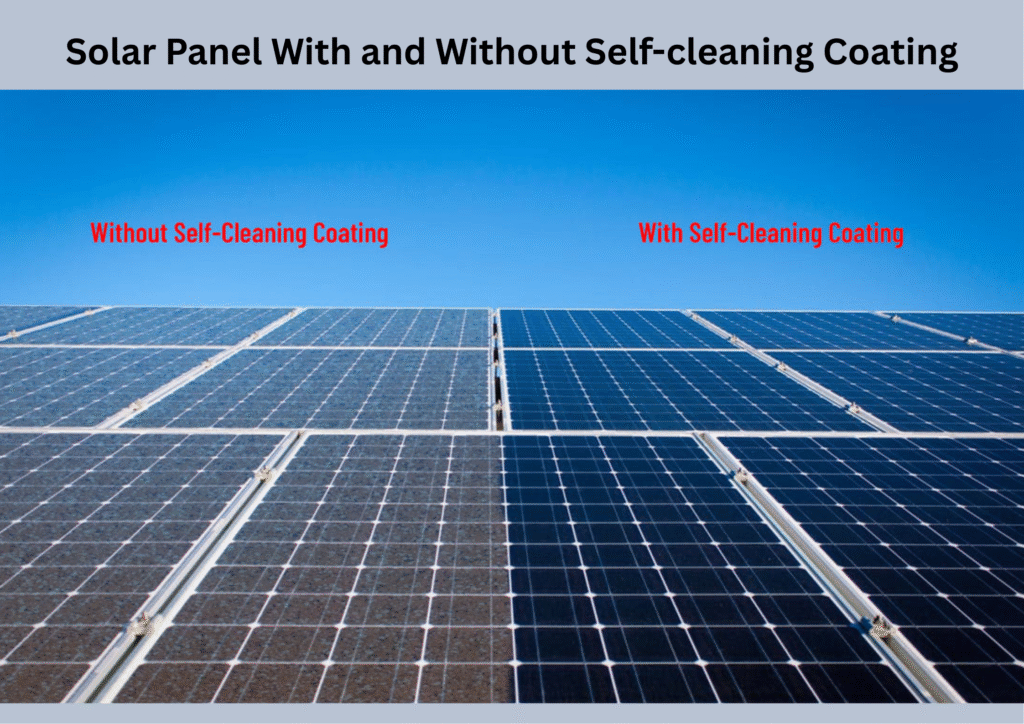
- Improves Performance: Self-cleaning solar panels offer consistent performance and higher efficiency. The self-cleaning system automatically removes dust from the panel’s surface and maximizes sunlight absorption. Thus, it improves power generation all year round.
- No need for Regular Manual Cleaning: The self-cleaning solar panels avoid the need for regular cleaning, which involves labor, water, and tools. If you are living in an area with high pollution and less rainfall, then a self-cleaning solar panel is an ideal option for you. It saves both time and money.
- Saves Time and Money: The self-cleaning solar panels are a smart investment for large solar farms as they offer long-term cost savings. It reduces operational and maintenance costs. It also protects your system’s value over its 25+ year lifespan.
- Environmentally Friendly: A self-cleaning solar panel conserves water and reduces chemical usage. So, for sustainable living, self-cleaning panels are a great option.
- Offers Safety: Self-cleaning panels are safer and smarter. There is no risk of falling or injury, so there are fewer workplace hazards.
Reference: A Review on Solar Panel Cleaning Systems and Techniques
Are Self-Cleaning Panels Worth It for Homeowners?
If you are living in a dry and dusty region, near an industrial area with air pollution, or in areas with limited rainfall, then self-cleaning solar panels are an ideal option for you. It offers better long-term performance, minimal maintenance, and safety benefits, while also saving both time and money.
But suppose you are living in areas with few air pollutants and have easy access to your panel, areas with frequent rainfall, where rainwater may help clean panels naturally. In that case, traditional solar panels may still serve you well.
Conclusion
Self-cleaning solar panels are a smart and efficient way to keep the solar panel clean all the time. It offers high energy output, consistent performance, and a longer life span with minimal effort. In the future, self-cleaning features are expected to become standard in most solar panels. To make it affordable for everyday users, research is going on about AI-sensors, dust-repellent materials, and graphene coatings. So, whether you are a homeowner or the owner of a large solar farm, switching to these automated self-cleaning solar panels can offer better results with fewer hassles.
FAQS
- What is a Self-Cleaning Solar Panel?
Self-cleaning solar panels are photovoltaic panels designed with advanced technology, such as built-in systems or surface treatments, to automatically remove all the dust, debris, water, or other contaminants from the panel’s surface area.
2. What is the electrostatic dust removal process?
The electrostatic dust removal process uses the electrostatic forces to remove dust from the solar panel’s surface. In this technique, a transparent conductive layer is placed over the surface. When this layer is activated, it creates an electric field and charges the dust particles present on it. The charged dust particles are repelled and pushed off the surface to keep the surface clean.
3. Are Self-Cleaning Panels Worth It for Homeowners?
The self-cleaning solar panels are worth it if you are living in a dry and dusty region, near an industrial area with air pollution, or in areas with limited rainfall. It offers better long-term performance, minimal maintenance, and safety benefits, while also saving both time and money.
Also Read:
- Dual Glass Solar Panel: A Simple and Long-Lasting Investment for Homeowners
- Anti-Reflective Solar Panels: A Smart Way to Maximize Rooftop Efficiency
- Graphene-Coated Solar Panels: The Next Big Thing in Residential Solar Panels
- Utilization of AI in Optimal Site Selection of Renewable Energy Projects: A Complete Guide
- A Practical Guide to Transparent Solar Panels: How Home Windows Can Produce Electricity?
- Smart Meters for Solar: The New Real-Time Energy Monitoring System in Rooftop Solar Systems
- Intelligent Solar Tracker: The Secret to More Solar Energy
- How to Optimize Energy Storage with AI Algorithms in Renewable Energy Systems?
- How to Enhance Solar Panel Efficiency with AI-Based Analytics?
- How Smart Inverters Help Balance Solar Power and Grid Supply? A Complete Guide
- Case Study: How Google Uses AI to Accelerate Grid Connections in the U.S.
- Case Study: How Duke Energy Uses AI for Grid Stability?
- How AI Strengthens Cybersecurity in Smart Grids? A Complete Guide
- How AI Is Used to Design the Perfect Rooftop Solar System? A Complete Guide
- How Is AI Used to Develop Advanced Materials for Renewable Energy Technologies?
- How AI is Revolutionizing Predictive Maintenance in Smart Grids? A Complete Guide
- How AI Is Powering Smart Grids for Efficient Energy Distribution?
Pingback: Tandem Solar Panels: The Future of Rooftop Solar - science2energy
Pingback: Crystalline Vs Thin-Film Solar Panels: Which One Is The Best for Your Modern Smart Homes? - science2energy
Pingback: Performance of Tandem Solar Cells in Real Pilot Solar Farms: A Case Study - science2energy
Pingback: What Size Solar Panel Kit Do You Need? Find the Right Solar Kit for Your Home - science2energy
Pingback: Portable Solar Panel Kits: Best Uses for RVs and Camping - science2energy
Pingback: Are DIY Solar Panel Kits Worth It? A Complete Guide - science2energy
Pingback: Microinverters vs String Inverters: Which One Is the Best Solar Inverter for Your Rooftop Solar System? - science2energy
Pingback: Can Solid-State Batteries Keep the Lights on at Night? A Complete Guide - science2energy
Pingback: A Complete Guide to How a Wind Turbine Turns Air into Electricity: From Blades to Grid - science2energy
Pingback: How Wind Direction and Speed Affect Wind Turbine Performance? A Complete Guide - science2energy