
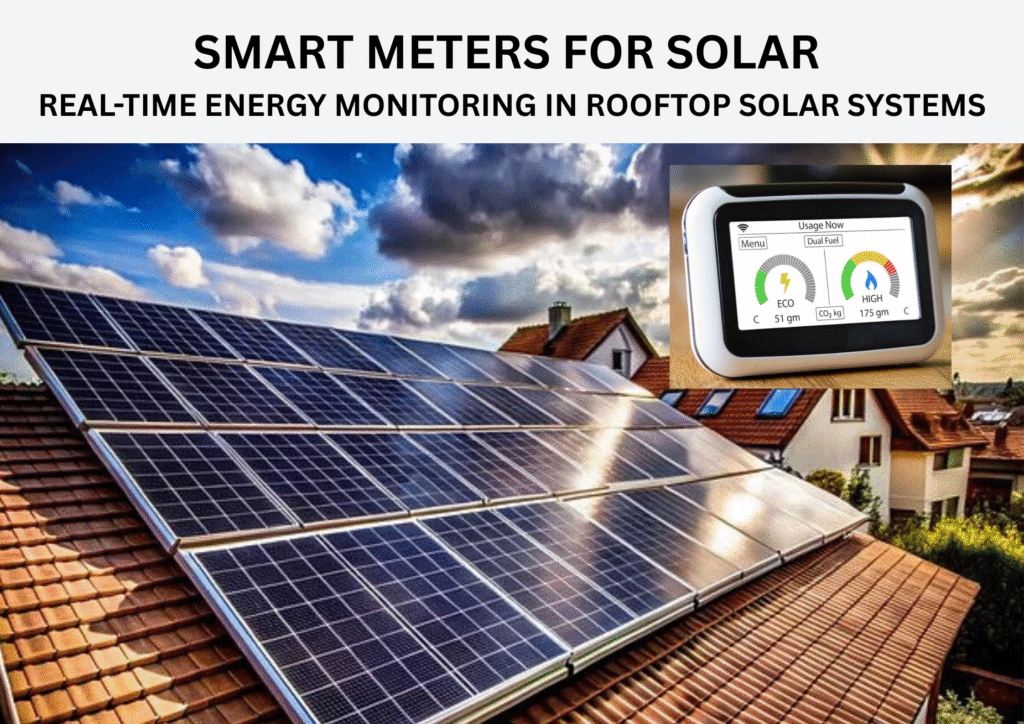
Smart meters are a digital upgrade in modern energy systems and solar setups. Not just digital readings, these smart systems offer two-way communication, provide real-time data, and detailed insights that help users manage energy more efficiently. Smart meters offer several benefits and especially to homeowners who use solar energy. This article highlights the role of smart meters in real-time energy monitoring in rooftop solar systems. It also describes how the smart meter works, its advantages, and the detailed differences between smart meters and traditional meters. Let’s break it down in simple language.
What Is a Smart Meter in a Solar System?
A smart meter is a digital device that records power consumed from the grid for home use, and in the case of a solar system, how much power is exported to the grid from your solar panel. It helps homeowners understand exactly how much energy is produced, consumed, and shared with the power grid. It offers two-way measurement and provides real-time data to utility companies.
A smart meter is strongly recommended and an essential requirement for grid-tied solar installations. Without it, you may not qualify for net metering or incentive programs offered by your utility provider.
Reference: Smart energy meter: The ultimate beginner’s guide
How Smart Meters Work in a Solar System
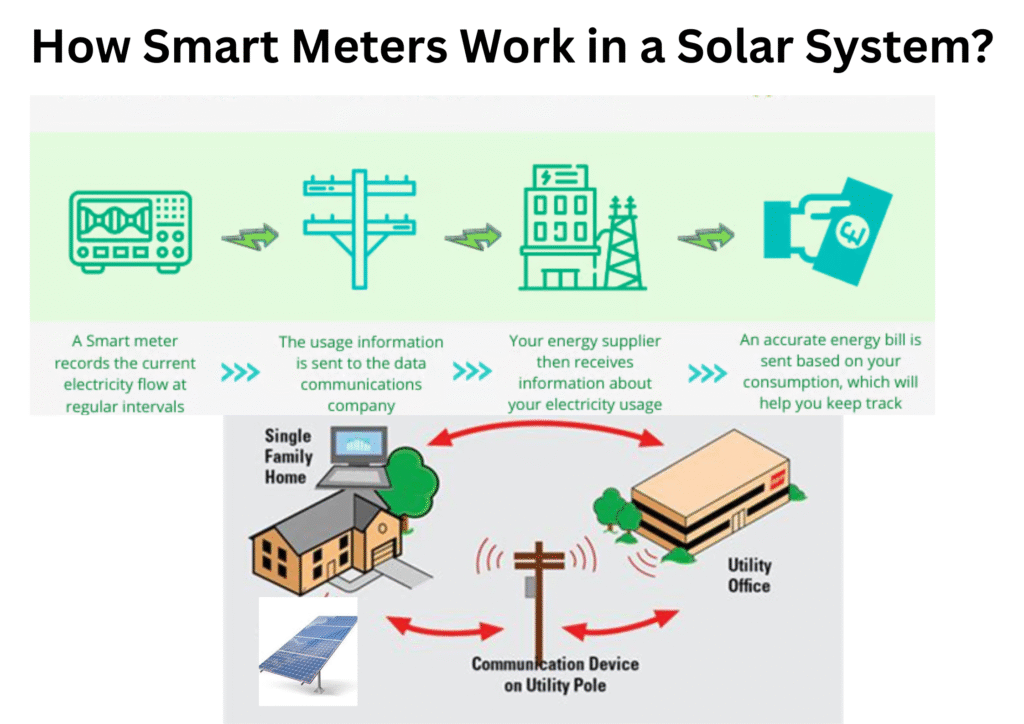
A smart meter tracks both the incoming and outgoing power.
- Incoming Power (Import):
When the power generated by the solar system is not enough for home use, your home draws the extra power from the grid. The smart meter records this extra power as imported energy.
2. Outgoing Power (Export):
When the solar panel generates more power than the home needs, the excess amount is sent back to the utility grid. The smart meter records this extra energy as exported energy.
The smart meter uses wireless communication to send energy data to utility companies. The power utility companies use these imported and exported data to calculate energy bills. In areas with net metering, exported electricity earns you credits that reduce your monthly charges.
Reference: Smart meters and solar panels: Everything you need to know
Difference Between Smart Meters and Traditional Meters
| Traditional Meter | Smart Meter |
| 1. It is also known as an analog meter. It uses a mechanical system with a spinning disk to measure the amount of electricity consumed by the home. | 1. A smart meter is a digital device. It records electricity consumed by the home and transmits the data to the utility company. |
| 2. It offers one-way measurement and tracks only consumed energy. | 2. It offers two-way measurement. It tracks both the energy consumed and the energy exported. |
| 3. It does not provide any real-time data. | 3. It provides real-time data via apps or utility websites. |
| 4. The technician manually read the meter readings to get the data. | 4. Data is transmitted automatically through wireless transmission. |
| 5. Does not support net-metering. | 5. It supports net-metering for solar users. |
| 6. There are chances of human error present in the data. | 6. It offers accurate billing data. |
| 7. Installation cost is lower than smart meters. | 7. Installation cost is more due to its advanced features. |
| 8. It offers limited system monitoring. | 8. It offers advanced tracking and diagnostics. |
Important Features of Smart Meters
Two-way Energy Management:
- A smart meter tracks electricity flow in both directions, i.e., power exported from the solar system and power imported from the grid. This is an important feature for net metering. Smart meters designed for solar systems enable utility incentives and solar credit programs.
. Real-time Energy Monitoring:
Smart meter monitors the generated power in real-time and transmits the energy usage data to the utility provider, often every 15 minutes or hour. It also identifies the high usage period and adjusts to reduce electricity bills.
- Digital Display:
A smart meter features a digital screen that displays total generated power, total power consumed, and the amount of power sent back to the grid. It helps users to understand their consumption patterns.
- Remote data transmission:
Smart meters avoid the need for manual meter readings and send the real-time data through secure wireless connections.
- Tamper Detection Mechanism:
Smart meters are designed with tamper detection mechanisms that ensure accurate readings and prevent energy theft.
- Outage Detection:
Smart meters can alert utilities instantly when a power outage occurs.
- Integration:
Smart meters can be integrated with energy storage systems, energy management tools, and smart devices.
Advantages of Smart Meters
- Accurate Billing:
Smart meters can accurately record energy usage and avoid billing errors. This ensures exact charges based on actual usage. Solar users offer accurate crediting of exported electricity under net metering programs.
- Real-time Energy Monitoring
The smart meters can track energy usage in real-time. With this, you can see when and how much electricity you are using. It also helps adjust your habits to reduce your electricity bill.
- Supports Net-metering
Smart meters are essential for net metering. It can measure the total energy produced by the solar panel, the amount of extra energy sent back to the grid utility, and also tracks the difference between how much you have produced and how much you have consumed. This improves the return on investment for your solar system.
- No Need for Manual Reading
Smart meters use wireless communications to send data to the utility provider and avoid manual reading. It offers faster and more reliable services to users.
- Time-of-Use Billing Advantage
The areas where electricity prices vary throughout the day, the smart meters help homeowners to track when the energy is cheapest and to shift usage to off-peak hours.
- Load Management
The utility providers use smart meter data to balance electricity supply and demand. It helps maintain grid stability and improves fair energy distribution.
- Environmental Benefits
Solar homes support clean energy integration, making your system more sustainable.
Conclusion
Smart meters are a smarter way to manage your energy. These meters are becoming an essential part of every home’s energy setup. Whether your home electricity system is connected to the grid or you have your own solar system, this advanced system offers various advantages, including accurate billing, real-time data monitoring, and support for net metering. It is a powerful tool for handling solar energy, controlling electricity costs, and maintaining reliable service. Using a smart meter gives you better control, greater transparency, and full access to solar incentives like net metering. If you’re planning to install solar panels or want to reduce your electric bill, switching to a smart meter can make a big difference.
FAQS
- What Is a Smart Meter in a Solar System?
A smart meter is a digital device that records power consumed from the grid for home use, and in the case of a solar system, how much power is exported to the grid from your solar panel. It helps homeowners understand exactly how much energy is produced, consumed, and shared with the power grid.
Also Read:
- Intelligent Solar Tracker: The Secret to More Solar Energy
- How to Optimize Energy Storage with AI Algorithms in Renewable Energy Systems?
- How to Enhance Solar Panel Efficiency with AI-Based Analytics?
- How Smart Inverters Help Balance Solar Power and Grid Supply? A Complete Guide
- Case Study: How Google Uses AI to Accelerate Grid Connections in the U.S.
- Case Study: How Duke Energy Uses AI for Grid Stability?
- How AI Strengthens Cybersecurity in Smart Grids? A Complete Guide
- How AI Is Used to Design the Perfect Rooftop Solar System? A Complete Guide
- How Is AI Used to Develop Advanced Materials for Renewable Energy Technologies?
- How AI is Revolutionizing Predictive Maintenance in Smart Grids? A Complete Guide
- How AI Is Powering Smart Grids for Efficient Energy Distribution?
- A practical case study: How AI Enhances Microgrid Performance in Rural Areas?
- Hidden Microcracks in Solar Panel? How does AI Detect Early?
- Floating Solar Panel: The New Way to Produce Clean Energy on Lakes and Reservoirs
- AI-Powered Forecasting: A Powerful Technique to Enhance Grid Stability
- Importance of an AI-Driven Energy Pricing Model in Pricing Optimization
- Building-Integrated Solar Panels: How They Turn Walls and Windows into Clean Energy Generators?
- AI-Driven Predictive Maintenance in Wind Energy Systems
- How AI Is Used in the Renewable Energy Sector?
- AI and Microgrids: Empowering Remote Communities with Smart Energy
Pingback: A Practical Guide to Transparent Solar Panels: How Home Windows Can Produce Electricity? - science2energy
Pingback: TOPCon Vs HJT Vs Tandem Solar Panels: Making the Right Call for Your Solar Business Project - science2energy
Pingback: HJT Solar Panels: A Right Solar Investment for Large Businesses - science2energy
Pingback: High-Wattage 450W Solar Panels: Are They Worth It for Your Home Roof Space? - science2energy
Pingback: Perovskite Solar Panels: The Future of Home Solar - science2energy