
To make renewable energy sources like solar and wind reliable, renewable energy storage plays a crucial role. As these energy sources are not available all the time, a safe and efficient storage system is required. Presently, lithium-ion batteries are a dominating solution for renewable energy storage. These batteries are a practical option and widely available, but they carry inherent safety risks that require costly management systems. Whereas, solid-state batteries are the emerging storage technology but have the potential to reshape the future of energy storage with safer, higher-capacity, and longer-lasting designs. So, which battery is truly safer in renewable energy storage? This article provides a detailed explanation of “solid-state batteries vs. lithium-ion” and which one is more future-proof.
Basic Idea
What Are Solid-State Batteries?
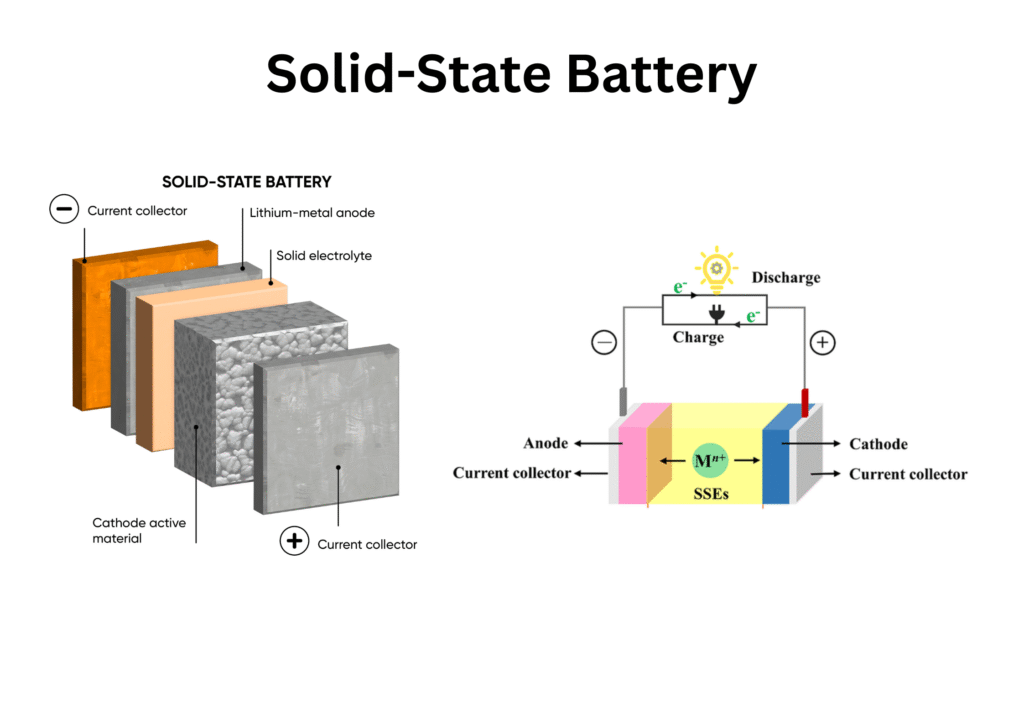
Solid-state batteries are an advanced version of energy storage technology that uses a solid electrolyte, such as ceramics, glass, or solid polymers, to carry ions between the anode and cathode. It consists of three important parts: the cathode, the anode, and the electrolyte. These batteries offer improved stability and efficiency and are highly safe to use.
Lithium-metal anodes used in solid-state batteries can store more energy than graphite anodes used in lithium-ion batteries. So, these are ideal to use in longer-lasting electric vehicles. With less risk of overheating, these batteries can potentially handle faster charging speeds. These batteries also offer a longer lifespan due to reduced risk of dendrite growth.
The solid-state batteries are being tested and developed for electric vehicles, renewable energy systems, and consumer electronics that last longer without overheating, such as laptops, smartphones, wearables, etc.
What are Lithium-Ion Batteries?

Lithium-ion batteries are the most widely used energy storage technology in the present world. A lithium-ion battery has three important parts: an anode, which is usually made from graphite, a cathode made from lithium-based compounds, and a liquid or gel-type electrolyte that carries ions between the cathode and anode.
While charging, the ions move from the cathode to the anode and are stored there. While discharging, the ions flow back to the cathode by creating an electric current to power devices.
These batteries are lightweight in structure, have high energy density, and offer a longer life cycle as compared to nickel-cadmium or lead-acid batteries. Whereas they also have some drawbacks, such as they can overheat or catch fire if damaged, and their capacity gradually reduces after repeated charge and discharge cycles.
At present, lithium-ion batteries are used in electric vehicles, smartphones, laptops, medical equipment, and renewable energy storage systems.

Safety Comparison: Solid-State Batteries vs. Lithium-Ion
Solid-State Batteries: Solid-state batteries use solid electrolytes, which are non-flammable and reduce the risk of fire and explosion. These batteries have high thermal stability, so they can withstand high temperatures by reducing the chance of thermal runaway.The battery’s reduced dendrite formation improves its safety and lifespan. Their solid electrolytes eliminate the chance of leakage or swelling, which makes them safer under mechanical stress.
Lithium-ion Batteries:
Lithium-ion batteries use liquid or gel electrolytes, which are highly flammable. If the batteries get damaged or overheated, they can cause fire or explosions. When overheated, it also leads to thermal runaway, which causes a rapid temperature rise. While charging, the dendrite growth inside the battery can cause short circuits and safety failures. Sometimes, manufacturing defects or exposure to high heat can also damage the battery.
Remark: The solid-state battery utilizes a nonflammable electrolyte with high thermal stability; however, the technology is currently still in the development phase and is not commercially available. Whereas lithium-ion batteries are widely used and reliable. But they need careful management systems to prevent accidents.
Reference: Are solid-state batteries safer than lithium-ion batteries?
Solid-State Batteries vs. Lithium-Ion
| Solid-State Battery | Lithium-Ion Battery | |
| Electrolyte | It uses a solid non-flammable electrolyte. | It uses a liquid or gel-based, flammable electrolyte. |
| Anode and Cathode | The anode of a solid-state battery can be lithium metal and stores more energy than graphite. Its cathode is made from a lithium compound. | The anode of a lithium-ion battery is typically made from graphite, while the cathode is composed of lithium compounds, such as lithium cobalt oxide or lithium iron phosphate. |
| Energy Density | Its energy density is higher than that of lithium-ion batteries due to lithium metal anodes. | Energy density is high. |
| Safety | It is very safe to use due to the non-flammable solid electrolyte. | There are risks of fire, overheating, and thermal runaway due to flammable liquid electrolyte. |
| Lifespan | It offers a longer lifespan (approximately over 2000 cycles) with reduced risk of dendrite growth. | It offers a limited lifespan (around 500–1,500 cycles) due to electrode degradation. |
| Charging Speed | The charging speed of solid-state batteries is potentially faster than lithium-ion batteries. | It offers a moderate charging speed. |
| Future Proof | Holds greater long-term potential. | Still reliable in the short to medium term. |
| Cost | These batteries are expensive due to limited production. But the cost is expected to decrease in the future. | Less costly due to mass production. |
| Technology Maturity | Research and development are still in progress to make it affordable and commercially available. | This is a widely adopted technology. |
Which Battery is Truly Safer in Renewable Energy Storage?
The renewable energy storage deals with large-scale battery systems. So, if the battery fails, it not only damages the equipment but also causes fire hazards and environmental risks. A safe battery is a crucial factor in ensuring grid reliability, reducing maintenance costs, and fostering public trust in renewable projects.
Lithium-ion batteries are widely used and a practical choice for renewable energy storage because of proven performance and availability. However, it requires a safety management system to reduce overheating and fire risks.
The solid-state batteries could be the breakthrough technology, safer than the lithium-ion batteries due to the use of non-flammable electrolytes and higher thermal stability. The transition from lithium-ion batteries to solid-state batteries may take time. But in the future, solid-state batteries are expected to set the benchmark for safety in renewable energy storage systems.
Solid-State Batteries vs. Lithium-Ion: Which One is More Future-Proof?
In the next decade or for 5 to 10 years, lithium-ion batteries will remain the dominant battery technology, but solid-state batteries will start entering the premium electric vehicles and niche markets.
However, in the long-term future, the solid-state batteries are expected to become the more future-proof solution due to their safety and performance benefits.
Conclusion
Lithium-ion batteries are widely available and a practical solution for renewable energy storage. But their safety concerns and material limitations are some real challenges. Whereas, solid-state batteries are the emerging technology that offer high potential for renewable energy storage. With safer, longer-lasting, and higher-capacity solutions, these batteries could soon redefine energy storage.
FAQS
- Which one is more future-proof between solid-state batteries and Lithium-ion batteries?
In the next decade or for 5 to 10 years, lithium-ion batteries will remain the dominant battery technology, but solid-state batteries will start entering the premium electric vehicles and niche markets. However, in the long-term future, the solid-state batteries are expected to become the more future-proof solution due to their safety and performance benefits.
- Which one is safer, between solid-state batteries and Lithium-ion batteries?
The solid-state batteries could be the breakthrough technology, safer than the lithium-ion batteries due to the use of non-flammable electrolytes and higher thermal stability.
Also Read:
- The Future of Renewable Energy Storage: Can Solid-State Batteries Deliver 24/7 Clean Energy?
- Thermal Stability of Solid-State Batteries in Harsh Renewable Energy Environments
- Can Solid-State Batteries Keep the Lights on at Night? A Complete Guide
- Microinverters vs String Inverters: Which One Is the Best Solar Inverter for Your Rooftop Solar System?
- Are DIY Solar Panel Kits Worth It? A Complete Guide
- Portable Solar Panel Kits: Best Uses for RVs and Camping
- Breaking Down Each Component of a 5kW Solar Panel Kit
- What Size Solar Panel Kit Do You Need? Find the Right Solar Kit for Your Home
- Perovskite Solar Panels: The Future of Home Solar
- High-Wattage 450W Solar Panels: Are They Worth It for Your Home Roof Space?
- The Rise of 600W+ High-Power Panels in Commercial Solar Farms
- HJT Solar Panels: A Right Solar Investment for Large Businesses
- N-Type TOPCon Solar Panel: A Complete Guide
- TOPCon Vs HJT Vs Tandem Solar Panels: Make The Best Purchase for Your Project
- Case Study: How Bifacial Solar Panels Improved Output in the Nevada Desert?
- Performance of Tandem Solar Cells in Real Pilot Solar Farms: A Case Study
- Flexible Solar Panels: The Ideal Solution for Small and Irregular Spaces
- Crystalline Vs Thin-Film Solar Panels: Which One Is The Best for Your Modern Smart Homes?
- Tandem Solar Panels: The Future of Rooftop Solar