
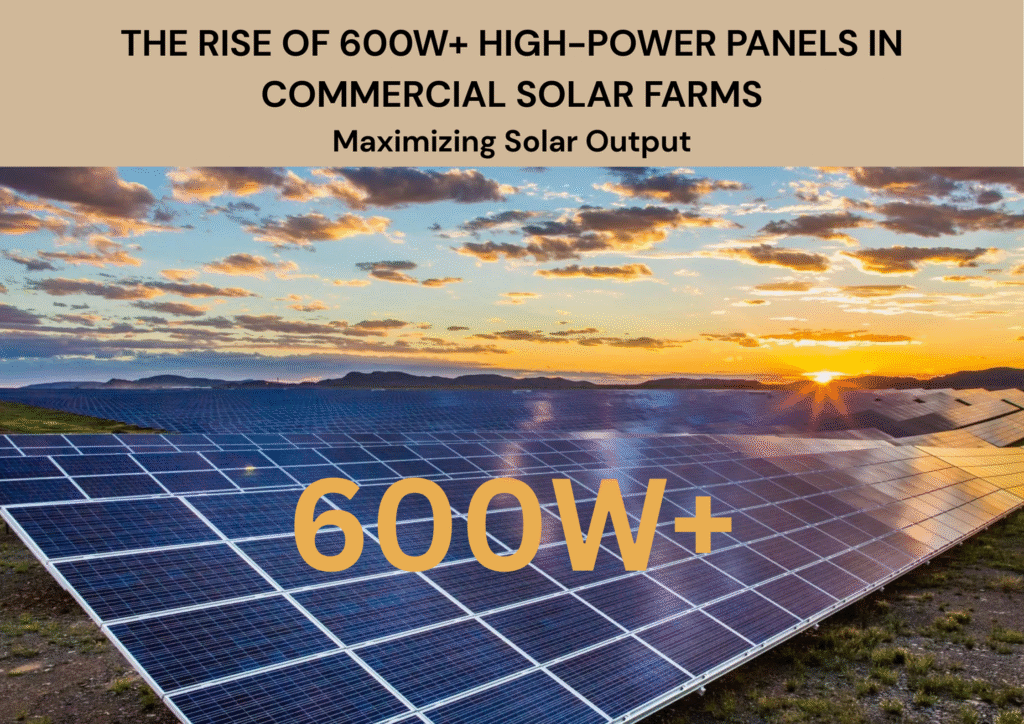
In commercial and large-scale solar projects, the 600W+ high-power panels are a major innovation. With high energy output and reduced system costs, these panels are shaping the economics of the commercial solar industry. These are large and offer higher efficiency and better returns for large-scale systems than traditional solar panels. This article provides a detailed idea of 600W+ high-power panels, their importance in commercial solar farms, and a technical analysis of these panels.
What Are 600W+ High-Power Panels?
600W+ high-power panels are photovoltaic modules that can generate power over 600W under standard test conditions. These high-power panels are larger than traditional solar panels and are typically used in utility-scale and commercial projects. The physical size of these panels is over 2.4 meters in length and 1.1 meters in width. These solar panels are built using advanced cell technologies, such as N-type TOPCon, heterojunction (HJT), and IBC.
Why Commercial Solar Farms Are Choosing 600W+ High-Power Panels?
- To Maximize Energy Production
The 600W+ high-power panels can generate more electricity per square foot. With fewer 600W+ solar panels compared to traditional panels (400W-500W), commercial solar farms can maximize solar energy production. This lowers the number of modules required for each megawatt. These high-power solar panels are ideal for places where land is expensive or limited.
- Lower Installation Costs
With larger high-power panels, the commercial farms need fewer mounting structures, cables, and connectors. With a reduced number of components, the total installation cost reduces without compromising output.
- Faster Installation
Fewer high-power solar panel installations lead to faster installation. It requires less manpower for installation on-site.
A Technical Analysis of 600W+ High-Power Solar Panels
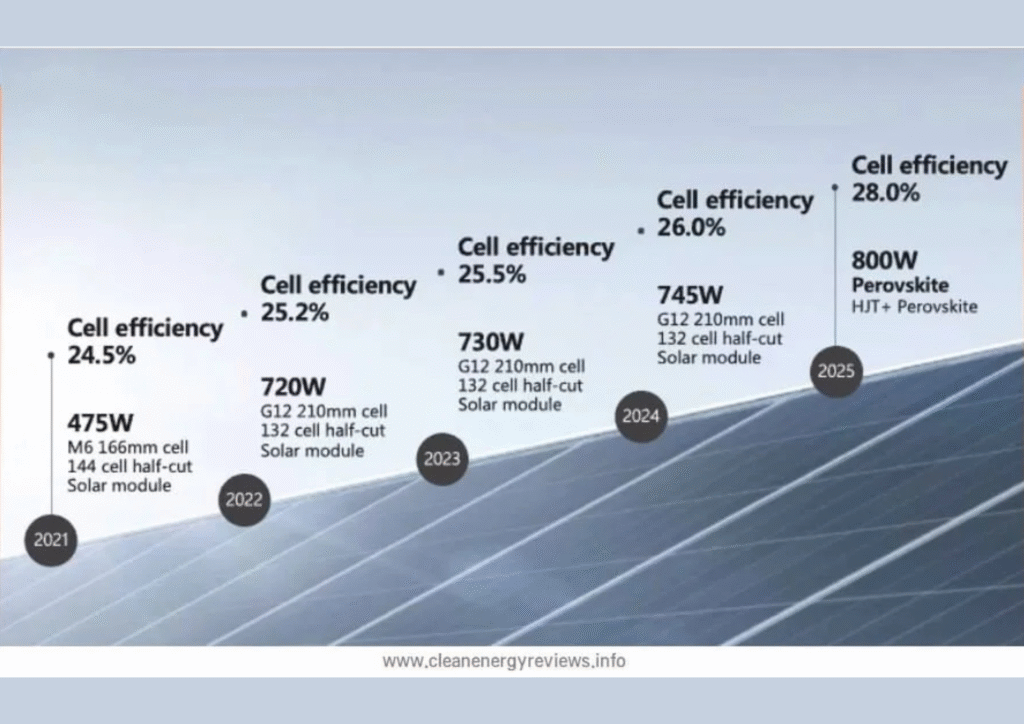
The 600W+ high-power solar panels are photovoltaic modules that deliver output power of 600W to 670W under standard test conditions. The weight of these solar panels ranges between 35Kg to 38Kg. The panel size is approximately 2.4 meters in length and 1.1 meters in width, with a cell count that ranges between 132–210 half-cut cells.
The advanced cell technologies used to design 600W+ high-power solar panels are
- TOPCon (Tunnel Oxide Passivated Contact)
- Heterojunction (HJT)
- Interdigitated Back Contact (IBC)
These solar cell technologies allow higher current and voltage within the same physical space. The high power output not only depends on better cells but from a larger surface area and an optimized internal layout. Various types of components used to design high-power solar cells are:
- Half-cut cells
- Multi-busbar (MBB)
- Bifacial glass-glass
- Split junction boxes
The 600W+ high-power solar panel requires a smaller number of modules to reach a desired capacity. With a reduced number of module installations becomes faster as the system requires fewer installations, and the balance of system (BOS) costs come down.
Maximum high-power solar panels are bifacial, so they can capture sunlight from both the front and back sides of the panel. This helps them generate an extra 10 to 20% more output.
Due to their higher current and voltage, the high-power solar panels must have inverters whose MPPT voltage range should align with the string voltage. The string current ratings must handle 18–20A.
The 600W+ high-power solar panels with increased size and weight require robust racking systems, wider row spacing to prevent shading, and components with higher wind-load and snow-load ratings.
Reference: Very High-Power Solar Modules
Ideal Projects to Use 600W+ High-Power Solar Panels
- Utility-scale solar power plants
- Large ground mount commercial solar systems
- Floating solar farms
- Solar projects with land constraints
- Bifacial-optimized sites
- Solar farms in high-irradiance zones
Reference: Most powerful solar panels 2025
Case Study
Case Study 1: 100 MW Utility-Scale Project (Rajasthan, India)
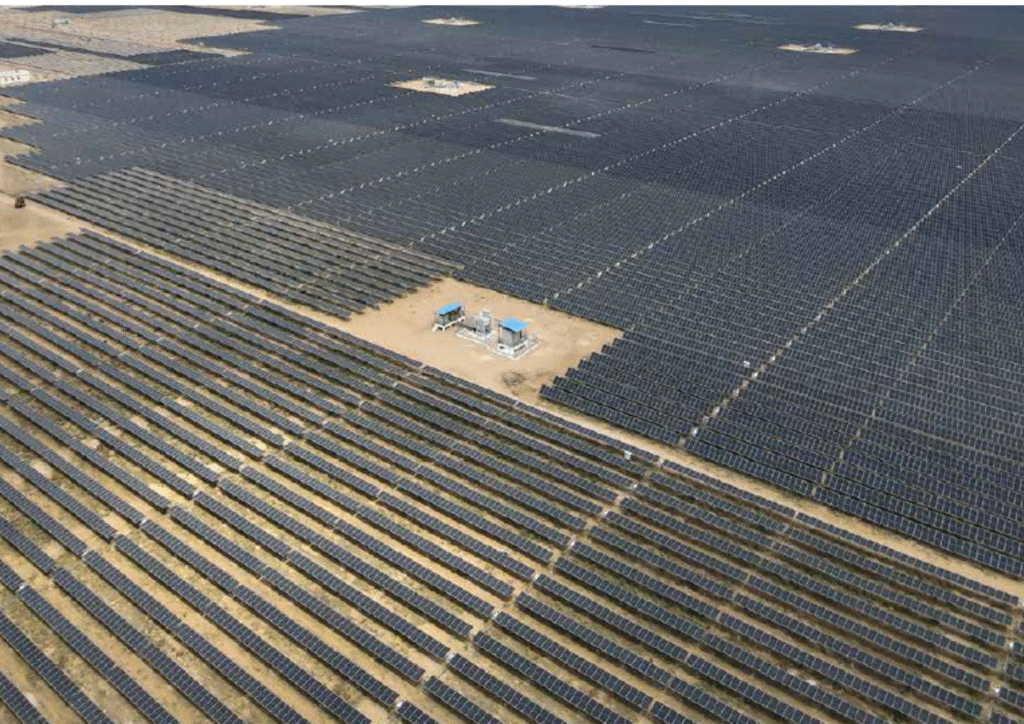
This project is located in Bikaner, Rajasthan, and it covers a land of 425 acres. It has used 670W bifacial (TOPCon) solar panels. The annual energy generated from this project is 196 GWh. By using high-power solar panels, the total number of panels is reduced by 24%.
Reference: Juniper Green Energy switches on 100 MW solar project in India for supply to Bhutan
Case Study 2: 20 MW Commercial Solar Farm (Southern California, USA)
In this project, 605W HJT bifacial solar panels have been installed. The annual energy generated from this project is 1,820 kWh/kW/year. The HJT cells used in this project offer a stable production under California’s high temperatures.
Case Study 3: 3 MW Floating Solar Farm (Southeast Asia)
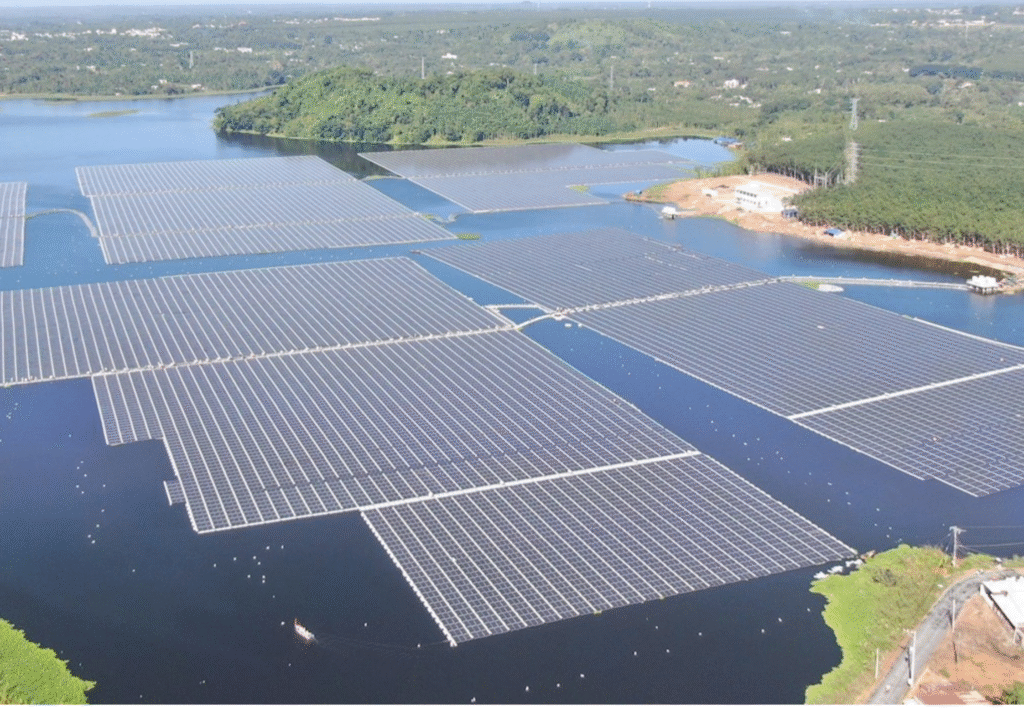
This project has installed 610W Monofacial solar panels in an industrial water reservoir. Its float structure is an HDPE platform with wind anchors. With 18% of reservoir surface coverage, the annual energy generated from this project is 6,050 MWh/year.
Case Study 4: 5 MW Industrial Rooftop (Germany)
This project is constructed on the rooftop of a food processing plant. In this project, 600W Monofacial TOPCon solar panels have been installed. Its mounting structure is a South-facing metal roof with a ballast system. The annual energy generated from this project is 5,950 MWh/year. The HJT cells used in this project offer a stable production under California’s high temperatures.
600W+ High-Power Solar Panels Vs. Traditional 500W Solar Panel
| Traditional 500W Solar Panel | 600W+ High-Power Solar Panels | |
| Power Output | The output power of traditional solar panels ranges between 400W and 500W. | The output power of high-power solar panels ranges between 600W and 670W. |
| Panel Size | Approximately 1.6 meters in height and 1 meter in width | Approximately 2.4 meters in length and 1.1 meters in width |
| Built Using | Traditional solar panels are built using mono PERC or TOPCon cell technology. | High-power solar panels are built using advanced cell technologies, such as N-type TOPCon, HJT, and IBC. |
| Efficiency | The efficiency of traditional PERC solar panels ranges between 20% – 21.5%. | The efficiency of high-power solar panels ranges between 21% – 23%. |
| Used In | Traditional solar panels are used for residential and small-scale commercial installations. | High-power solar panels are only installed for commercial and utility purposes. They are not ideal for residential installations. |
Conclusion
The 600W+ high-power panels are mainly designed for large-scale installations and are on track to become the industry standard for commercial-scale solar in the next few years. Their high-performance and cost-efficient solutions for large projects make them dominate the future utility-scale projects.
FAQS
- What are 600w+ high-power panels?
600W+ high-power panels are photovoltaic modules that can generate power over 600W under standard test conditions. These high-power panels are larger than traditional solar panels and are typically used in utility-scale and commercial projects.
- What is the efficiency of a 600W+ high-power solar panel?
The efficiency of 600W+high-power solar panels ranges between 21% – 23%.
- Are 600W+ high-power solar panels ideal for residential installation?
No, 600W+ high-power solar panels are not ideal for residential installation. They are only installed for commercial and utility purposes.
Also Read:
- HJT Solar Panels: A Right Solar Investment for Large Businesses
- N-Type TOPCon Solar Panel: A Complete Guide
- TOPCon Vs HJT Vs Tandem Solar Panels: Make The Best Purchase for Your Project
- Case Study: How Bifacial Solar Panels Improved Output in the Nevada Desert?
- Performance of Tandem Solar Cells in Real Pilot Solar Farms: A Case Study
- Flexible Solar Panels: The Ideal Solution for Small and Irregular Spaces
- Crystalline Vs Thin-Film Solar Panels: Which One Is The Best for Your Modern Smart Homes?
- Tandem Solar Panels: The Future of Rooftop Solar
- Self-Cleaning Solar Panels: No More Manual Cleaning from Now On
- Dual Glass Solar Panel: A Simple and Long-Lasting Investment for Homeowners
- Anti-Reflective Solar Panels: A Smart Way to Maximize Rooftop Efficiency
- Graphene-Coated Solar Panels: The Next Big Thing in Residential Solar Panels
- Utilization of AI in Optimal Site Selection of Renewable Energy Projects: A Complete Guide
- A Practical Guide to Transparent Solar Panels: How Home Windows Can Produce Electricity?
- Smart Meters for Solar: The New Real-Time Energy Monitoring System in Rooftop Solar Systems
- Intelligent Solar Tracker: The Secret to More Solar Energy
- How to Optimize Energy Storage with AI Algorithms in Renewable Energy Systems?
- How to Enhance Solar Panel Efficiency with AI-Based Analytics?
- How Smart Inverters Help Balance Solar Power and Grid Supply? A Complete Guide
Pingback: High-Wattage 450W Solar Panels: Are They Worth It for Your Home Roof Space? - science2energy
Pingback: What Size Solar Panel Kit Do You Need? Find the Right Solar Kit for Your Home - science2energy
Pingback: The Future of Renewable Energy Storage: Can Solid-State Batteries Deliver 24/7 Clean Energy? - science2energy
Pingback: Solid-State Batteries vs. Lithium-Ion: Which Battery is Truly Safer in Renewable Energy Storage? - science2energy