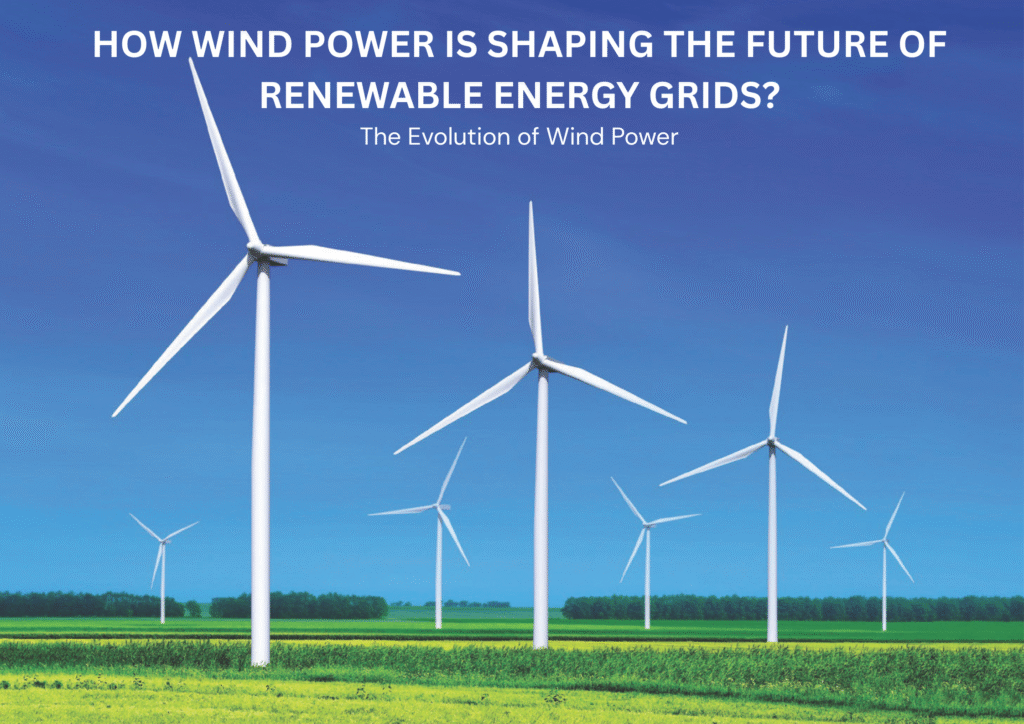
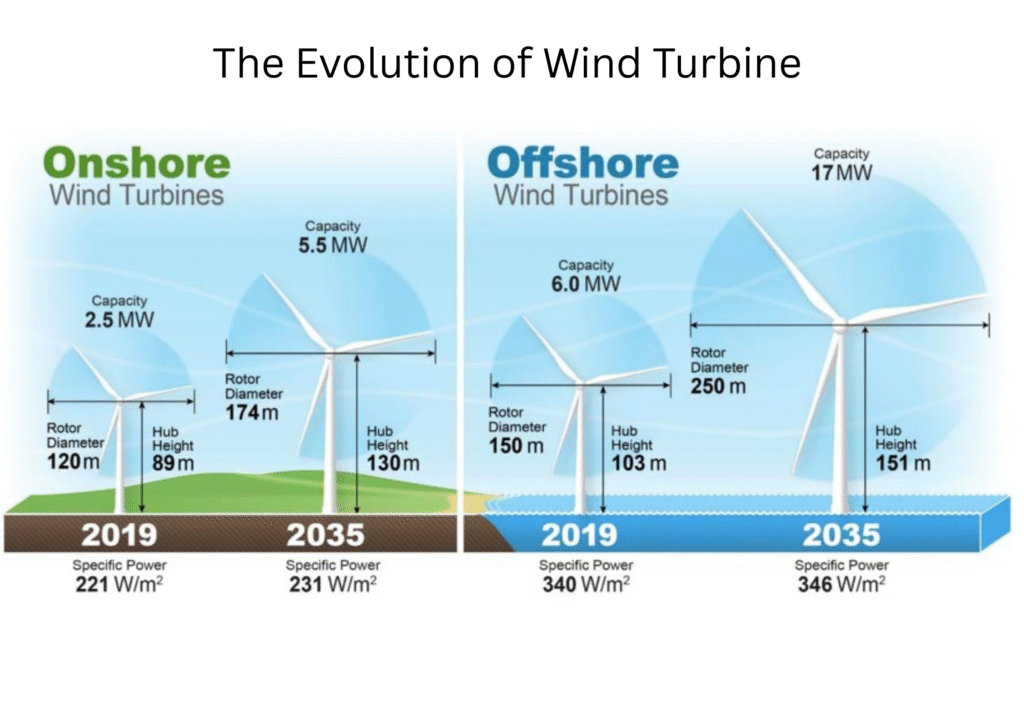
A small-scale energy source has transformed into a global renewable energy revolution over the last few years. Small windmills have evolved into highly advanced wind turbine systems that are capable of powering entire cities. This revolution is playing a major role in building a sustainable energy future. Modern turbines are designed with advanced aerodynamics, smart technologies, digital communication, and energy storage capabilities. Today, wind power is a key component of a balanced and resilient energy network. This article explains the evolution of wind power and its role in shaping the future of renewable energy grids.
How Does a Wind Energy Conversion System Work?
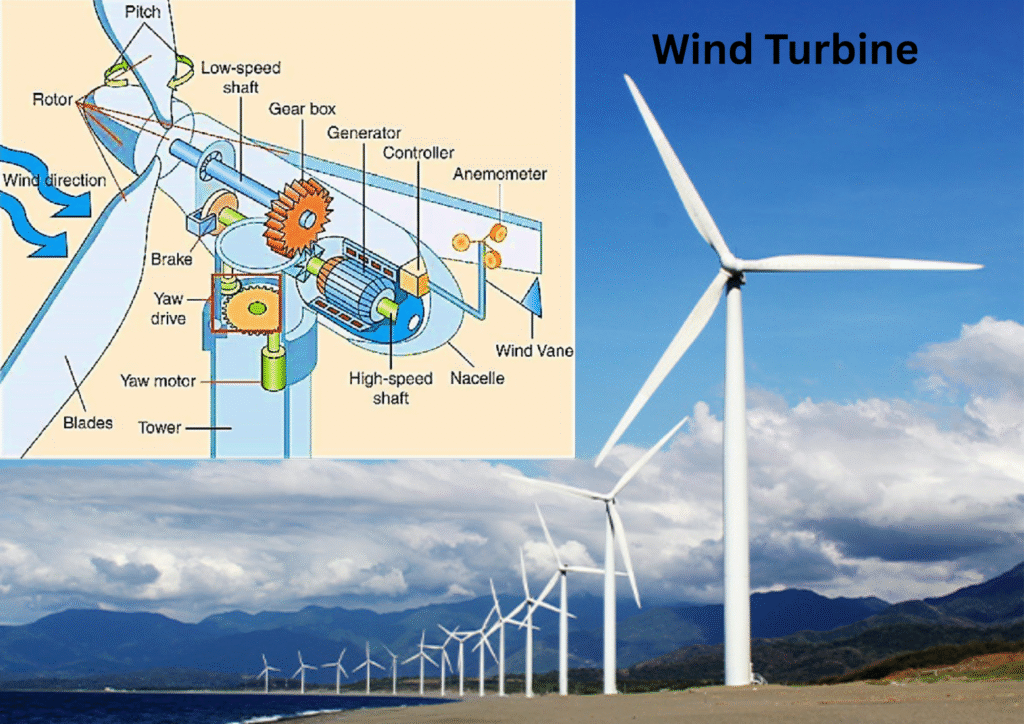
When the wind passes over the turbine’s blades, it creates a pressure difference on either side, causing the blades to spin. The spinning blades turn a rotor connected to a shaft inside the nacelle. This shaft is a low-speed shaft that carries the rotational energy from the rotor hub to the gearbox. The gearbox increases the rotational speed to a level suitable for the generator. The generator converts rotational motion from the shaft into electric power through electromagnetic induction. The produced electricity can be used directly or fed into the power grid.
In the wind energy conversion process, the movement of air is transformed into usable power. With no carbon emissions during operation, this technology leads to the generation of clean electricity.
The Role of Wind Power in Modern Energy Systems
Modern energy systems are designed with advanced technology and smart grid integration to provide a reliable electrical power supply to homes and industries. In the power grid, the electricity generated from various renewable and non-renewable sources, such as solar, wind, hydro, and traditional power plants, is mixed.
As the wind speed and the power output from the wind turbine system are both variable, it is essential to integrate wind power smartly into the overall energy system. Modern energy grids are designed with advanced grid management and storage technologies. These energy grids can balance supply and demand to ensure a steady energy supply, although the wind speed varies continuously.
Technical Advantages of Wind Power in Renewable Grids
- Grid Stability:
Modern wind turbines are integrated with advanced control systems and power electronics. These systems help the wind farms to maintain voltage and frequency according to the grid demand. This helps in providing a stable and balanced energy supply.
- Flexible Integration:
Wind energy systems are highly flexible and can be easily scaled to meet different energy requirements. They are designed to fit various grid capacities. So, wind farms are easily integrated with solar and hydro power plants to form hybrid power plants.
- Advanced Technologies:
Modern wind turbines are designed with advanced technologies, such as smart sensors, pitch control systems, yaw control mechanisms, and predictive maintenance systems. These technologies enable wind farms to maintain high capacity factors, thereby enhancing the performance of renewable energy grids.
- Compatibility with Smart Grids:
Modern wind turbine systems are designed with digital communication and automation to manage energy flows. It can provide real-time data on generation and performance. The remote monitoring and forecasting technology helps wind farms to schedule power dispatch and reduce grid fluctuations.
- Integration with Energy Storage System:
A wind energy system can be easily integrated with an energy storage system. During high energy generation, the energy can be stored and used later. This also enhances grid flexibility.
Reference: A review on modern control applications in wind energy conversion system
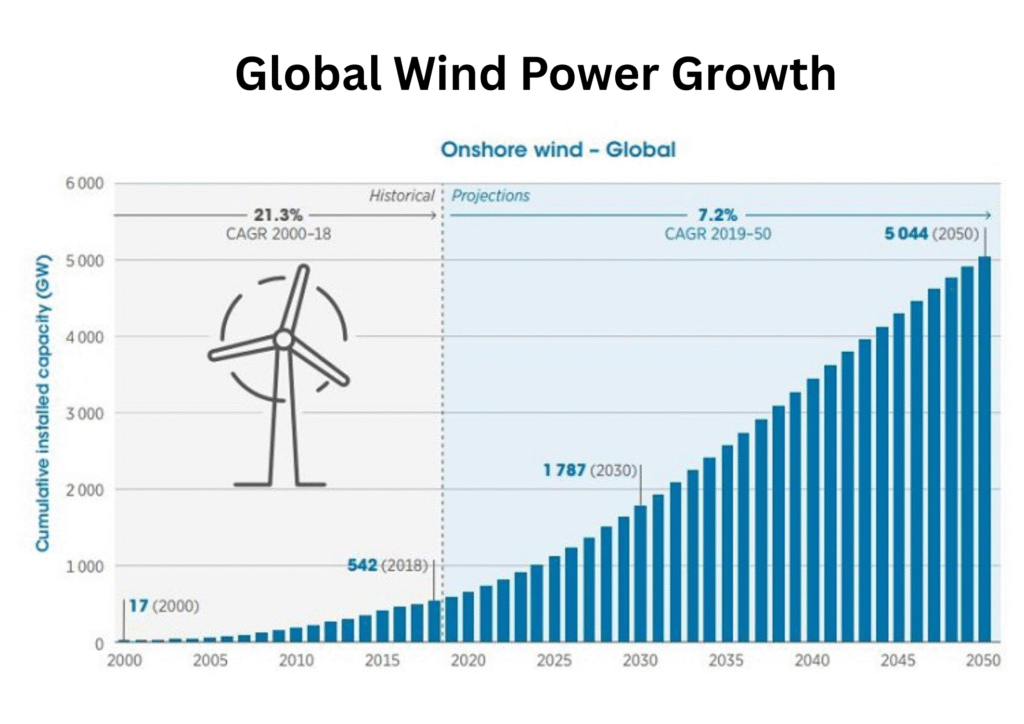
The Economic Strength Behind Wind Power Expansion
- Advanced technology, low maintenance cost, and large and more efficient turbines are decreasing the cost of electricity generated from wind by almost 60%.
- The broad job creation by wind power is strengthening the local economy. From turbine manufacturing and installation to the grid maintenance and project management sector, it has become a major source of employment.
- Since the fuel “wind” is free, the wind power is an economically stable investment with consistent returns over time. In many countries, wind power helps achieve greater energy independence. They can reduce their reliance on imported fossil fuels.
- The continuous research and innovation are fueling the economic strength of wind energy. Countries like the U.S. and China are exporting expertise, equipment, and services to other nations.
- Wind power development in rural and coastal areas is creating steady economic benefits. The communities that were once dependent on agriculture or fishing are now enjoying sustainable community growth.
Integrating Wind Power into Hybrid and Smart Grid Systems
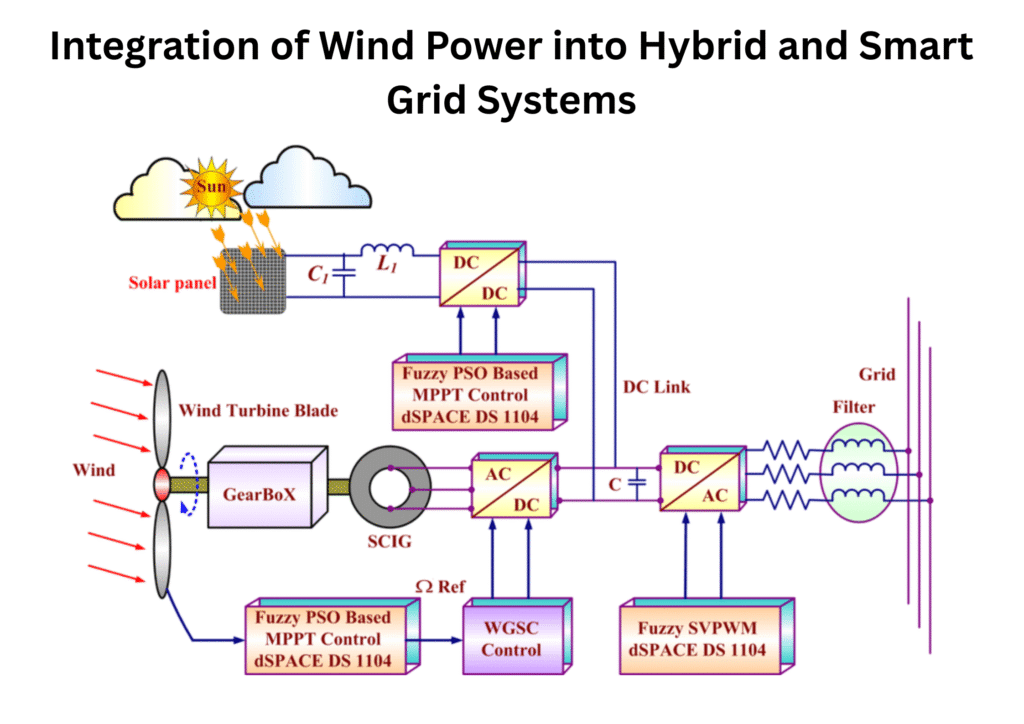
A hybrid energy system includes both renewable and non-renewable power generation sources to supply continuous and reliable electricity to users. It includes wind energy systems, solar systems, hydro power plants, and energy storage systems. Integration of multiple energy sources optimizes power output and improves reliability. The hybrid energy system ensures a steady power output even when the wind speed varies.
A smart grid is an advanced electricity network that utilizes automation, real-time monitoring, predictive forecasting, and two-way digital communication to operate power. Smart grids are capable of handling the variable nature of wind power efficiently.
- Integrating wind power into hybrid and smart grid systems improves the stability of the grid. If the wind output changes suddenly, the smart grid coordinates with storage units or other energy sources to supply energy uninterruptedly.
- Integration of wind energy with a hybrid energy system lowers operational costs and limits dependency on expensive fossil fuels.
- It also reduces greenhouse gas emissions and promotes long-term environmental sustainability.
A Future Vision: Fully Wind-Integrated Energy Networks
A fully wind-integrated energy network is an advanced power system where wind energy is the primary source of electricity. It is a combination of onshore and offshore wind farms. In this network, power generation, distribution, and all other communications are executed by smart technologies.
The wind-integrated energy networks are also connected with solar panels and energy storage systems to function efficiently and provide 24/7 energy to users. For grid balancing, this energy network is integrated with automatic demand response technologies.
Wind speed variability is one of the major challenges of wind power. To solve this, advanced energy storage technologies such as lithium-ion batteries, flow batteries, etc., will be used. These energy storage systems store surplus energy when wind speeds are high and release it when the power generation decreases.
In the future, interconnected regional grids will share renewable electricity across borders. To carry wind power, HVDC (High Voltage Direct Current) transmission systems will be used to carry offshore farms to urban and industrial areas. It would lead to a balanced and resilient energy system.
A fully wind-integrated energy network will offer both economic and environmental benefits. It will reduce dependence on imported fossil fuels. It will create millions of jobs in manufacturing, maintenance, and engineering. It will drastically reduce greenhouse gas emissions and air pollution.
Reference: Optimizing Wind Energy Integration: A Review of Forecasting Techniques and Emerging Trends
Real World Example on Wind-powered Grid
Case Study 1: Wind-Integrated Grid System in Denmark
Denmark produces more than half of its total electricity from wind turbines. Denmark’s grid is also integrated with advanced control systems, real-time sensors, and automated balancing mechanisms. After satisfying domestic demands, Denmark also exports surplus power to neighboring countries.
Reference: Seamless integration of wind into the electricity grid
Case Study 2: Texas, USA
With consistent wind conditions, Texas produces over 25% of the nation’s total wind power output. The Texas grid is handled by the Electric Reliability Council of Texas (ERCOT). ERCOT is one of the largest independent grid operators in the world. It uses digital automation and advanced forecasting systems to balance variable wind power in real-time.
Conclusion
Recent innovations and engineering in the wind power industry are reshaping the world’s energy landscape. The integration of modern wind energy systems with energy grids offers clean, efficient, and stable electricity to millions of users. The modern wind turbines are designed with advanced aerodynamics, digital monitoring, and hybrid grid integration. Nowadays, wind power not only meets current energy demands but also leads the way toward a sustainable future. In the future, the world can create an energy system powered primarily by the wind, which will be known as fully wind-integrated energy networks.
FAQS
- How does a wind turbine work?
When the wind passes over the turbine’s blades, it creates a pressure difference on either side, causing the blades to spin. The spinning blades turn a rotor connected to a shaft inside the nacelle. This shaft is a low-speed shaft that carries the rotational energy from the rotor hub to the gearbox. The gearbox increases the rotational speed to a level suitable for the generator. The generator converts rotational motion from the shaft into electric power through electromagnetic induction. The produced electricity can be used directly or fed into the power grid.
- What is the relationship between wind speed, direction, and blade aerodynamics of a wind turbine system?
The aerodynamic forces are balanced when the turbine is facing the wind directly, the blades are adjusted at the optimal pitch angle, and the wind is within the rated speed range. This is the condition where the wind turbine generates maximum power with minimal mechanical strain.
Also Read:
- How Wind Direction and Speed Affect Wind Turbine Performance? A Complete Guide
- A Complete Guide to How a Wind Turbine Turns Air into Electricity: From Blades to Grid
- Importance of AI-Driven Predictive Maintenance in Wind Energy Systems
- Are DIY Solar Panel Kits Worth It? A Complete Guide
- Portable Solar Panel Kits: Best Uses for RVs and Camping
- Breaking Down Each Component of a 5kW Solar Panel Kit
- What Size Solar Panel Kit Do You Need? Find the Right Solar Kit for Your Home
- Perovskite Solar Panels: The Future of Home Solar
- High-Wattage 450W Solar Panels: Are They Worth It for Your Home Roof Space?
- The Rise of 600W+ High-Power Panels in Commercial Solar Farms
- HJT Solar Panels: A Right Solar Investment for Large Businesses
- N-Type TOPCon Solar Panel: A Complete Guide
- TOPCon Vs HJT Vs Tandem Solar Panels: Make The Best Purchase for Your Project
- Case Study: How Bifacial Solar Panels Improved Output in the Nevada Desert?
- Performance of Tandem Solar Cells in Real Pilot Solar Farms: A Case Study
- Flexible Solar Panels: The Ideal Solution for Small and Irregular Spaces
- Crystalline Vs Thin-Film Solar Panels: Which One Is The Best for Your Modern Smart Homes?
- Tandem Solar Panels: The Future of Rooftop Solar
- Self-Cleaning Solar Panels: No More Manual Cleaning from Now On
Pingback: Can a Small Wind Turbine System Power Your Entire House? A Practical Guide - science2energy
Pingback: How to Combine Solar Panels and Wind Turbines for 24/7 Home Energy? A Hybrid Solar-Wind System - science2energy
Pingback: Payback Period for Residential Wind Power: What Homeowners Can Expect - science2energy