
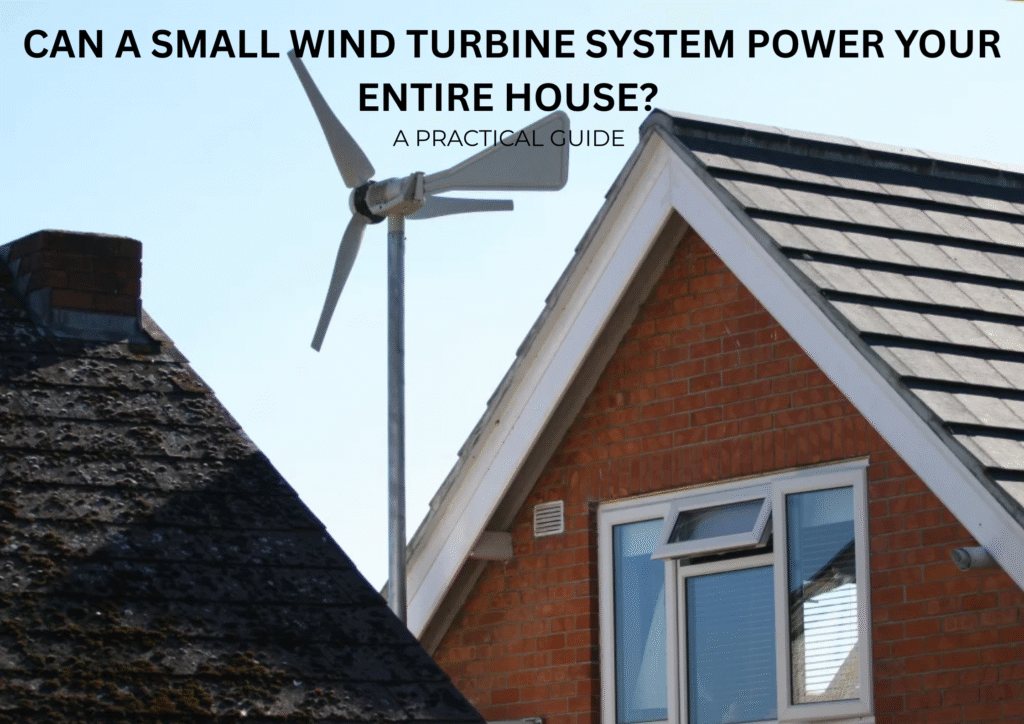
With the rising demand for renewable energy, small wind turbine systems are becoming the practical choice for homes, farms, and small businesses. The use of wind energy helps users reduce energy bills and reliance on fossil fuels. Just like large wind turbines, a small wind turbine system converts the natural power of moving air into usable electricity. You must wonder how much energy a small wind turbine actually generates. This practical guide explains the small wind turbine system, how much energy it produces, how a small wind turbine system can power your entire house, and some common myths about home wind power. Read the full article to know if wind energy can truly make your home self-sufficient and sustainable.
What Is a Small Wind Turbine System?
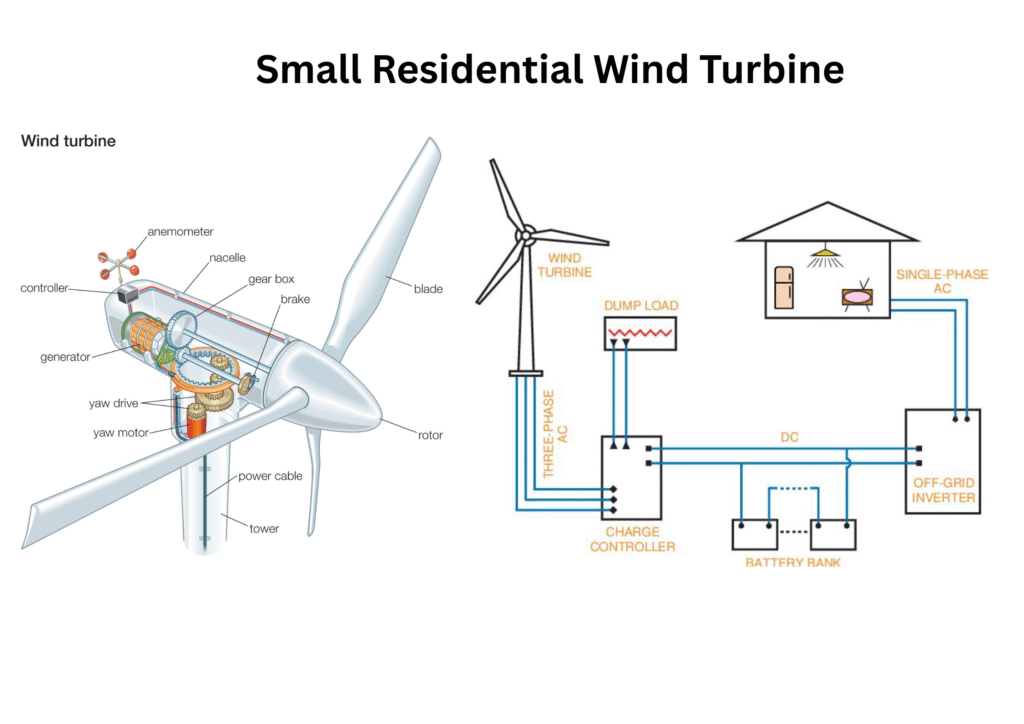
Small-scale wind turbines are designed to generate electricity for individual use rather than utility-scale power generation. These are scaled-down versions of a large wind turbine. Small wind turbine systems are typically designed with a capacity of up to 100 kW.
In on-grid setups, after the electricity is generated, it passes through an inverter and is synchronized with the utility grid. In an off-grid setup, electricity generated by the turbine is either stored in batteries or used directly to power equipment. Small wind turbines are typically used in residential homes, on farms, in remote locations, and in hybrid systems.
How Much Energy Can a Small Wind Turbine Really Produce?
The amount of energy a small wind turbine produces is determined by the amount of wind that passes through its blades. The produced energy also depends on turbine height, blade design, type of turbine, efficiency, and site location. The mathematical relationship between wind speed and power available in the wind is explained below.
P=ρ×A×V^3
Here, P = Power (Watts)
ρ= Air Density (kg/m³)
A = Area covered by the turbine blades (m²)
V = Wind Speed (m/sec)
The formula represents that as rho and A are constant values, the output power increases with the cube of the wind speed. This means that the power increases exponentially with wind speed. The power depends on the swept area of the blades, air density, and the cube of wind speed.
The ratings of small wind turbines vary from 400 Watts to 100kW. Areas with average wind speeds of 9 – 12 mph are ideal for installing small wind turbines. The approximate annual energy output from a small wind turbine ranges between 500 and 1500 kWh. At a location with consistent wind speed, a small wind turbine of 10 kW can generate approximately 15000 to 20000 kWh per year.
The generated power increases exponentially with wind speed, and even small changes in wind speed can lead to significant variations in power output. A wind turbine in an area with an average wind speed of 8mph can generate around 2,000kWh of energy per year. At the same time, the same turbine in an area with an average wind speed of 12mph can generate energy around 8000kWh per year.
Reference: A review on modern control applications in wind energy conversion system
Factors to Remember While Installing a Wind Turbine System in Your Home
- Average Wind Speed:
Before installing a wind turbine system, first evaluate the average wind speed at your location throughout the year. For a small wind turbine system, the average wind speed should be at least 4.5 to 5.5 m/sec.
- Electricity Consumed by Your Home
Evaluate your household energy needs to decide the size of the turbine. You can calculate this from your monthly energy bill.
- Turbine Size
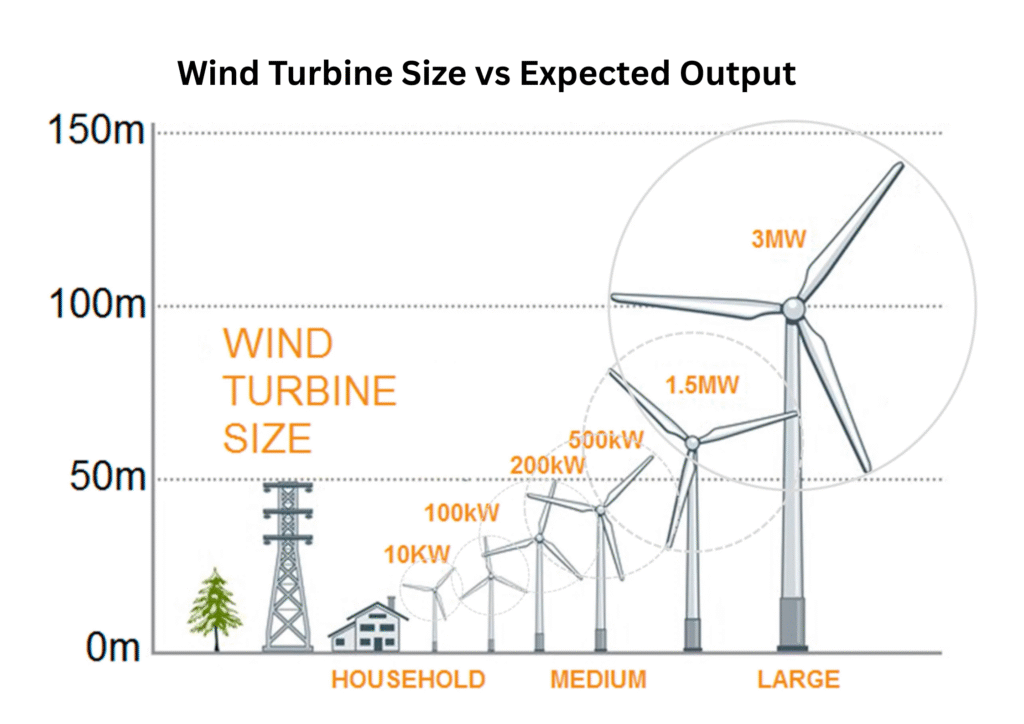
Select a correct turbine size that can meet your household’s energy needs. Residential wind turbines vary between 1 kW and 20 kW.
- Turbine Height
Wind speed increases with height. While installing a wind turbine, you must follow a general rule: “the tower should be at least 30 feet higher than any object within a 300-foot radius.”
- Permission from Local Zoning Authorities
Before installing a wind turbine, check the local zoning and permitting regulations. You may need a building permit for the tower, an electrical permit for system wiring, and also environmental clearance.
- Grid-tied or off-grid System
A grid-connected and off-grid wind turbine system affects the overall setup and cost. A grid-connected wind turbine system connects directly to the grid, whereas for an off-grid system, you need an energy storage system to power your home.
- Turbine Quality
While installing a wind turbine, select a certified wind turbine system that meets international standards for safety, durability, and performance. It offers high efficiency and ensures reliability during high wind conditions.
- Hire a Professional Installer
The wind turbine installation needs electrical, mechanical, and civil work. To ensure a correct installation, you must hire a professional installer.
How to Estimate Your Home’s Power Needs?
Method 1:
To estimate your home’s power needs, you should check your monthly electricity bills. In the electricity bill, the monthly energy consumption is written in kilowatt-hours (kWh).
To calculate the average monthly usage, add them all from January to December and divide by 12. This value suggests how much energy your home needs every month.
Method 2:
Make a list of all the electrical equipment, such as kitchen appliances, laundry equipment, lighting, entertainment devices, small equipment, etc. Then note the power rating of each appliance.
To calculate how much energy each appliance consumes per day, use this formula:
Energy (kWh) = (Power (Watts) x Operating Hours)/ 1000
This indicates the total daily energy consumption. Add all the values to find out the daily energy consumption, and multiply this by 30 to find out the monthly energy usage.
Always add 10 – 20% extra capacity to your calculation for energy usage in peak months.
Reference: MEASURING POWER
Can a Small Wind Turbine Power Your Entire House?
Some important factors determine whether a small wind turbine can power your entire house or not.
- Average Wind Speed at Your Location
The output power increases with the cube of wind speed. To meet a household’s energy needs, the average annual wind speed should be approximately 10-12 mph.
- Turbine Size
The wind turbine system used for residential purposes usually ranges between 3 kW and 20 kW. In low wind areas, to meet a household’s energy demand, you should install a large turbine of size up to 10 to 15 kW. Whereas, in high wind areas, small wind turbines of size up to 5 to 10 kW are enough to power your entire house.
- Electricity Usage in Your Home
Before installing a wind turbine, you must first calculate the average monthly electricity usage. You can find this out in your utility bills.
- Grid-tied or Off-grid System
If the wind turbine is connected to the grid, you can draw power from the grid during low wind periods. Whereas, in an off-grid system, you need a battery storage system to store excess energy for use during calm or stormy weather.
If the average household consumption is 11000 to 12000 kWh per year, and the average wind speed at your location is 12 mph, a small wind turbine of 10 kW is enough to power your entire house. It can generate around 18000 to 20000 kWh per year.
If the average wind speed in your area is around 8 to 9 mph, the output of the same wind turbine might drop to 7000 to 9000 kWh, and it can only cover a part of your home’s energy needs.
So, a small wind turbine system can power your entire house only if you live in a region with strong and consistent wind speeds. The right turbine size, installation height, and turbine design are other important factors that make it possible to meet your household’s electricity needs.
Reference: Small wind turbines – A unique segment of the wind power market
Common Myths and Misconceptions About Home Wind Power
Myth 1: The wind turbines only work in areas with constant, strong winds. The truth is that a small wind turbine operates efficiently at a wind speed of 3 to 4 m/sec.
Myth 2: Home wind turbines are very noisy. The truth is, the modern wind turbines operate quietly and smoothly.
Myth 3: A small wind turbine cannot power an entire home. The truth is, if you live in a region with strong and consistent wind speeds, a small wind turbine can power your entire home.
Myth 4: Wind turbines are harmful to wildlife or have a negative environmental impact. The truth is, it is one of the cleanest and most eco-friendly power sources.
Myth 5: The wind turbine system is not cost-effective. The truth is, the initial installation cost is usually high, around $5,000 to $10,000 per kilowatt. The long-term savings on electricity bills and strong financial returns over time make it cost-effective.
Myth 6: Wind energy is an unreliable power source. Truth is, modern systems use hybrid designs that integrate wind turbines with solar panels or battery storage to provide consistent power.
Conclusion and Future Trends
Proper planning, system design, and site location are some of the important factors that determine the success of wind turbine installation. If your home is located in a consistently windy area, it offers greater benefits. Modern wind turbines are quieter, more efficient, and easier to install, which makes them a practical option for rural households. To optimize energy production, small wind turbines can be integrated with smart home systems and an AI-based energy management system. In the future, small wind turbines are expected to play a larger role in residential microgrids and hybrid energy systems.
FAQS
- How many kW wind turbine do I need for a house?
If the average household consumption is 11000 to 12000 kWh per year, and the average wind speed at your location is 12 mph, a small wind turbine of 10 kW is enough to power your entire house. It can generate around 18000 to 20000 kWh per year.
If the average wind speed in your area is around 8 to 9 mph, the output of the same wind turbine might drop to 7000 to 9000 kWh, and it can only cover a part of your home’s energy needs.
2. Do small wind turbines work in low wind areas?
For a small wind turbine system, the average wind speed should be at least 4.5 to 5.5 m/sec. However, the modern wind turbines with advanced technology and tall towers can generate power in low wind areas.
Also Read:
- The Evolution of Wind Power: How Wind Power Is Shaping the Future of Renewable Energy Grids?
- How Wind Direction and Speed Affect Wind Turbine Performance? A Complete Guide
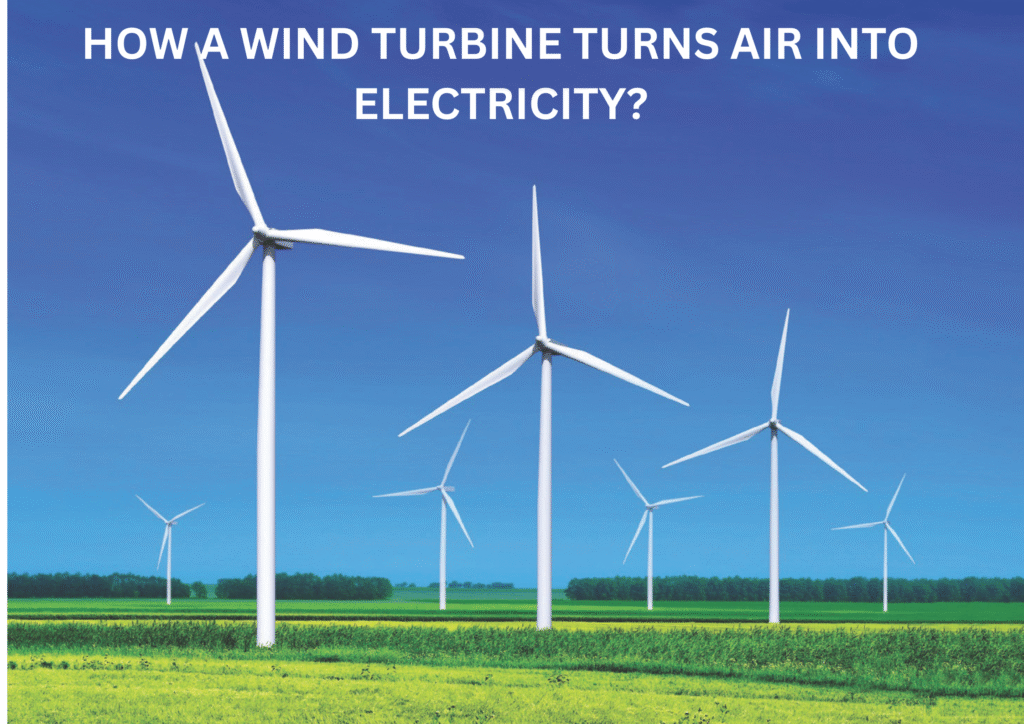
- A Complete Guide to How a Wind Turbine Turns Air into Electricity: From Blades to Grid
- Importance of AI-Driven Predictive Maintenance in Wind Energy Systems
- Are DIY Solar Panel Kits Worth It? A Complete Guide
- Portable Solar Panel Kits: Best Uses for RVs and Camping
- Breaking Down Each Component of a 5kW Solar Panel Kit
- What Size Solar Panel Kit Do You Need? Find the Right Solar Kit for Your Home
- Perovskite Solar Panels: The Future of Home Solar
- High-Wattage 450W Solar Panels: Are They Worth It for Your Home Roof Space?
- The Rise of 600W+ High-Power Panels in Commercial Solar Farms
- HJT Solar Panels: A Right Solar Investment for Large Businesses
- N-Type TOPCon Solar Panel: A Complete Guide
- TOPCon Vs HJT Vs Tandem Solar Panels: Make The Best Purchase for Your Project
- Case Study: How Bifacial Solar Panels Improved Output in the Nevada Desert?
- Performance of Tandem Solar Cells in Real Pilot Solar Farms: A Case Study
- Flexible Solar Panels: The Ideal Solution for Small and Irregular Spaces
- Crystalline Vs Thin-Film Solar Panels: Which One Is The Best for Your Modern Smart Homes?
- Tandem Solar Panels: The Future of Rooftop Solar
Pingback: A Step-by-Step Guide to Design a Small Wind Turbine System - science2energy
Pingback: How to Combine Solar Panels and Wind Turbines for 24/7 Home Energy? A Hybrid Solar-Wind System - science2energy
Pingback: Why Taller Wind Turbines Produce More Power? The Real Reason Behind It - science2energy
Pingback: AI-Powered Wind Turbine: How It Optimizes Power Output? - science2energy
Pingback: Payback Period for Residential Wind Power: What Homeowners Can Expect - science2energy
Pingback: Solar Farms on Old Landfills: How Unused Lands Are Powering Solar Energy Projects? - science2energy
Pingback: The Global Clean Energy Race: Who’s Ahead and Why? - science2energy
Pingback: Solar Panels: Latest Technology and Current Price Trends - science2energy