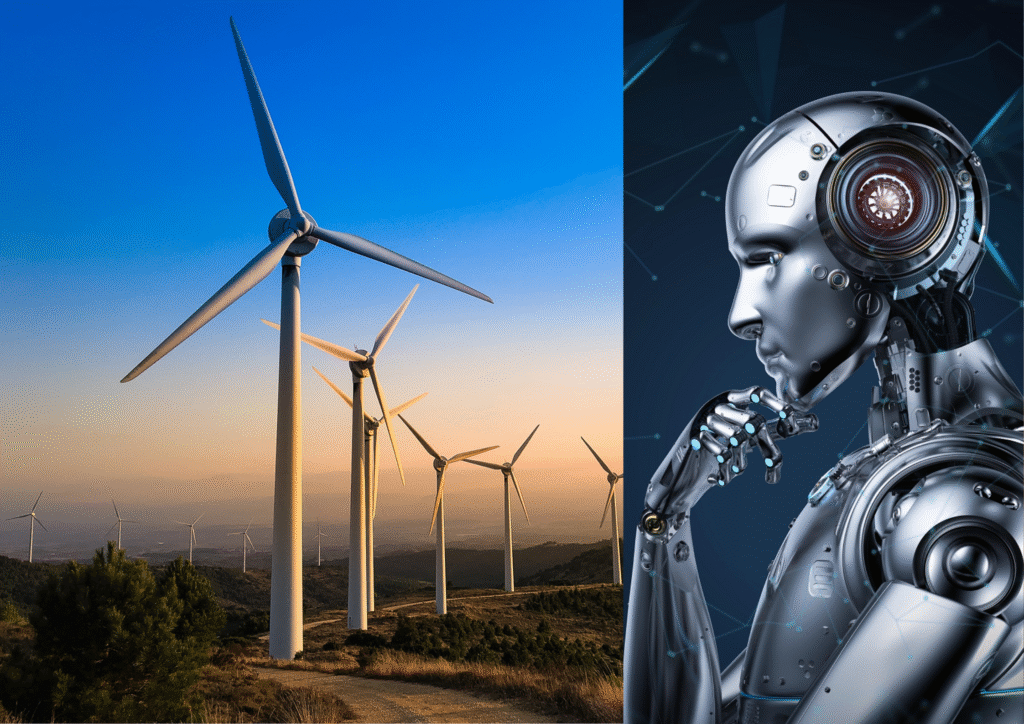
Today’s AI-powered wind turbine is not only machines that converts wind to electricity but an intelligent system that thinks, learns, and makes decisions in real-time. The advanced wind turbines are designed by implementing smart sensors and AI-powered tools that can track every small change in wind behavior and the system’s performance.
Do you know that an AI-powered wind turbine can increase energy production by up to 15% as compared to traditional turbines? These advanced wind turbines carry more than 200 sensors, each tracking vital data every second.
This article explains everything in detail about AI-powered wind turbines, the smart sensors, how AI uses sensor data to optimize power output, and AI-powered monitoring and control systems used in the turbines.
What Is AI-Powered Wind Turbine?
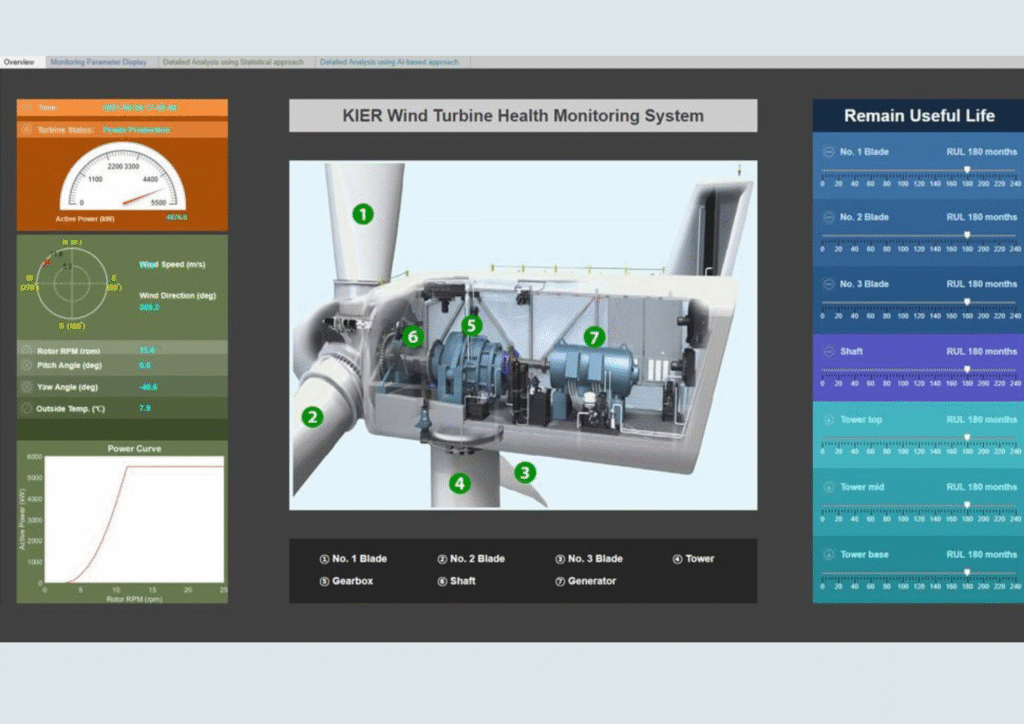
AI-powered wind turbines are advanced wind energy systems designed using intelligent digital technologies to enhance the overall performance of the system. These wind turbines enhance energy production, increase the reliability of the wind farm, and also reduce the maintenance costs.
AI-powered wind turbines utilize intelligent tools that learn from real-time data and adjust the system’s performance in response to changing wind conditions.
The key components of an AI-powered wind turbine are:
Smart Sensors: The high-precision sensors measure data such as wind speed, temperature, pressure, vibration, blade pitch angle, etc., and send this data to the turbine’s control system.
Intelligent Control Algorithms: The wind turbine system uses control algorithms to analyze the data and adjust its blade pitch angle, rotor speed, and yaw direction accordingly to capture maximum energy.
Predictive Analysis: The AI tools analyze both the historical and present data to predict the condition of the equipment, weather patterns, and performance drops.
Reference: The role of AI and machine learning in revolutionizing wind energy
Smart Sensors Used in AI-Powered Wind Turbines
Smart sensors used in AI-powered wind turbines are discussed below.
- Wind Speed and Direction Sensor: These sensors measure how fast the wind is moving and the direction of the wind. These sensors are also known as anemometers and wind vanes. By using these data, the turbine turns the nacelle toward the wind and adjusts rotor speed.
- Blade Pitch Sensor: These sensors measure the exact angle of each blade. These data help the turbine to optimize the blade position during varying wind conditions.
- Vibration Sensors: These sensors measure the vibration in the blades, tower, nacelle, and gearbox. These sensors are also known as accelerometers. The data are used for early fault detection and to prevent serious damage and reduce downtime.
- Temperature Sensors: These sensors are used to detect the temperature level of multiple components, including the gearbox, generator, bearings, and power electronics.
- Pressure Sensors: These sensors ensure there is enough pressure in the system to operate safely. These sensors are used in hydraulic systems that control blade pitch and braking mechanisms.
- Acoustic Sensors: These sensors listen for unusual sounds inside the turbine.
- Strain Sensors: These sensors measure the stress on the blades, tower, and other structural parts.
- Environmental Sensors: These sensors measure some environmental data, such as humidity, air pressure, lightning, and temperature around the turbine.
How AI Uses Sensor Data to Optimize Power Output?
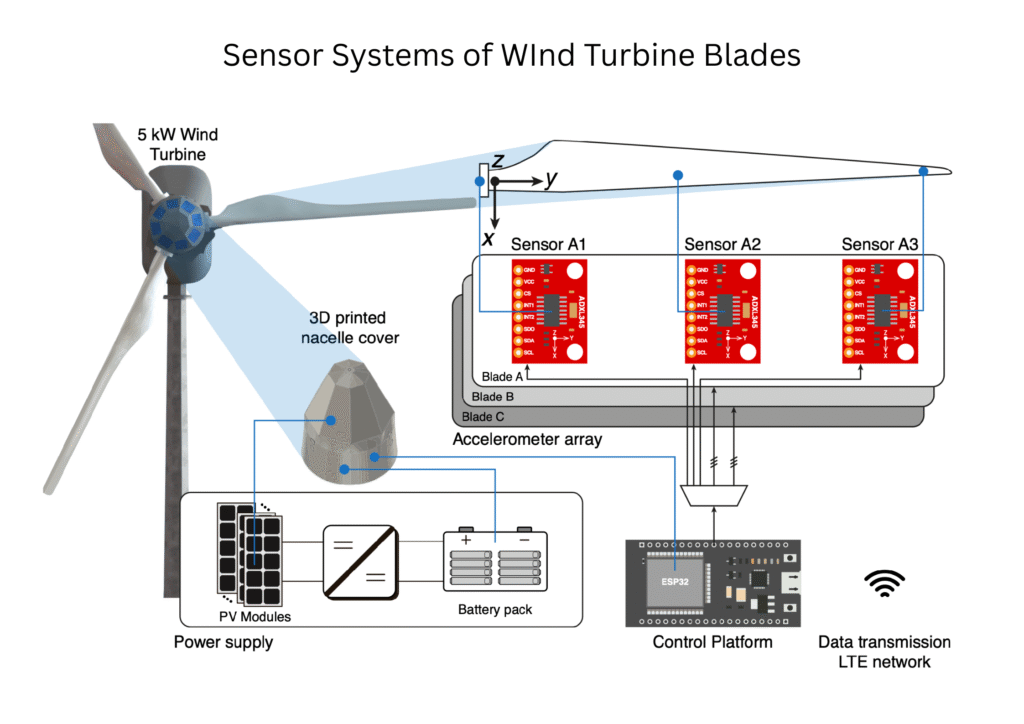
After analyzing the data provided by the wind speed and direction sensors, the AI tools decide how the turbine should position itself. The AI tools help the turbine rotate to face the strongest flow, reducing energy loss.
AI analyzes the information provided by blade pitch sensors. The AI tools command the turbine to adjust the blades to capture the right amount of wind. In low-wind conditions, the blades are set open wider to collect more energy. Whereas, during strong winds, the blades turn slightly to prevent overload.
By analyzing the data provided by vibration sensors, AI tracks the condition of the blades, bearings, and gearbox. If the AI tools notice something unusual, it reduces the load, changes the operating mode, or alerts technicians.
AI tools use temperature sensor data to monitor the heat inside the various components of the turbine. AI uses this data to prevent overheating and damage to critical parts.
AI algorithms compare the historical data and current sensor readings to predict how much energy the turbine will produce in the next hour or the next day. The AI tools also analyze the data provided by environmental sensors and decide when to change settings or shut down the turbine temporarily. This protects the turbine during extreme weather.
The AI tools continuously analyze the wind speed and direction data and command the nacelle to rotate at the ideal angle. This precise alignment increases overall energy production.
The Role of AI in Predictive Maintenance
The AI-powered wind turbines track real-time sensor data 24/7 and compare it with the normal operating patterns. A small change in the data is instantly flagged. For example, a small change in vibration signals represents gearbox wear, and a change in torque and speed readings represents generator imbalance. The technicians learn about the blade cracks through acoustic data.
The predictive models help in identifying the faults before they become failures. Once AI detects unusual behavior, the maintenance team schedules repairs at the right time. This prevents sudden failures and reduces unexpected downtime.
The mechanical parts of a wind turbine are expensive to replace. The AI-driven predictive maintenance improves the overall lifespan of the turbine. It helps maintenance teams to know exactly which part needs attention and what type of repair is required.
The AI-driven predictive maintenance prevents large breakdowns and cuts labor costs. Early fault detection minimizes expensive emergency repairs and extends the working life of major components.
Reference: Application of Artificial Intelligence in Wind Power Systems
AI-Powered Monitoring and Control System in Wind Turbines
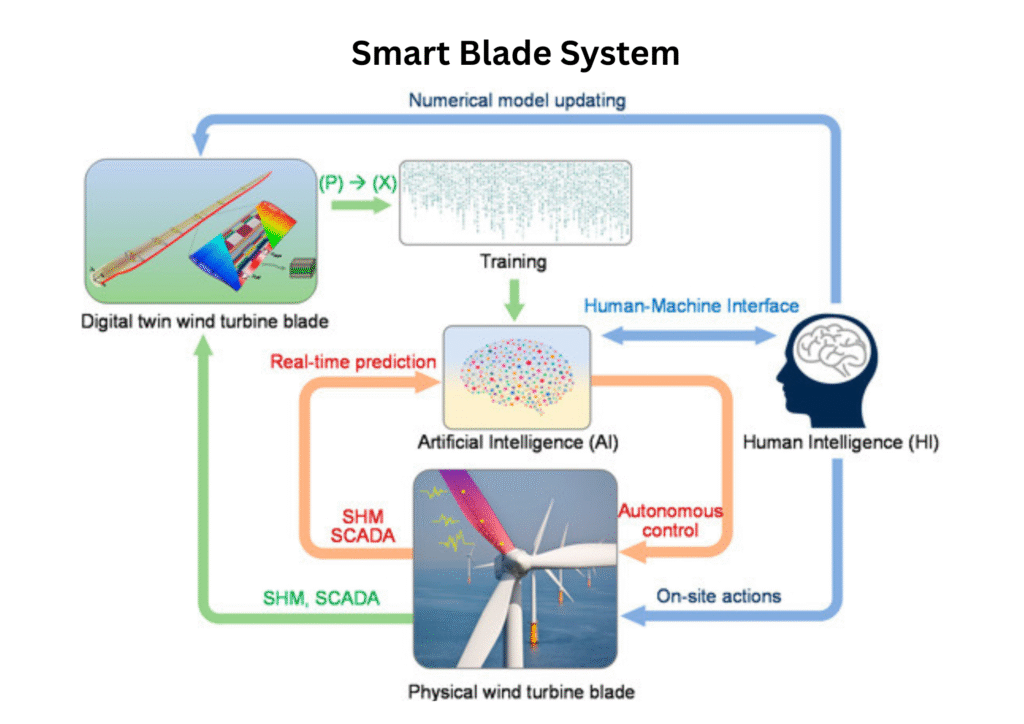
Real-Time Monitoring: The smart sensors equipped with wind turbines measure data such as vibration, wind speed, temperature, rotor position, etc., second by second. If the system notices something abnormal, it quickly reacts to avoid damage. This helps the turbine to operate more accurately and safely.
Control Systems:
- Blade Pitch Controller: The AI-powered monitoring system continuously monitors the real-time data, and the controller adjusts the blade angle to capture maximum energy. During high wind speeds, the blades turn slightly to prevent overload. During low wind speeds, the blades open wider to increase lift.
- Rotor Speed Controller: The AI-powered control system adjusts the rotor speed according to the varying wind speed to maximize energy production.
- Intelligent Yaw Control System:The AI-powered system uses wind direction data to correct the nacelle’s position instantly. This helps the turbine stay aligned with the strongest wind flow.
How AI-Powered Wind Turbines Deliver More Stable Electricity?
The AI-powered tools continuously analyze the sensor’s data and adjust the rotor speed and blade pitch angle accordingly. This avoids sudden spikes or drops in power output and helps the turbine produce a smoother and more predictable flow of electricity.
The power stability depends on how efficiently the turbine captures wind energy. The AI tools continuously rotate the nacelle to face the strongest wind direction. Even a small adjustment can significantly enhance the power production.
The AI-powered tools consistently compare the current data with the historical data and forecast power production. This allows grid operators to plan power flow and manage demand. It makes the overall electricity supply more stable.
During extreme weather conditions, AI reduces the load or adjusts rotor speed to maintain safe operation. The early fault detection by AI tools helps the maintenance teams repair during scheduled downtime. The AI-powered tools ensure the entire wind farm operates in a coordinated manner. It makes the electricity flowing to the grid far more stable.
Reference: AI Secures Power Network Stability Amidst Growing Electricity Demands
Case Study
Case Study: GE Digital Wind Farm
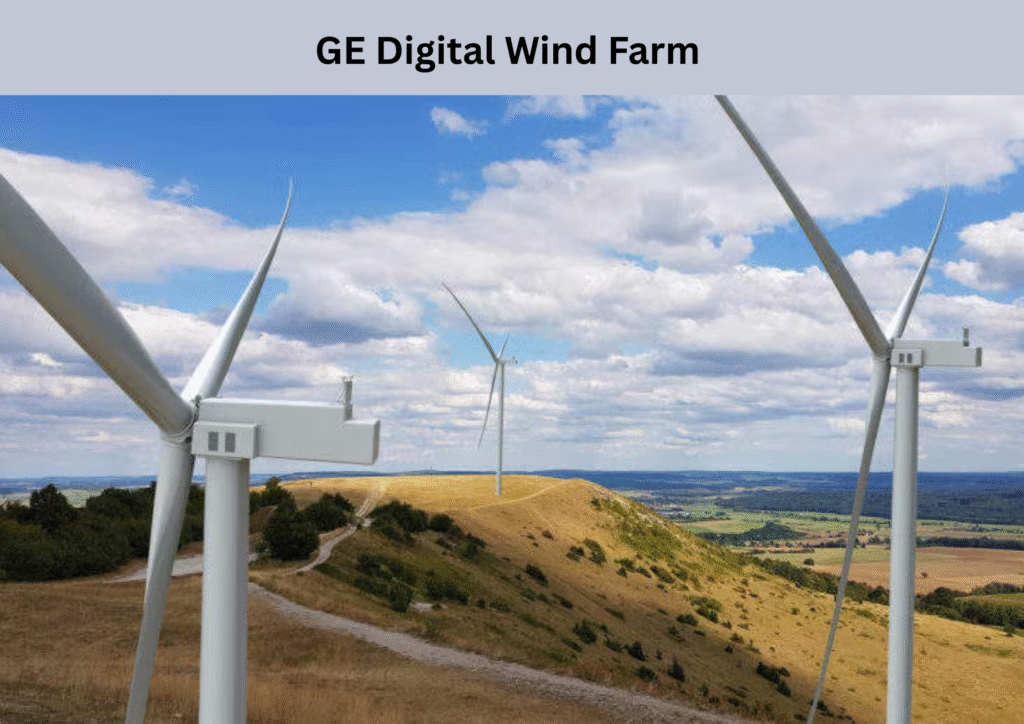
General Electric (GE) has developed a digital wind farm that integrates data from hundreds of turbines. For anomaly detection, it uses PulsePOINT technology. PulsePOINT is used on over 12,000 wind turbines globally. By using its PowerUp app, GE applies iterative tuning of turbine settings (blade pitch, yaw, etc.). Its Energy Forecasting application uses weather prediction combined with real-time data to forecast power output. This project combines condition monitoring, predictive maintenance, and performance tuning to improve the overall performance.
Reference: GE Brilliant wind farms
Challenges of AI-Powered Wind Turbines
- The AI-powered wind turbine uses hundreds of smart sensors. Maintaining sensor accuracy in harsh weather conditions is a major challenge.
- The processing of massive real-time data generated by these turbines requires high-capacity storage and reliable connectivity.
- The AI-powered turbines are becoming more exposed to cyber risks.
Future Trends of AI-Powered Wind Turbines
- The next generation of wind turbines will be self-learning. They will be able to learn from long-term data patterns and adjust their behavior automatically.
- The advanced wind turbines will use smarter predictive maintenance techniques such as advanced vibration mapping, thermal imaging, and sound analysis to detect faults earlier than ever.
- Instead of sending all data to a distant server, future turbines will process data at the turbine itself.
Conclusion
The integration of artificial intelligence is making the wind turbines cleaner, stronger, and more efficient. These AI-powered wind turbines are designed with advanced technologies such as AI tools, real-time adjustments, and accurate forecasting. These smart features enable wind turbines to run smarter, adapt faster, and produce clean energy more efficiently.
FAQS
- What are AI-powered wind turbines?
AI-powered wind turbines are advanced wind energy systems designed using intelligent digital technologies to enhance the overall performance of the system. These wind turbines enhance energy production, increase the reliability of the wind farm, and also reduce the maintenance costs.
AI-powered wind turbines utilize intelligent tools that learn from real-time data and adjust the system’s performance in response to changing wind conditions.
2. What are the roles of AI in predictive maintenance?
The predictive models powered by AI help in identifying the faults before they become failures. Once AI detects unusual behavior, the maintenance team schedules repairs at the right time. This prevents sudden failures and reduces unexpected downtime.
Also Read:
- How Smart Wind Turbine Blades Are Redefining the Future of Wind Energy?
- A Technical Look at Offshore Wind Farms
- Can Wind Turbines Operate Efficiently in Low-Wind Regions? What You Need to Know?
- Why Taller Wind Turbines Produce More Power? The Real Reason Behind It
- A Step-by-Step Guide to Design a Small Wind Turbine System
- Can a Small Wind Turbine System Power Your Entire House? A Practical Guide
- The Evolution of Wind Power: How Wind Power Is Shaping the Future of Renewable Energy Grids?
- How Wind Direction and Speed Affect Wind Turbine Performance? A Complete Guide
- A Complete Guide to How a Wind Turbine Turns Air into Electricity: From Blades to Grid
- Importance of AI-Driven Predictive Maintenance in Wind Energy Systems
- Are DIY Solar Panel Kits Worth It? A Complete Guide
- Portable Solar Panel Kits: Best Uses for RVs and Camping
- Breaking Down Each Component of a 5kW Solar Panel Kit
- What Size Solar Panel Kit Do You Need? Find the Right Solar Kit for Your Home
- Perovskite Solar Panels: The Future of Home Solar
- High-Wattage 450W Solar Panels: Are They Worth It for Your Home Roof Space?
- The Rise of 600W+ High-Power Panels in Commercial Solar Farms
- HJT Solar Panels: A Right Solar Investment for Large Businesses
- N-Type TOPCon Solar Panel: A Complete Guide
Pingback: Machine Learning in Wind Energy Forecasting: The Future of Smart Grids - science2energy
Pingback: Where can I buy residential wind turbines with installation services? - science2energy