
Home wind turbines are helping thousands of homeowners to generate their own clean energy, cut electricity bills, and recover most of their investment faster. With the growing demand for renewable energy, government and utility companies are offering attractive incentives and rebates. These incentives help reduce the cost of wind turbine installation and make clean power more affordable.
Do you know that home wind turbine systems can lower household electricity bills by 50–90% in areas with strong wind speeds? Again, the incentives and rebates can cover a large portion of the upfront costs, including equipment, installation, and even grid connection costs.
This article explains the incentives and rebates for home wind turbine installation. Read the full article to learn how they can turn your home into a source of sustainable electricity.
Why Do Governments Offer Wind Energy Incentives?
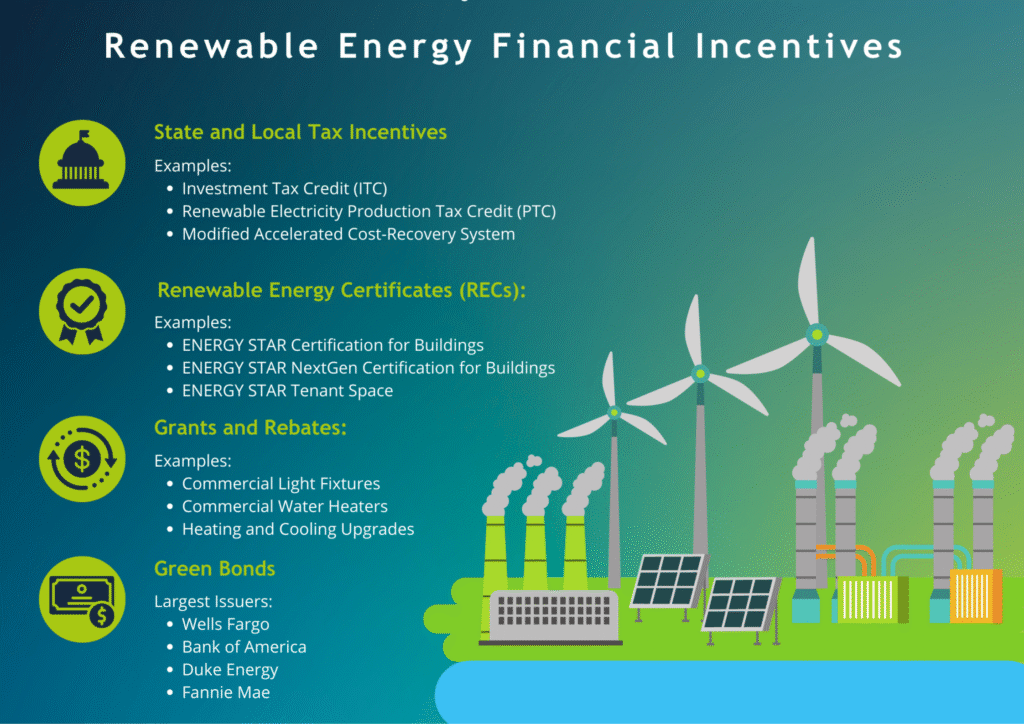
Wind energy incentives are financial or policy-based mechanisms such as tax credits, subsidies, grants, net metering, and rebates designed to promote the adoption and development of home wind turbine installations. These incentives make wind energy more affordable.
- Wind energy incentives encourage more wind turbine installations. This leads to lower carbon footprints, cleaner air in cities, and a greener future.
- Installation of home wind turbines improves long-term energy security. It offers stable electricity in remote areas and reduces power outages. It significantly cuts electricity bills and reduces dependence on fossil fuels.
- Wind turbine installation also supports economic growth by creating new job opportunities in both rural and urban regions.
- Incentive programs support research centers, startups, and universities working on new solutions. This encourages innovation and technology development. The advanced wind turbine system generates power even at lower wind speeds.
- The incentives help reduce the upfront costs for wind turbine installation. This makes renewable energy more affordable for everyone.
Reference: Residential Clean Energy Credit
Types of Incentives for Home Wind Turbine Installation
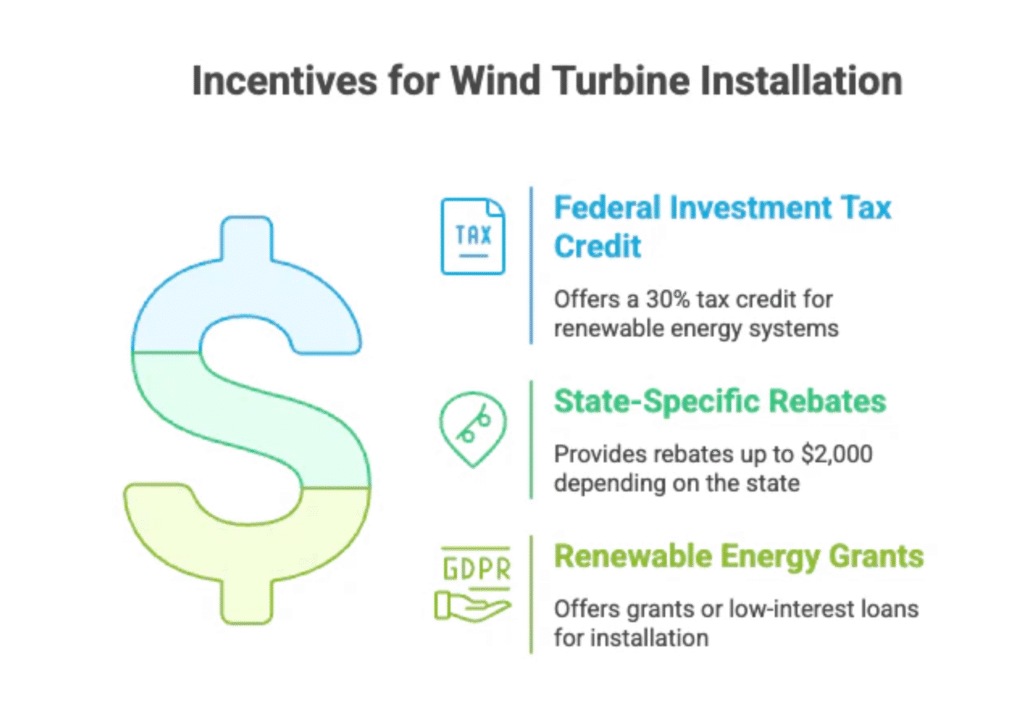
- Federal Tax Credit:
It allows homeowners to deduct a percentage of the wind turbine installation cost from their income taxes. These credits are applied to equipment purchase, installation charges, and labor charges.
- State and Local Rebates:
Some states and local authorities offer direct rebates that reduce the upfront payment at the time of purchase. It makes the wind turbine systems more cost-effective.
- Property and Sales Tax Exemptions:
Some areas offer property tax exemptions so homeowners do not pay extra taxes on the value added by the turbine. Sales tax exemptions may also apply when purchasing wind turbine components. This reduces the overall cost of the wind turbine system.
- Performance-Based Incentives (PBIs):
These incentives are given to homeowners according to the actual electricity produced by the wind turbine. This encourages homeowners to maintain high-performing systems and maximize energy output.
- Net Metering Programs:
Net metering allows homeowners to send excess electricity back to the grid when their turbine generates more power than they need. In return, they receive credits that reduce monthly electricity bills.
- Low-Interest Loans:
Some government agencies offer financial assistance through installment-based loan plans and long-term, low-interest loans. This reduces the upfront costs of wind turbine systems and makes wind power cost-effective.
How Incentives Reduce the Cost of Home Wind Turbines?
- Reduces Equipment and Installation Costs
Incentives directly reduce the upfront purchase expenses and installation costs. The homeowners have to pay a lesser amount, which makes the small-scale wind turbine installation more affordable.
- Reduces Tax Burdens
Incentives such as state tax deductions, federal tax credits, and property tax exemptions reduce financial burdens. This improves the financial value of wind energy investments.
- Revenue Through Net Metering
The net metering program allows homeowners to send excess power generated from wind turbines back to the local grid. In reverse, the utility company sends energy credits for that power. These credits help lower the future electricity bills. Thus, wind energy turns into an economic benefit.
- Performance-Based Incentives
Homeowners with wind turbine installationsgain a predictable income for every kilowatt-hour generated, known as performance-based incentives. A stable financial return makes home wind turbines more profitable over time.
- Low-interest loans
With low-interest loans, homeowners can pay for a wind turbine gradually, instead of making one large payment. This helps more families access clean energy technology without major budget stress.
Who Qualifies for Wind Turbine Incentives?
- Homeowners who own the installation site, including single-family homeowners, farmers and rural property owners, and small businesses with on-site wind systems, qualify for wind turbine incentives.
- The wind turbines that are designed to power the home or building on the property are qualified for incentives. The installation should have small wind turbines ranging from 1-100kW, and a grid-connected system with net metering.
- The wind turbine model and components should meet national reliability standards to be qualified for incentives.
- The wind turbine installers may also need specific licenses or certifications to qualify for incentives.
- The property must have proper building permits, an approved tower height, and must follow local permitting rules to get qualified for incentives.
- The wind turbines must be connected to the utility grid for credit-based benefits.
How to Apply for Home Wind Energy Incentives
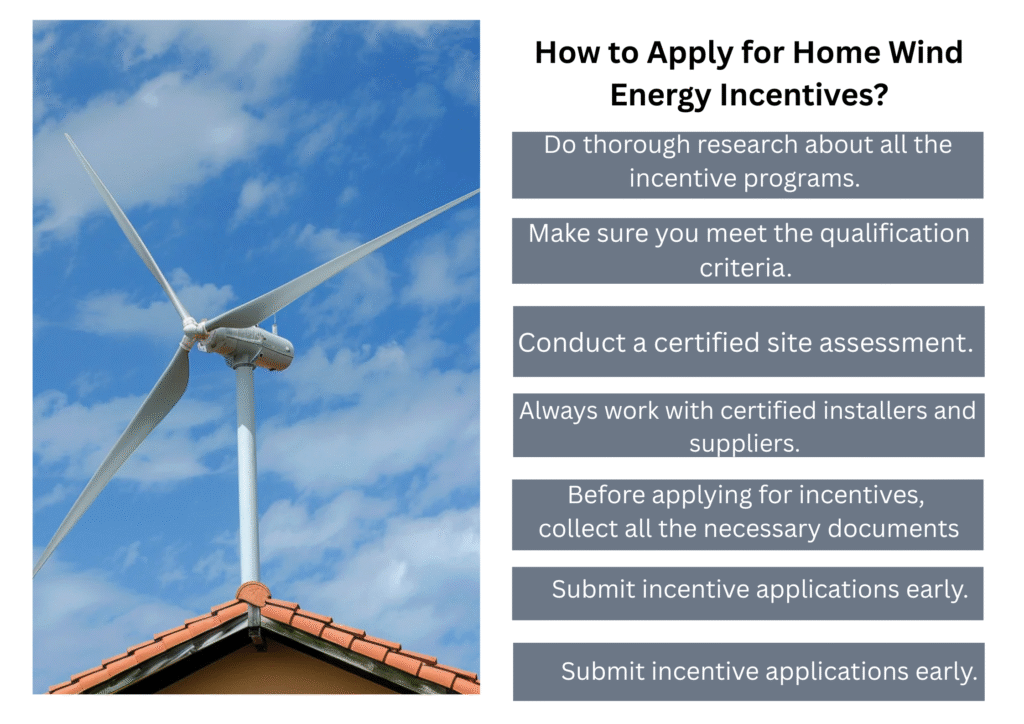
Follow the steps below to apply for home wind energy incentives.
Step 1: Do thorough research about all the incentive programs in your area. Check for all the incentive types, such as federal tax credits, state and local rebates, net metering rules, etc., and make a complete list.
Step 2: Make sure you meet the qualification criteria. The incentive programs require eligibility certificates such as property ownership, certified wind turbine equipment, zoning approvals, and professional installation.
Step 3: Many incentive programs ask for a wind resource evaluation. So, conduct a certified site assessment to check wind speed, direction, tower height, grid connectivity, estimated yearly energy production, etc. The site assessment report strengthens your application and proves that the system will perform well.
Step 4: Always work with certified installers and suppliers. Many incentive providers often require installation by licensed professionals.
Step 5: Before applying for incentives, collect all the necessary documents, which include:
- Equipment cost or invoices
- Turbine model certification records
- Building permits
- Site assessment records
- Energy production projections
- Contract agreements with installers
Step 6: Most wind energy incentives have strict deadlines. So, submit incentive applications early or before installation begins to avoid missing out on benefits.
Step 7: Once the wind turbine is installed, complete final inspections by the authorities. They inspect the system to confirm safe operation and code compliance. After that, you can start generating clean energy and earning financial credits or tax savings.
Reference: Small Wind Turbines (Residential) Tax Credit
Tips for Homeowners
- Do thorough research about all the incentive programs in your area. Check for all the incentive types, such as federal tax credits, state and local rebates, net metering rules, etc., and make a complete list.
- Most incentive programs require tested and approved turbine models that meet safety and performance standards. Before buying, the homeowners should confirm that the turbine is approved under the required national or regional certification program.
- Always hire licensed and experienced installers who understand incentive procedures and help ensure eligibility.
- Perform a wind resource assessment to determine whether the location can generate enough wind to qualify for certain incentives. Higher performance estimates lead to better financial returns and smoother approval.
- Many incentive programs require proof that the project follows local building and zoning rules. Always secure permits before installation begins.
- Always keep all the records and receipts, which are essential when applying for financial incentives.
- Submit applications early that offer better approval chances. Some incentive programs have strict deadlines.
Conclusion
Incentives for installing home wind turbines deliver a powerful combination of environmental protection, economic growth, and long-term energy security. The government is supporting clean energy initiatives through incentives and rebates to build a healthier and more resilient future. These incentives make wind power more affordable. The homeowners should follow all the necessary steps written above to receive strong financial support for their clean-energy investment.
FAQS
- What are Net metering programs?
Net metering allows homeowners to send excess electricity back to the grid when their turbine generates more power than they need. In return, they receive credits that reduce monthly electricity bills.
2. What is a Federal Tax Credit?
Federal tax credit allows homeowners to deduct a percentage of the wind turbine installation cost from their income taxes. These credits are applied to equipment purchase, installation charges, and labor charges.
Also Read:
- What Are the Most Efficient Small-Scale Wind Turbines for Home Use?
- Where can I buy residential wind turbines with installation services?
- AI-Powered Wind Turbine: How It Optimizes Power Output?
- How Smart Wind Turbine Blades Are Redefining the Future of Wind Energy?
- A Technical Look at Offshore Wind Farms
- Can Wind Turbines Operate Efficiently in Low-Wind Regions? What You Need to Know?
- Why Taller Wind Turbines Produce More Power? The Real Reason Behind It
- A Step-by-Step Guide to Design a Small Wind Turbine System
- Can a Small Wind Turbine System Power Your Entire House? A Practical Guide
- The Evolution of Wind Power: How Wind Power Is Shaping the Future of Renewable Energy Grids?
- How Wind Direction and Speed Affect Wind Turbine Performance? A Complete Guide
- A Complete Guide to How a Wind Turbine Turns Air into Electricity: From Blades to Grid
- Importance of AI-Driven Predictive Maintenance in Wind Energy Systems
- Are DIY Solar Panel Kits Worth It? A Complete Guide
- Portable Solar Panel Kits: Best Uses for RVs and Camping
- Breaking Down Each Component of a 5kW Solar Panel Kit
- What Size Solar Panel Kit Do You Need? Find the Right Solar Kit for Your Home
- Perovskite Solar Panels: The Future of Home Solar
- High-Wattage 450W Solar Panels: Are They Worth It for Your Home Roof Space?
- The Rise of 600W+ High-Power Panels in Commercial Solar Farms
Pingback: Payback Period for Residential Wind Power: What Homeowners Can Expect - science2energy
Pingback: Solar Farms on Old Landfills: How Unused Lands Are Powering Solar Energy Projects? - science2energy