Are you planning to install a wind turbine at home but wondering how long it will take to recover your investment? Many homeowners are installing wind turbine systems for reliable and clean energy. The amount of electricity generated by a wind turbine depends on the wind speed, tower height, and turbine size. However, a residential wind turbine can generate between 400 kWh and more than 10,000 kWh per year.
But how long does it take for these energy savings to recover the initial investment, which is also known as the payback period? This is not the same for everyone. One has to wait for 20 years or more, whereas the other can clear it in 6 to 10 years. It depends on various factors such as local wind speed, electricity price, and available incentives.
This guide explains everything in detail about the payback period for residential wind power, the total cost of a wind turbine system, how to calculate the payback period for residential wind power, the average payback period, etc. Read the full article to get a clear idea of this topic.
What Is the Payback Period for Residential Wind Power?
The payback period of residential wind power is defined as the time required for the savings on your electricity bills to equal the total cost of buying and installing the wind turbine system.
You can save electricity bill by
- Generating your own electricity by using a wind turbine system or any kind of renewable resources, such as solar, wind, etc.
- Being less dependent on the utility grid for electricity. It reduces the electricity bill.
- Selling excess power back to the grid.
So, how quickly a home wind turbine pays for itself depends on
- Average wind speed at your location
- System Size (A small wind turbine system may have longer payback times, whereas larger wind turbines offer faster payback)
- The total cost of your project, including turbine, wiring, tower cost, and installation cost.
- Electricity prices at your location
- Incentives, rebates, and tax credits offered by the government
Total Cost of Residential Wind System
- Wind Turbine Price:
The cost of a wind turbine varies based on size, materials, and power capacity. A small turbine ranges between $5000 and $25000. Whereas, a large wind turbine’s price varies between $ 25,000 and $ 75,000.
- Tower and Foundation Cost:
Wind speed increases with height, and high wind speed improves output power. It is ideal to consider for a tall tower. The cost of the tower often makes up 20 -30% of the total budget.
- Installation Cost:
Professional installation ensures proper safety, wiring, and permitting compliance. This may add several thousand dollars to the final price.
- Cost of Electrical Components:
The cost of electrical components, such as inverters, cables, switches, and charge controllers, can vary depending on the distance from the turbine to your home’s electrical panel.
- Permits and Approvals:
Local zoning regulations require site evaluation, structural analysis, etc. These fees may range from a few hundred to a few thousand dollars
Reference: Small Wind Turbines: A 2025 Guide (vs. Solar Panels)
How Much Energy Can a Small Wind Turbine Produce?
Small wind turbine systems are generally designed for residential uses, remote properties, and farms. The amount of energy a small wind turbine generates is measured in kilowatt-hours (kWh) per year. It depends on
- Rated capacity of the wind turbine during the strong wind period
- Average wind speed at that location
- Tower height
- Rotor design
- System’s efficiency
A general idea of the energy output of a small wind turbine with respect to turbine size is represented below.
| Turbine Size | Average Annual Energy Output | Suitable for |
| 1 kW | 1000 – 2000 kWh | Small Cabins |
| 3 kW | 3000 – 6000 kWh | Partial household energy requirement |
| 5 kW | 6000 – 10000 kWh | High wind areas |
| 10 kW | 10000 – 20000+ kWh | Full household energy requirement |
Reference: How Much Electricity Can a Home Wind Turbine Generate?
Factors That Affect Payback Period
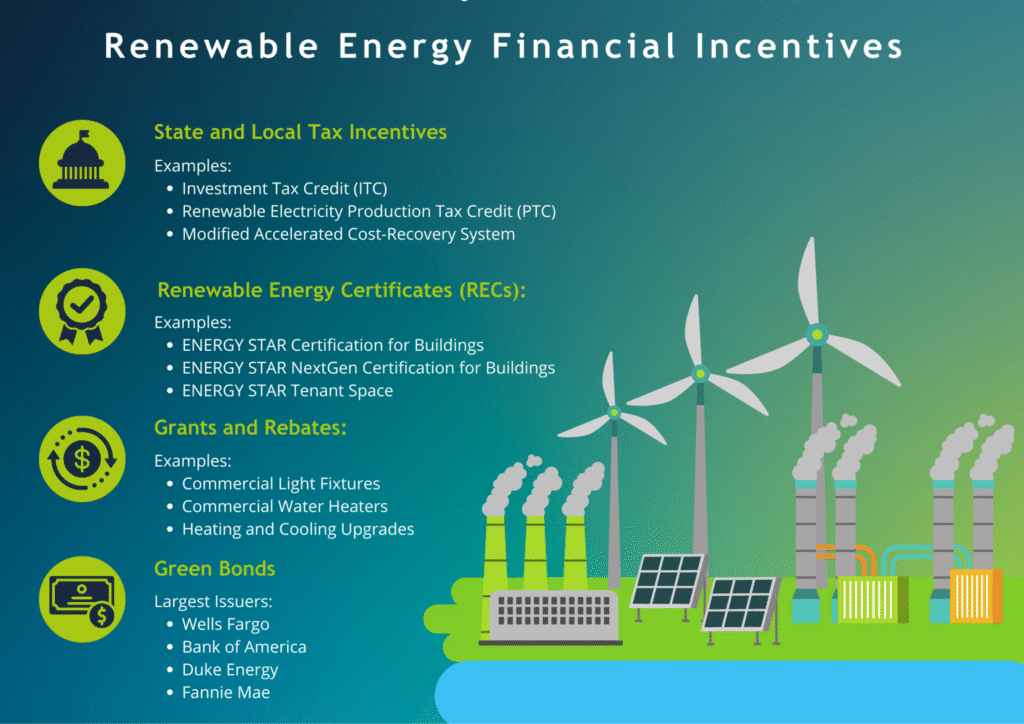
The key factors that affect the payback period of residential wind power are discussed below.
- Average Wind Speed: A small change in wind speed has a large impact on energy production. So, a wind turbine system installed at a location with high wind speed can have a faster payback.
- Efficiency of the Wind Turbine System: A wind turbine system with a high rated capacity can generate more power. The upfront cost of these turbines is higher. So, select a well-matched wind turbine that is not too large or too small. It provides the best balance of cost and energy output.
- Total Installation Cost: The higher the installation cost, the longer the payback period.
- The Cost of Energy: If the energy prices of the area are high, the energy produced by the wind turbine saves more money. It offers faster payback.
- Incentives: The incentives and rebates offered by the government can reduce the upfront cost and shorten the payback period by several years.
- Maintenance Cost: Lower yearly maintenance leads to a shorter payback time.
- Performance of Wind Turbine: If a wind turbine performs excellently and generates higher energy output, it leads to a better return on investment.
Average Payback Period for Residential Wind Power
The average payback period for residential wind power usually falls between 10 to 20 years. However, With strong incentives, the payback period can improve by several years. Many wind turbines designed for residential use last 20 to 25 years or more.
Example:
The average cost of residential wind power ranges between $30000 and $60000.
The electricity generated from the turbine saves $1500 to $3000 on electricity bills.
The average payback period = 30000/3000 = 10 Years
Or, 60000/3000 = 20 Years
How to Calculate Payback Period for Residential Wind Power?
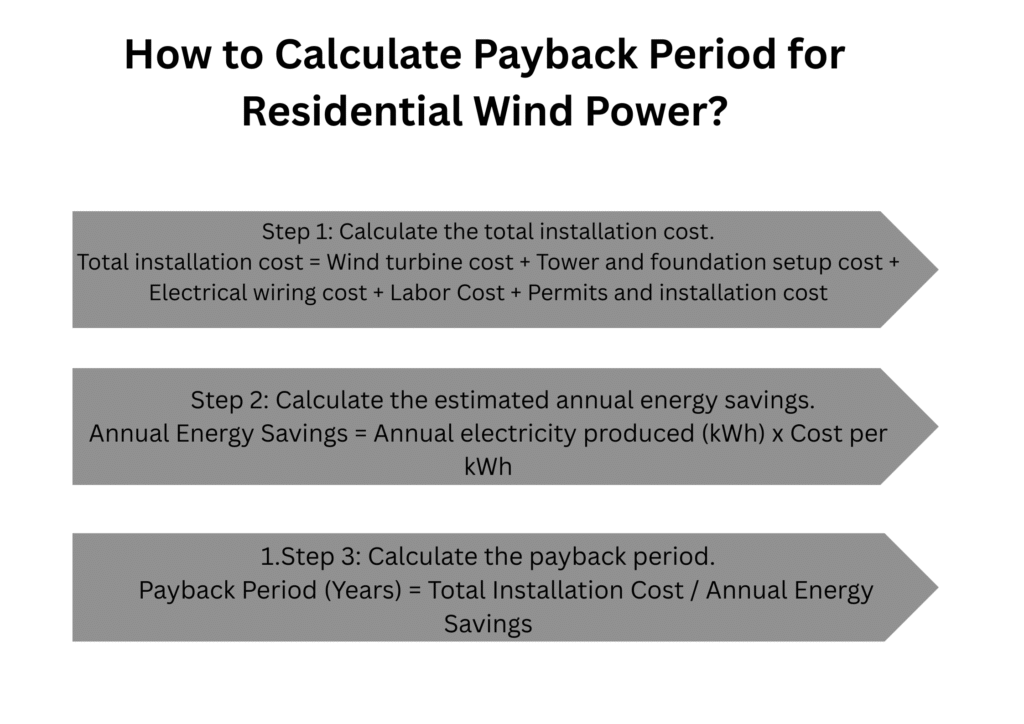
- Step 1: Calculate the total installation cost.
Total installation cost = Wind turbine cost + Tower and foundation setup cost + Electrical wiring cost + Labor Cost + Permits and installation cost
- Step 2: Calculate the estimated annual energy savings.
Annual Energy Savings = Annual electricity produced (kWh) x Cost per kWh
- Step 3: Calculate the payback period.
Payback Period (Years) = Total Installation Cost / Annual Energy Savings
Example: If the total Installation cost of a small wind turbine system = $30000
Annual electricity produced = 6000 kWh
Cost per kWh = $0.15/kWh
Annual Energy Savings = 6000 x 0.15 = $900/ year
Payback Period = 30000 / 900 = 33.3 Years
If the incentives and rebates reduce the installation cost to $20000. Then,
Payback Period = 20000 / 900 = 22.2 Years
Reference: Energy Payback
Incentives That Improve Payback Time
- Federal Tax Credit:
It allows homeowners to deduct a percentage of the wind turbine installation cost from their income taxes. These credits are applied to equipment purchase, installation charges, and labor charges.
- State and Local Rebates:
Some states and local authorities offer direct rebates that reduce the upfront payment at purchasing time. It makes the wind turbine systems more cost-effective.
- Property and Sales Tax Exemptions:
Some areas offer property tax exemptions so homeowners do not pay extra taxes on the value added by the turbine. Sales tax exemptions may also apply when purchasing wind turbine components. This reduces the overall cost of the wind turbine system.
- Performance-Based Incentives (PBIs):
These incentives are given to homeowners according to the actual electricity produced by the wind turbine. This encourages homeowners to maintain high-performing systems and maximize energy output.
- Net Metering Programs:
Net metering allows homeowners to send excess electricity back to the grid when their turbine generates more power than they need. In return, they receive credits that reduce monthly electricity bills.
- Low-Interest Loans:
Some government agencies offer financial assistance through installment-based loan plans and long-term, low-interest loans. This reduces the upfront costs of wind turbine systems and makes wind power cost-effective.
Example:
| Installation Cost | Annual Savings on Energy Bills | Estimated Payback Period | |
| Without incentives | $60000 | $2000 | 30 Years |
| With incentives | $50000 | $2000 | 25 Years |
| With incentives + net-metering | $40000 | $4000 | 10 Years |
How to Reduce Payback Period?
- Select a high wind area for wind turbine installation. Perform a site assessment before installation. High wind speed can maximize electricity production, which in turn saves more money each year.
- Install a taller tower. It captures faster and cleaner air, increases energy production, and often leads to faster payback.
- Selecting the right turbine size matches household energy needs and local wind availability, creating the best return on investment.
- Take advantage of the incentives provided by the government. It helps reduce the payback period and makes wind power more affordable.
- Well-maintained turbines, routine inspections, and timely repairs ensure consistent energy production over the life of the system.
- Try reducing home energy usage. If the household consumes less energy, more of the wind-generated power offsets the utility bill.
Conclusion
By selecting a proper site with steady wind speed for wind turbine installation and the right turbine size, and by taking advantage of incentives and rebates, homeowners can maximize energy production and secure strong economic benefits for decades. They can achieve an affordable payback timeline and can enjoy decades of low-cost electricity.
FAQS:
- What is the payback period for residential wind power?
The payback period of residential wind power is defined as the time required for the savings on your electricity bills to equal the total cost of buying and installing the wind turbine system.
- What is the average annual energy output of a 10kW wind turbine?
A 10kW wind turbine can generate 10000 – 20000+ kWh of energy annually.
Also Read:
- Incentives and Rebates for Home Wind Turbine Installation
- What Are the Most Efficient Small-Scale Wind Turbines for Home Use?
- Where can I buy residential wind turbines with installation services?
- AI-Powered Wind Turbine: How It Optimizes Power Output?
- How Smart Wind Turbine Blades Are Redefining the Future of Wind Energy?
- A Technical Look at Offshore Wind Farms
- Can Wind Turbines Operate Efficiently in Low-Wind Regions? What You Need to Know?
- Why Taller Wind Turbines Produce More Power? The Real Reason Behind It
- A Step-by-Step Guide to Design a Small Wind Turbine System
- Can a Small Wind Turbine System Power Your Entire House? A Practical Guide
- The Evolution of Wind Power: How Wind Power Is Shaping the Future of Renewable Energy Grids?
- How Wind Direction and Speed Affect Wind Turbine Performance? A Complete Guide
- A Complete Guide to How a Wind Turbine Turns Air into Electricity: From Blades to Grid
- Importance of AI-Driven Predictive Maintenance in Wind Energy Systems
- Are DIY Solar Panel Kits Worth It? A Complete Guide
- Portable Solar Panel Kits: Best Uses for RVs and Camping
- Breaking Down Each Component of a 5kW Solar Panel Kit
- What Size Solar Panel Kit Do You Need? Find the Right Solar Kit for Your Home
- Perovskite Solar Panels: The Future of Home Solar
- High-Wattage 450W Solar Panels: Are They Worth It for Your Home Roof Space?