
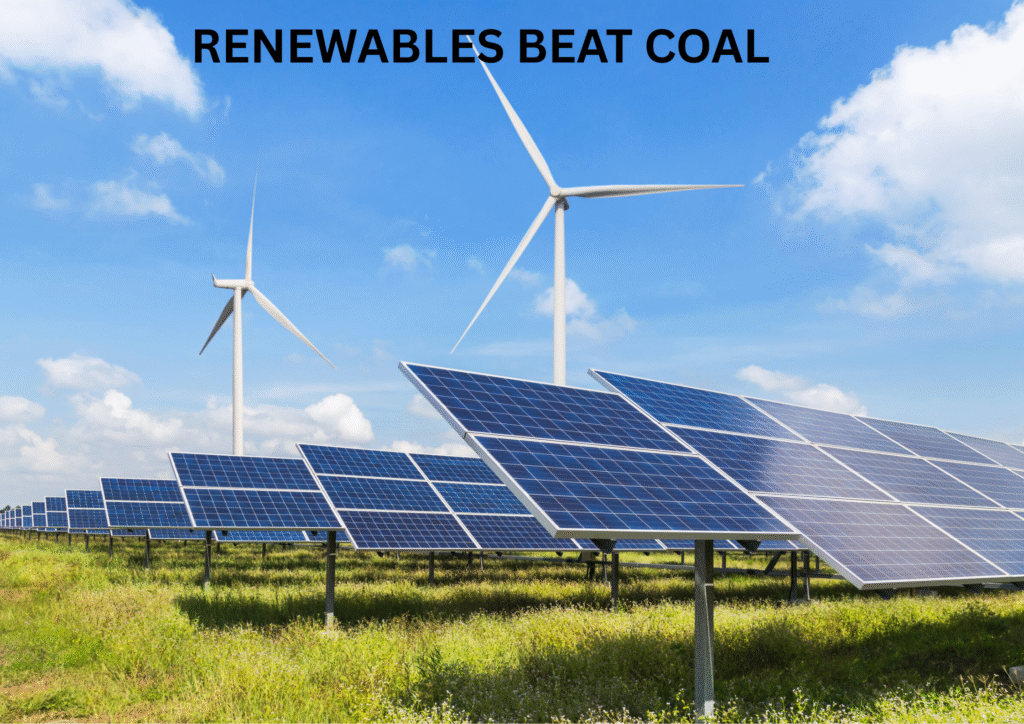
A remarkable growth is achieved where, for the first time in history, renewables beat coal. Renewable energy has now generated more electricity than coal. In 2024-2025, electricity produced from renewables such as solar and wind is more than coal’s output. In the same year, in the U.S., electricity generated from renewables accounts for 17% of total electricity, while electricity generated from coal accounts for 15%.
This article explains how and why solar and wind beat coal, what this means for climate goals, and what this means for electricity bills. Read the full article to get a clear view of this topic.
Renewables Beat Coal: What Does It Mean?
According to Charlton & Jenrick, the output power generated by renewable resources was 5072 terawatt-hours (TWh). The output power generated from coal was 4896 TWh. This means the renewables beat coal by approximately 176 TWh, which is around 3.6% more power generation. In this, solar power played a significant role, increasing by approximately 31% from 2024. Around 83% of the total global electricity was supplied by solar energy in 2025.
Renewables beat coal because:
- The renewable resources, like solar panels and wind turbines, have become much cost effective. The cost of a solar panel has dropped by more than 90%. It has been cheaper to build and install solar panels and wind turbines.
- Countries like China, India, and the U.S. have installed thousands of megawatts of new renewable capacity.
- The coal power plants are retiring faster because of environmental regulations, operational costs, and lower demand for coal power.
- The advanced energy storage systems and grid infrastructure can store power from generate from wind and solar systems efficiently and for long durations.
How Coal Dominated Power for Decades?
By the early 2000s and into the 2010s, the largest share of electricity was produced by coal. In 2022, 36% of the global electricity was generated from coal, which was around 10000 TWh. The generated power was enough to power hundreds of millions of homes.
The main reasons why coal dominated power for decades are:
- The high energy output of coal made it suitable for producing electricity on a large scale
- The reliable large coal plants were capable of delivering consistent power. Whereas the renewable resources like solar and wind were less predictable.
- Utility companies, regulators, and governments built entire policy, economic, and supply systems around coal.
- A powerful economic ecosystem was created around coal. The coal industries supported millions of jobs, including mining, rail networks, trade unions, etc.
- Many countries invested heavily in coal-fired power plants, which were the bedrock of many national grids. Once built, they continued operating for decades because of their long life spans, and they were already paid.
How Solar and Wind Beat Coal?
The cost involved in building and installing solar panels and wind turbines has fallen sharply. The solar module prices have dropped by more than 90% since 2010. This makes it the cheapest source of electricity in many regions.
It takes much less time to build the solar and wind power plants. It takes just a few months to go from planning to operation. Whereas it takes several years to build a coal-operated power plant.
Many countries, including India, China, and the U.S., have installed tens of gigawatts of new renewable capacity every year. Where the cola capacity has declined in recent years. The large installed capacity of solar and wind is one of the primary reasons why solar and wind energy surpass coal.
Along with this, Governments and utilities have added new policies and incentives that have boosted public interest in renewables and discouraged long-term reliance on coal.
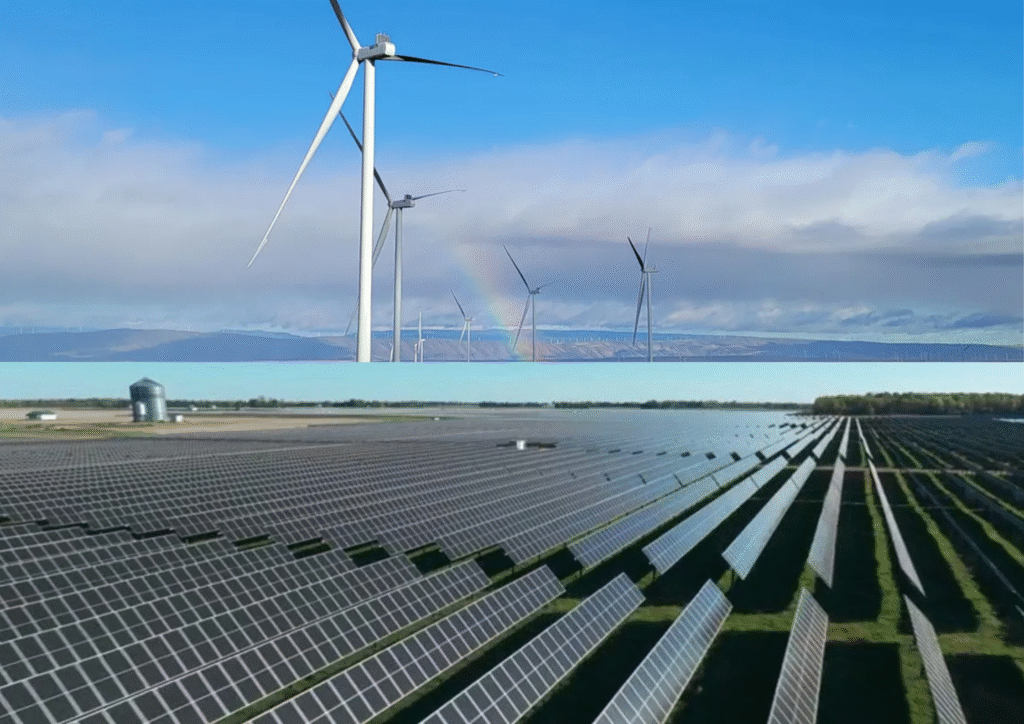
Renewables Beat Coal: What This Means for Climate Goals
The electricity sector accounts for a substantial share of global greenhouse gas emissions. Coal-fired power plants emit carbon dioxide at a large rate. Whereas the renewables, such as solar and wind, produce electricity without emitting any greenhouse gases.
But recently, renewables beat coal. In 2025, the output power generated by renewable resources was 5,072 terawatt-hours (TWh), while that from coal was 4,896 TWh. This represents a slowing or reduction in CO₂ emissions from the power sector.
As the electricity production from renewable resources is growing, the use of fossil fuels in the electricity sector is gradually decreasing. The shift from coal to renewables reduces carbon pollution and slows the pace of climate change.
According to the International Energy Agency, the renewable electricity generation could increase by 60% from 2024 to 2030, which helps reduce dependence on fossil fuels like coal, which are more carbon-intensive.
Reference: Investments in renewables and impact on global fossil fuel trade
Renewables Beat Coal: What This Means for Energy Bills?
In 2025, the coal-based electricity generation was around $60 -$70/MWh, and utility-scale solar and onshore wind projects can produce electricity at $35 -$40/MWh. This means the renewable electricity is less expensive to produce than coal. When the utilities buy cheaper power, the consumers get the electricity at a lower price.
As the renewable resources, such as solar and wind is free, the operating cost of the renewable plant is largely fixed and predictable. This helps protect consumers from sudden spikes in fuel costs.
Is Coal’s Decline Permanent?
The electricity generation from coal is expected to gradually fall towards 2030 and beyond due to cost-competitive renewable technologies and decarbonization policies. In 2025, coal-fired power generation still accounted for a significant portion of global electricity. In the regions where grid flexibility remains a challenge, coal-fired power generation still accounts for a primary source of power generation. So, the coal may ramp up and down easily to complement the renewables, rather than simply vanish.
Challenges That Still Remain
- One of the main challenges with solar and wind power is that they don’t produce electricity all the time. Solar panels generate power when the sun shines, and wind turbines depend on wind speeds.
- Another major challenge is the availability of a large-scale energy storage system. The current storage capacity is far below what is needed.
- The existing grid infrastructure in many regions was originally designed for centralized power plants, such as coal stations. Modern and robust grid infrastructures are required to integrate with renewable energy sources.
- A high initial investment is required to set up infrastructures like solar farms, wind turbines, energy storage, etc.
- Large renewable energy projects often require significant land areas.
Conclusion
The coal-based power plant powered the world for over a century. Now its decline marks a shift toward cleaner, more sustainable energy systems. This achievement is the foundation for achieving climate targets and more affordable and stable energy bills. However, the exact effect on individual utility bills varies by region and market design. As the electricity generated from renewables has outpaced the electricity generated from coal, the milestone signals progress toward a cleaner, lower-carbon world.
FAQS
- How much output power was generated by the renewable resources and coal in 2025?
In 2025, the output power generated by renewable resources was 5,072 terawatt-hours (TWh), while that from coal was 4,896 TWh.
Also Read:
- The Global Clean Energy Race: Who’s Ahead and Why?
- Liquid Air Energy Storage: How Liquid Air Can Store Renewable Energy for the Grid?
- Bikaner 1.4 GW Solar Project by Tata Power in Rajasthan
- Solar Farms on Old Landfills: How Unused Lands Are Powering Solar Energy Projects?
- Payback Period for Residential Wind Power: What Homeowners Can Expect
- Incentives and Rebates for Home Wind Turbine Installation
- What Are the Most Efficient Small-Scale Wind Turbines for Home Use?
- Where can I buy residential wind turbines with installation services?
- AI-Powered Wind Turbine: How It Optimizes Power Output?
- How Smart Wind Turbine Blades Are Redefining the Future of Wind Energy?
- A Technical Look at Offshore Wind Farms
- Can Wind Turbines Operate Efficiently in Low-Wind Regions? What You Need to Know?
- Why Taller Wind Turbines Produce More Power? The Real Reason Behind It
- A Step-by-Step Guide to Design a Small Wind Turbine System
- Can a Small Wind Turbine System Power Your Entire House? A Practical Guide
- The Evolution of Wind Power: How Wind Power Is Shaping the Future of Renewable Energy Grids?
- How Wind Direction and Speed Affect Wind Turbine Performance? A Complete Guide
- A Complete Guide to How a Wind Turbine Turns Air into Electricity: From Blades to Grid
- Importance of AI-Driven Predictive Maintenance in Wind Energy Systems
- Are DIY Solar Panel Kits Worth It? A Complete Guide
Pingback: The U.S. Power Shift: Solar Takes the Lead in New U.S. Power Generation - science2energy
Pingback: Solar Rebates Explained: How Solar Rebates Can Save You Money? - science2energy
Pingback: Europe’s Clean Energy: How Wind Deals Are Reshaping Europe