Solar power is the world’s fastest-growing electricity source. But it only generates electricity when the sun is shining. Energy storage systems, like batteries, fix this problem by storing unused electricity for peak demand periods, nighttime, or grid outages.
Hybrid solar-battery systems are powering homes and businesses not only during the day but also at night, without any interruptions. These systems combine solar photovoltaic panels with battery energy storage systems to generate electricity from sunshine, store the excess unused electricity, and deliver it more reliably and efficiently.
So, how are hybrid solar-battery systems changing renewable energy? This article explains about hybrid solar-battery projects, how they work, their advantages, and their uses.
What Are Hybrid Solar and Battery Systems?
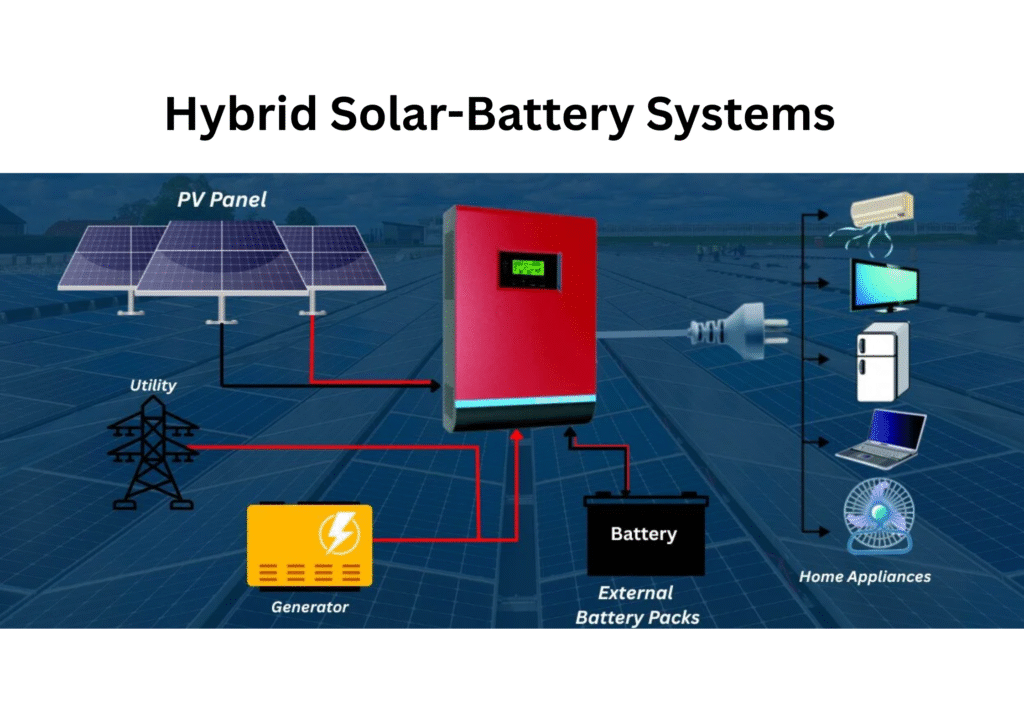
Modern renewable energy systems that combine solar photovoltaic power generation and battery energy storage are known as hybrid solar-battery systems. These hybrid projects are a standard solution for homes, businesses, commercial power grids, and large renewable energy parks.
Hybrid solar-battery systems generate electricity from the sun and use energy storage systems such as batteries to store the excess amount of energy. These projects offer energy independence, cost savings, power backup, and help balance electricity supply and demand.
Intermittency is a major problem in renewable energy. The solar energy system generates electricity only when the sun is shining. The energy storage system solves this problem by storing the unused electricity for nighttime and peak demand periods.
How Hybrid Solar-Battery Systems Work?
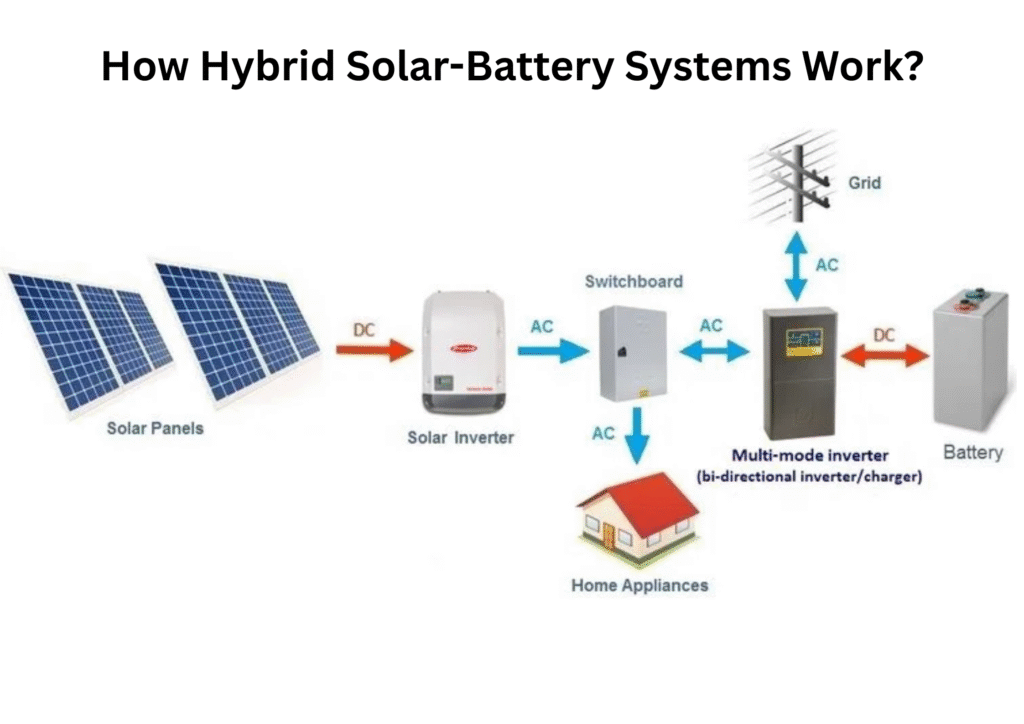
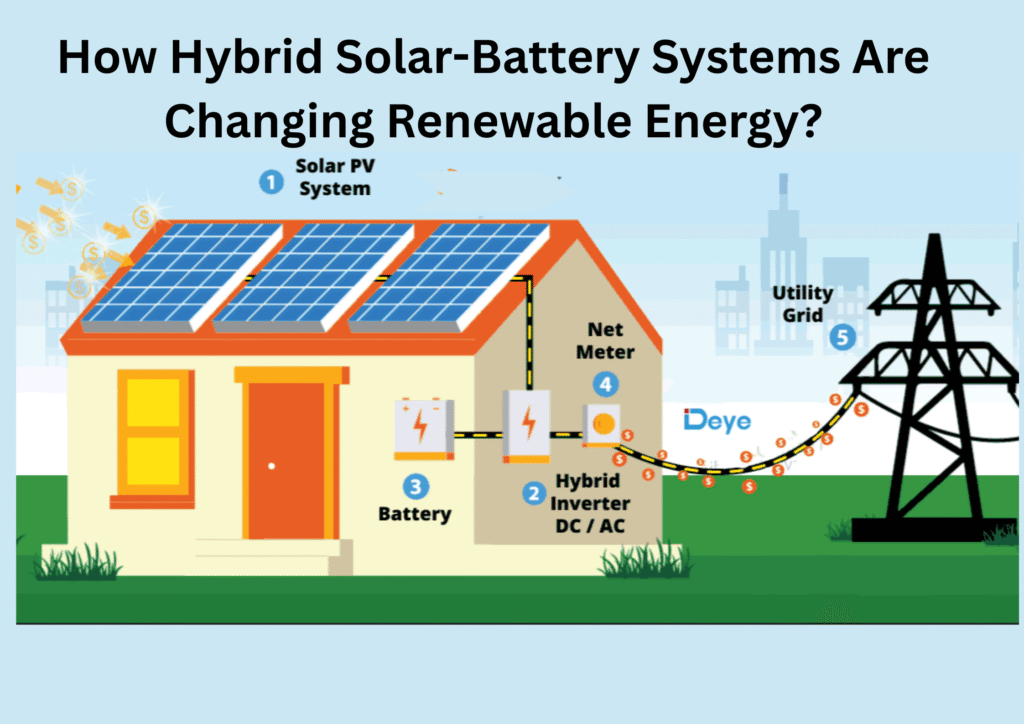
A hybrid solar-battery system typically has four major parts
- Solar Panel: The solar panels produce electricity from the sunlight.
- Battery Storage: The energy storage systems store the excess amount of electricity for later use.
- Hybrid Inverter: It manages energy flow between solar, battery, load, and the grid.
- Controller: It controls when the energy is stored or used.
The hybrid solar-battery systems work as following way.
- The solar panel converts the sunlight into DC (Direct Current) electricity.
- The hybrid inverter converts the DC electricity from solar panels into AC electricity. The alternating current (AC) is used by buildings and the grid. The inverter also handles charging and discharging of the battery.
- The electricity generated first flows to your homes and business loads. It directly powers your appliances and electronics.
- If the solar panel generates more electricity than your energy needs, the excess amount of electricity charges the battery.
- At night or during peak demand periods, stored battery energy powers your loads. If battery storage is full and solar panels continue to generate excess electricity, that electricity can be exported to the grid.
Advantages of Hybrid Solar-Battery Systems
- Uninterrupted Power Supply:
Uninterrupted power supply is the hybrid solar-battery system’s most important advantage. The traditional grid-tied solar systems shut down during grid failures. Whereas hybrid solar battery systems continue delivering electricity using stored energy in the batteries.
- Lower Electricity Bills:
Hybrid solar-battery systems help lower the electricity bills by storing excess energy during the day and using it when the electricity prices are high.
- Enhance Energy Independence:
Instead of relying on grid electricity at night or during cloudy weather, the users can use the stored energy. Energy independence is beneficial where grid access is unreliable or expensive.
- Better Use of Solar Energy:
In a conventional solar system, the excess energy generated during the day is either sent back to the grid or wasted. Whereas, in hybrid solar-battery systems, the surplus power is stored in a battery and used later.
- Reduce Greenhouse Gas Emissions:
Using the clean energy generated from solar systems reduces dependence on fossil-fuel-based electricity. This helps cut greenhouse gas emissions.
- Offers Additional Revenue:
Hybrid systems export extra stored solar energy to the grid in exchange for credits or payments on utility bills. This is also known as a net metering program, which makes the hybrid solar-battery systems even more financially attractive.
- Scalability:
In hybrid solar-battery systems, users can gradually add more solar panels or additional battery capacity as energy needs grow.
How Hybrid Solar-Battery Systems Are Changing Renewable Energy?
Hybrid solar-battery systems store excess solar energy produced during the day and use it during the night or high demand period. This makes solar power dispatchable, which means electricity can be supplied on demand.
These hybrid systems are also enhancing grid stability. These systems help utilities manage grid demand more effectively. They are playing a key role in preventing outages and maintaining frequency control on the grid.
The cost of solar panels and battery storage systems has dropped dramatically in recent years. The cost reductions are enabling hybrid systems to compete with traditional power generation in many markets.
The hybrid systems help integrate more renewable energy into the grid without sacrificing reliability. These hybrid systems are playing a major role in long-term decarbonization goals and reducing dependence on coal and gas generation worldwide.
Reference: A feasibility study of a stand-alone hybrid solar–wind–battery system for a remote island
Where Hybrid Solar-Battery Systems Are Most Useful?
The hybrid solar-battery systems are most useful in
- Homes and residential areas
- Remote locations without reliable grid electricity
- Commercial and industrial sites
- Agricultural sites
- Telecom towers and critical communication services
- Large-scale power plants
- Mining and remote industrial sites
Types of Batteries Used in Hybrid Solar-Battery Systems
Types of batteries used in hybrid solar-battery systems are explained below.
- Lithium-Ion Batteries:
Lithium-Ion Batteries are the most commonly used batteries worldwide. More than 80% of the installed capacity in large-scale energy storage projects is Lithium-Ion batteries. These batteries offer 95% round-trip efficiency. They also offer tens of thousands of deep charge/discharge cycles.
Lithium Iron Phosphate (LiFePO4) batteries offer a long life of 10 -15 years, amazing cycle durability, and are very safe to use. Another popular battery is the Lithium Nickel Manganese Cobalt (NMC) battery, which is commonly found in products like Tesla Powerwall and LG RESU.
- Lead-Acid Batteries:
Lead-acid batteries are traditional batteries that were once the standard for solar energy storage. There are two types of lead-acid batteries: flooded lead-acid batteries and Sealed Lead-Acid (SLA).
The upfront cost of lead-acid batteries is lower, but they offer a shorter lifespan of 5 to 10 years. These batteries are heavy and bulky compared to lithium types.
- Flow Batteries:
Flow batteries are standard option for large, stationary energy storage at utility or commercial scale. These batteries are suitable for applications where long duration is required. These batteries store electrical energy in liquid electrolytes held in external tanks.
Flow batteries offer a very long lifecycle with minimal degradation. The life span of these batteries is more than 20 years. These batteries are ideal for solar farms and grid energy storage.
Real-World Examples of Hybrid Solar-Battery Projects
- Sukari Hybrid Solar-Battery Project at a Gold Mine (Egypt)
This project is one of the world’s largest off-grid hybrid power systems. It is situated near Marsa Alam, Egypt. This hybrid project combines a 36 MW solar PV capacity and 7.5 MW battery storage capacity. This plant provides significant clean power while reducing fuel use and 60,000 tons of CO₂ emissions per year.
- ENGIE Project (India)
This hybrid solar-battery project pairs large-scale solar with battery storage under a government renewable tender. This project combines 200 MW solar PV capacity and 100 MW / 600 MWh battery storage. This system is designed to store and deliver renewable power for up to 6 hours.
Conclusion
Hybrid solar-battery systems are now a mainstream part of the energy transition. This is an innovative way to generate, store, and use electricity. Smart inverters and controllers manage the flexible flow of energy. These systems deliver reliable, cost-effective, and low-carbon energy. These hybrid systems are becoming a smart choice for homeowners, businesses, and utilities around the world.
FAQS
- What are hybrid solar-battery systems?
Modern renewable energy systems that combine solar photovoltaic power generation and battery energy storage are known as hybrid solar-battery systems.
- Where are the flow batteries used?
Flow batteries are standard option for large, stationary energy storage at utility or commercial scale. These batteries are suitable for applications where long duration is required. These batteries store electrical energy in liquid electrolytes held in external tanks.
Also Read:
- How Proven Wind Power Deals Reshape Europe’s Energy Future
- Solar Panels: Latest Technology and Current Price Trends
- Solar Rebates Explained: How Solar Rebates Can Save You Money?
- For the First Time, Renewables Beat Coal
- The Global Clean Energy Race: Who’s Ahead and Why?
- Liquid Air Energy Storage: How Liquid Air Can Store Renewable Energy for the Grid?
- Bikaner 1.4 G Solar Project by Tata Power in Rajasthan
- Solar Farms on Old Landfills: How Unused Lands Are Powering Solar Energy Projects?
- Payback Period for Residential Wind Power: What Homeowners Can Expect
- Incentives and Rebates for Home Wind Turbine Installation
- What Are the Most Efficient Small-Scale Wind Turbines for Home Use?
- Where can I buy residential wind turbines with installation services?
- AI-Powered Wind Turbine: How It Optimizes Power Output?
- How Smart Wind Turbine Blades Are Redefining the Future of Wind Energy?
- A Technical Look at Offshore Wind Farms
- Can Wind Turbines Operate Efficiently in Low-Wind Regions? What You Need to Know?
- Why Taller Wind Turbines Produce More Power? The Real Reason Behind It
- A Step-by-Step Guide to Design a Small Wind Turbine System
- Can a Small Wind Turbine System Power Your Entire House? A Practical Guide
- The Evolution of Wind Power: How Wind Power Is Shaping the Future of Renewable Energy Grids?