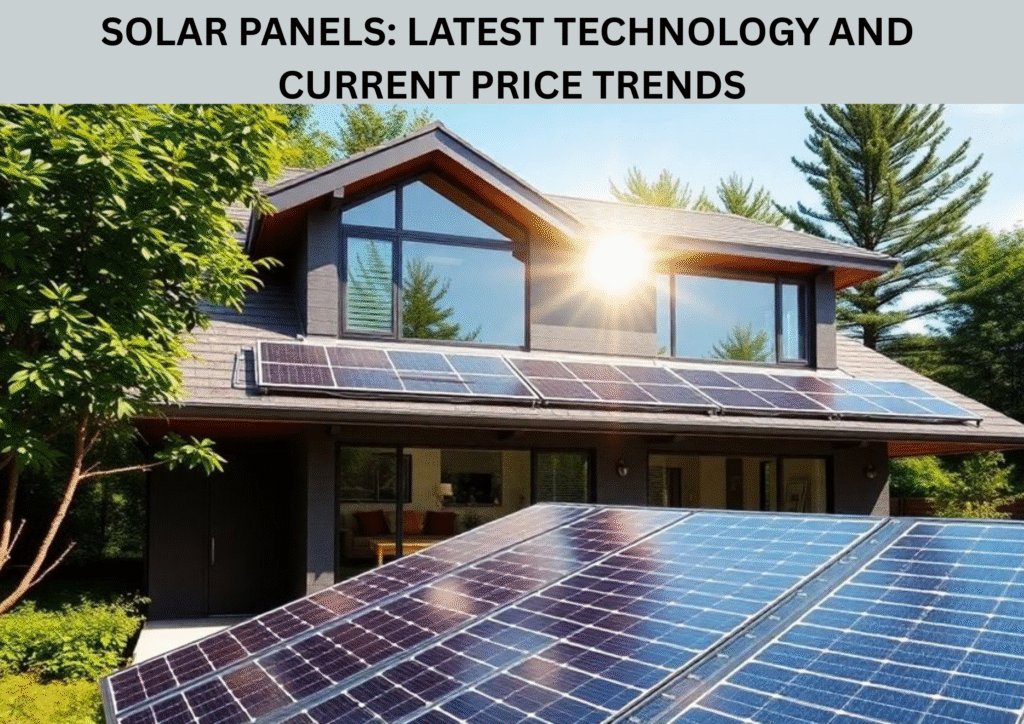
Solar energy is a fast-growing reality that represents how homes, businesses, and the corporate sectors generate electricity from renewable resources. The newly installed solar capacity is exceeding 450 GW globally. The solar power growth is driven by scientific breakthroughs and real-world manufacturing scale-up. The cost of solar panel modules has dramatically reduced from around $2.40 per watt in 2010 to about $0.10 per watt today on global markets. But what are the latest technologies and current price trends? Which technologies are driving better performance and lower system costs? This article explains everything in detail.
Latest Solar Panel Technology
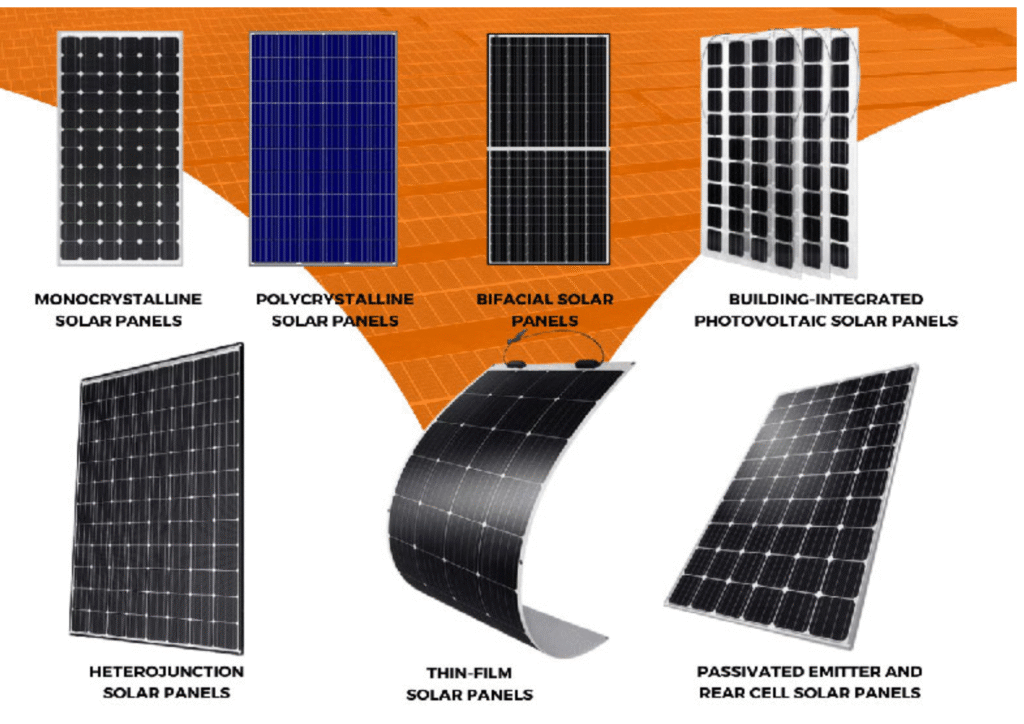
Advanced technology is a primary driver of the global growth of solar panels. The latest technologies are making the solar panels more efficient, affordable, and adaptable than ever before. Some important solar panel technologies are explained below. According to the International Energy Agency, the total installed solar capacity in 2024 was 2260 G, which is a 29% year-on-year increase.
- Advanced Silicon-based solar panels
Silicon-based solar panels dominate global solar panel production. The highly efficient and reliable mono-crystalline silicon panels are another widely used type of solar panels.
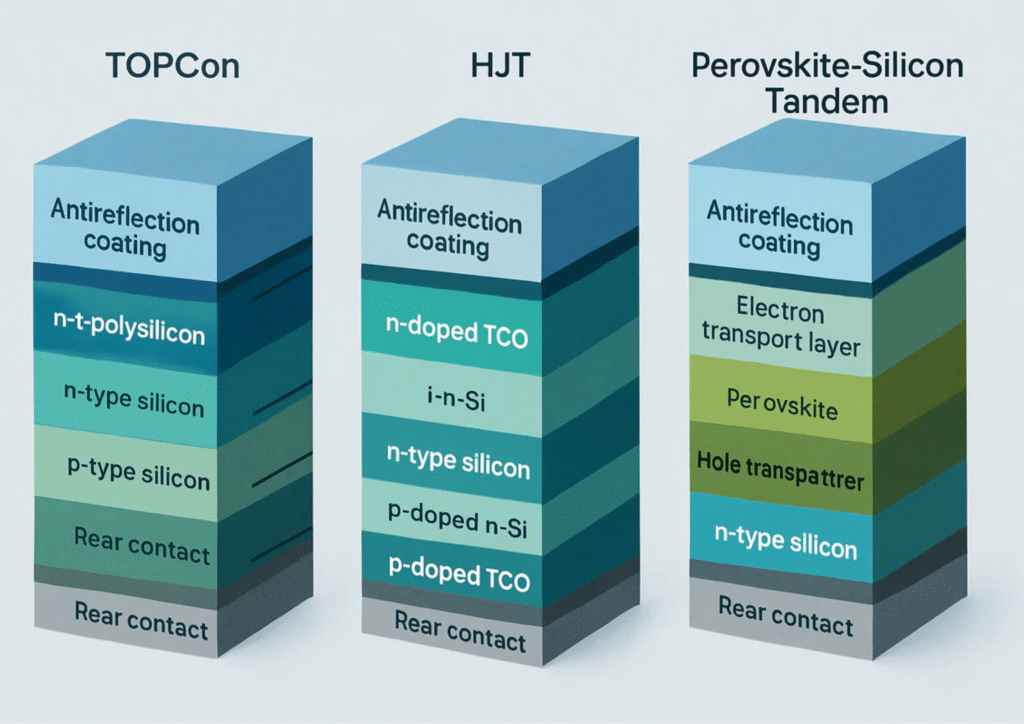
The latest advancement in silicon-based solar panels, which are replacing the older models are TOPCon (Tunnel Oxide Passivated Contact) and PERC (Passivated Emitter and Rear Cell). These advanced solar panels deliver 23-25% more efficiency than older models.
New high-wattage solar panels of capacity up to720 W and beyond, using large 220 × 220 mm cells, are now rolling in the market. These solar panels are an ideal option for rooftops with limited space, as they produce more electricity per square meter than traditional ones.
- Perovskite Solar Panels
Another exciting development in solar technology is the perovskite solar panel. These solar panels have a thin film of synthetic perovskite materials to capture sunlight. The panel’s surface, which is made of glass, metal foil, or plastic, is coated with a light-absorbing layer that is also called a perovskite layer.
- Tandem Solar Panels
Tandem solar panels are an advanced solar technology and have surpassed 33% efficiency. These solar panels combine perovskite with silicon. In these solar panels, two or more layers of different solar materials work in tandem or stacked on top of each other to absorb sunlight. With high energy yield, the tandem solar panels are the future of the solar industry.
The traditional solar panel with crystalline silicon can absorb only a portion of sunlight, whereas the tandem solar panel can capture more sunlight of various wavelengths.
- Thin Film Flexible Panels
Thin-film solar panels are created by depositing one or more layers of photovoltaic material onto a base. They use a much thinner layer of semiconductor material instead of using thick silicon wafers. These are only a few micrometers thick. These solar panels are lightweight and flexible.
Flexible solar panels are 80% lighter than traditional rigid crystalline solar panels. Their bendable structure allows them to be used on curved surfaces such as RV roofs, tents, and boats. Their thickness ranges from 1mm to 5mm. Thin-films are achieving 18–20% efficiency, with flexible perovskite films closer to 27%.
- Bifacial solar panels
Bifacial solar panels are an advanced version of traditional solar panels that can generate electricity from both the front and back sides of the panel. A bifacial solar panel has dual-sided solar cells. It not only captures sunlight from the front but also utilizes reflected light from the ground or nearby surfaces, thereby increasing overall energy output.
- Anti-reflective Solar Panels
The solar panels that utilize a special coating or are designed with a specific surface structure can minimize light reflection or maximize light absorption, and are known as anti-reflective solar panels. This anti-reflective layer is applied to the solar panel surface during the manufacturing process.
Reference: Recent Developments and Future Advancements in Solar Panels Technology
Current Solar Panel Price Trends
According to historical price data compiled by Our World in Data, the price of solar modules has fallen by 90%.
Average Cost per Watt
According to PV Magazine, in the first half of 2025, for rooftop solar systems, the average cost per watt was $2.48–$2.50 (before incentives). A typical 11.5 kW residential solar system can cost around $28,750 before incentives. After applying the U.S. federal solar tax credit (30% Investment Tax Credit), the price can drop to roughly $20,125.
Price by Solar Panel Type
| Solar Panel Type | Price range (Per Watt) |
| Typical Residential PV Installed System (U.S.) | $2.48–$2.50 (before incentives) |
| Mono PERC (Crystalline) | $0.29 –$0.35 |
| TOPCon (Crystalline, High-Efficiency) | $0.25 –$0.28 |
| High-Efficiency European Modules | $0.13 –$0.14 |
| Thin-Film Panels | +$0.50 |
Reference: Solar panel cost in 2026: It may be lower than you think
What Factors Affect Solar Panel Prices?
- Raw Materials:
Polysilicon is a primary raw material of solar panels. With a large increase in polysilicon prices, the cost of a solar panel may rise 40% higher. Another raw material is silver, which is used for electrical contacts in solar cells. Recently, silver prices surged above $100 per ounce. A high metal cost can increase manufacturing expenses and thus also enhance the solar panel prices.
- Advanced Technology and Efficiency
Generally, the standard solar panels, such as mono-crystalline solar panels, are less expensive and also less efficient. Whereas the advanced solar panels, including PERC, heterojunction, or bifacial models, are highly efficient, can generate more power per square, and are expensive.
- Installation Cost
Usually, installation labor and soft costs can make up 40 – 50% of the total system cost. Whereas a complex roof design with slopes and angles requires extra mounting hardware and safety equipment. This increases the cost by 5 to 10% more.
- Geographical Location
Locations with high sunlight availability require fewer solar panels, and the lower sun regions need a larger number of solar panels to produce the same amount of power. The total installation cost is higher in some states with higher wages for skilled PV installers. Also, places with more complicated or slow permitting processes increase total project costs.
- Government Policies and Incentives
Government incentives can significantly lower upfront costs. However, if incentives shrink or end and policies change, it can push net costs higher.
- Market Dynamics:
An increase in competition among solar panel makersleads to price reductions. However, if supply chains are smooth and materials are abundant, prices decrease.
- System Size
Large solar installations often cost less per watt than smaller systems. Large installations require a large number of purchases and more efficient deployments. So, smaller residential systems typically have higher per-watt costs than large commercial or utility projects.
- Quality and Brand
Solar panel systemswith 25-year warranties or better quality are more expensive because they offer longer life and better degradation performance. Often, the premium brands with reputable records offer stronger warranties and proven performance.
How does the latest technology impact solar panel cost?
The advanced solar panels designed with innovative technology are more efficient than the traditional ones. The solar panels with the latest technology can generate more power from the same area. So, to produce the same amount of electricity, one needs to install fewer panels. Fewer panels reduce the overall system cost.
The N-type TOPCon solar panels are 23.5 – 24% efficient, whereas the traditional solar panels are 22% efficient. The module cost of HJT and back-contact panels costs 15 – 25% more. The installation of 600W solar panels also reduces the number of panels, mounting points, wiring, and installation cost.
In commercial solar projects, the higher upfront costs add tens of thousands of dollars more in total system costs.
The newly tested perovskite-silicon tandem cells offer 33% efficiency and may cost half as much per watt as conventional silicon modules. For the same output, the highly efficient tandem cells can significantly reduce the total system costs.
The latest technology includes manufacturing automation, which includes robots and smart machinery in factories can reduce the overall production cost. The automation techniques lower labor expenses and minimize defects. Thus, it is doubling the output capacity and reducing the solar panel costs.
Future Trends in Solar Technology and Cost
- Next-generation cell technologies, including perovskite and tandem cells, are offering 30% module efficiency in lab testing. The perovskite modules currently cost around $0.57 per watt, but with an increase in manufacturing, the cost could fall to $0.29 to $0.49. The future solar arrays will get cheaper per unit of electricity generated.
- The bifacial solar modules can increase the energy production by up to 20% in high reflective environments. The increase in energy production leads to less panel requirement and thus reduces overall costs.
- The building-integrated solar panel can reduce structural and mounting costs by combining energy production with building materials.
- Flexible, ultra-thin solar panels could also reduce manufacturing costs by using less material and simpler production steps.
- Smarter manufacturing and the use of AI, automation, and digital tools are improving production and reducing labor costs. This trend is expected to reduce panel production costs.
Conclusion
The latest technology of solar panels is not just about clean energy; it is about smart energy. Innovations and smart technologies are making solar panels more powerful, affordable, and integrated into everyday life. For homeowners and businesses who are looking to install solar panels, these trends suggest better value and faster returns than ever before. The advanced technologies often lead to higher upfront costs, but their increased energy production often translates into lower installation costs per watt and a faster payback period.
FAQS
- Which types of solar panels are widely used in the global market?
Silicon-based solar panels dominate global solar panel production. The highly efficient and reliable mono-crystalline silicon panels are another widely used type of solar panels.
- What are tandem solar panels?
Tandem solar panels are an advanced solar technology and have surpassed 33% efficiency. These solar panels combine perovskite with silicon. In these solar panels, two or more layers of different solar materials work in tandem or stacked on top of each other to absorb sunlight.
Also Read:
- Solar Rebates Explained: How Solar Rebates Can Save You Money?
- For the First Time, Renewables Beat Coal
- The Global Clean Energy Race: Who’s Ahead and Why?
- Liquid Air Energy Storage: How Liquid Air Can Store Renewable Energy for the Grid?
- Bikaner 1.4 G Solar Project by Tata Power in Rajasthan
- Solar Farms on Old Landfills: How Unused Lands Are Powering Solar Energy Projects?
- Payback Period for Residential Wind Power: What Homeowners Can Expect
- Incentives and Rebates for Home Wind Turbine Installation
- What Are the Most Efficient Small-Scale Wind Turbines for Home Use?
- Where can I buy residential wind turbines with installation services?
- AI-Powered Wind Turbine: How It Optimizes Power Output?
- How Smart Wind Turbine Blades Are Redefining the Future of Wind Energy?
- A Technical Look at Offshore Wind Farms
- Can Wind Turbines Operate Efficiently in Low-Wind Regions? What You Need to Know?
- Why Taller Wind Turbines Produce More Power? The Real Reason Behind It
- A Step-by-Step Guide to Design a Small Wind Turbine System
- Can a Small Wind Turbine System Power Your Entire House? A Practical Guide
- The Evolution of Wind Power: How Wind Power Is Shaping the Future of Renewable Energy Grids?
- How Wind Direction and Speed Affect Wind Turbine Performance? A Complete Guide
- A Complete Guide to How a Wind Turbine Turns Air into Electricity: From Blades to Grid