The adoption of electric vehicles (EVs) is growing fast all over the world. EVs are hitting the roads in millions every year. They are transforming transportation by running on electricity stored in large battery packs. EVs can produce up to 73% less life cycle greenhouse gas emissions than conventional diesel and gasoline cars.
Better performance, cost savings, and environmental benefits of EVs are attracting drivers to switch to electric cars. But EVs also come with some significant challenges, including limited range, battery issues, higher upfront cost, etc.
This article explains all the pros and cons of electric vehicles on the environment. Read the full article to know more about it.
How Electric Vehicles Work?
Electric vehicles (EVs) don’t have an internal combustion engine (ICE) or a fuel tank. They are powered by electricity stored in a large battery. The major components of an electric vehicle are
- Battery
The battery is the heart of an electric vehicle. Most of the EVs use Lithium-ion batteries. The batteries store electrical energy and supply it to the powertrain when needed. The capacity of a typical EV battery ranges between 40 kWh and over 100 kWh.
Under normal driving conditions, a 60kWh battery can power a vehicle for more than 320 km on a single charge. The battery also has a battery management system that controls the vehicle according to the temperature, voltage, and safety.
- Inverter
The inverter converts the DC power stored inside the battery into AC power. The electric motor needs this AC power to run. It also controls the motor’s speed and torque by changing the frequency and voltage of the AC output. The inverter helps to communicate between the battery and the electric motor.
- Electric Motor
An electric motor converts electrical energy stored inside the battery into mechanical motion. These motors can be Ac or DC. Modern EVs mostly use AC motors. These motors give EVs instant acceleration. They can deliver 100% of torque from zero rpm.
- Controller
The controller acts like the brain of an EV. When the accelerator pedal is pressed, an electronic signal tells the controller how much power to send. The controller controls the inverter and motor to deliver smooth acceleration or deceleration.
- Charging Port and Charger
The EV needs a charging port to connect to external power sources. The household plug of 120V offers a slow charge, whereas the 240V EV charger offers faster charging. High-power public stations (150 kW to 350 kW) – rapid charging.
AN electric vehicle (EV) works in the following way.
- When the EV gets connected to an external power source through a charging port, the electricity enters the battery. The AC power is converted to DC power and stored in the battery.
- While driving, when the driver presses the accelerator, the controller signals the inverter.
- The inverter converts the DC power to AC power and sends AC power to the electric motor.
- The motor converts the AC power into mechanical motion. The motor’s shaft spins and turns the wheels, creating motion.
Pros of Electric Vehicles
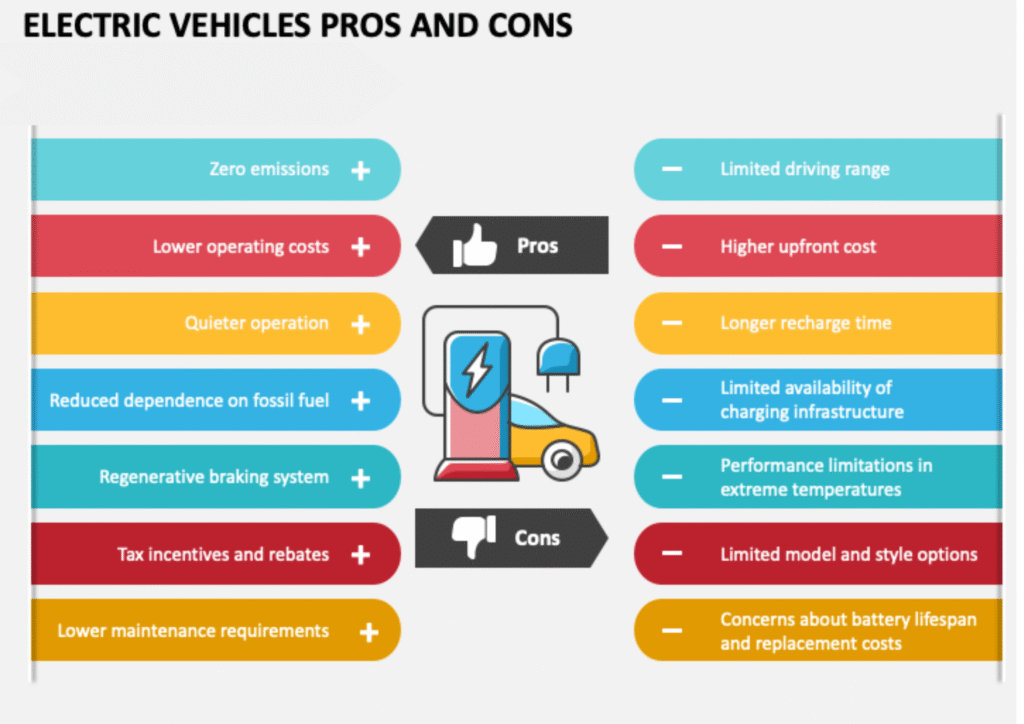
- Lower Fuel Cost
Compared with gasoline or diesel cars, EVs have much lower operating costs. In many areas, charging an EV costs up to 70% less per mile than filling a petrol or diesel car. Also, EVs convert around 85% of electrical energy into motion, whereas conventional engines only convert 20% of fuel energy.
- Lower Maintenance Costs
Compared to gasoline or diesel cars, EVs have fewer moving parts. So, typical maintenance savings range from 40% to 60% compared to vehicles with conventional engines. The EVs don’t have a fuel pump, timing belt, spark plugs, or exhaust system, which require repair and maintenance.
- Zero Tailpipe Emissions
The EVs do not release exhaust gases such as carbon dioxide (CO₂), nitrogen oxides (NOx), or other harmful pollutants during operation. They help reduce local air pollution and improve urban air quality.
- Smooth Driving Experience
Driving in EVs is quiet, comfortable, and enjoyable. EVs have electric motors that deliver instant torque. These electric vehicles provide smooth acceleration from a standstill without gear shifting. So, the EV cabins are much quieter, minimizing noise pollution in cities.
- Convenient Charging
Most EV drivers charge their vehicles at home using a standard outlet or a home charging unit. It gives drivers more control and flexibility in managing their daily travel needs.
- Energy Independence
Electric vehicles help reduce dependence on imported oil and fossil fuels.
- Tax Benefits
Many countries offer financial incentives and tax benefits to lower the cost of EV ownership. Some governments offer reduced vehicle registration fees, road tax, and rebates. These rebates and incentives lower the net purchase cost and improve the long-term value of EVs.
- Better Utilization of Energy
The energy conversion efficiency is much higher compared to gasoline or diesel cars. The diesel cars lose a significant portion of fuel energy as heat. The regenerative braking in EVs increases efficiency by recapturing energy that would otherwise be lost. Regenerative braking is a system that captures energy while slowing the vehicle.
Cons of Electric Vehicles
- Higher Initial Purchase Rate
Compared to diesel and gasoline cars, the upfront cost of EVs is higher. This price gap is largely due to the cost of large lithium-ion battery packs.
- Shorter Driving Range
Real-world testing found that popular models are delivering 5% to 23% less driving range than claimed. This makes long road trips more stressful and planning-intensive.
- Charging takes More Time
A standard Level 1 or Level 2 charger takes several hours to get fully charged. Whereas the diesel and gasoline cars take a few minutes to get refueled.
- Charging Infrastructure Is Still Developing
Public charging networks are still developing. In rural areas, there are fewer charging stations and also unevenly distributed. This makes long road trips harder to plan.
- Battery Longevity
The EV batteries gradually lose capacity over time. These batteries last for around 8 to 10 years. Also, replacing a large battery pack is expensive and costs thousands of dollars.
- Plug Standards
Depending on regions or countries, EV charging has multiple plug standards and technologies. This lack of uniformity can make charging less convenient.
- Performance Variability in Extreme Conditions
Batteries are sensitive to temperature. The battery efficiency can drop in very hot and very cold climates. This affects reliability and range predictability for drivers.
- Resale Value Challenges
Battery degradation and rapid technological changes make the electric vehicles’ depreciation faster than gasoline cars. With new EV models in the market, the older models may lose value more quickly.
- Grid Dependency
The widespread EV adoption can increase demand on electrical grids. The main problem is how the electricity is generated. If the grid relies heavily on fossil fuels like coal, it may cause severe environmental concerns.
- Require Specialized Maintenance
Fewer workshops are certified to handle high-voltage EV systems safely. Dependency on brand service centers can be more expensive and less convenient.
Reference: Impact of Electric Vehicles on the Environment:Pros and Cons
A Complete Environmental View of Electric Vehicles
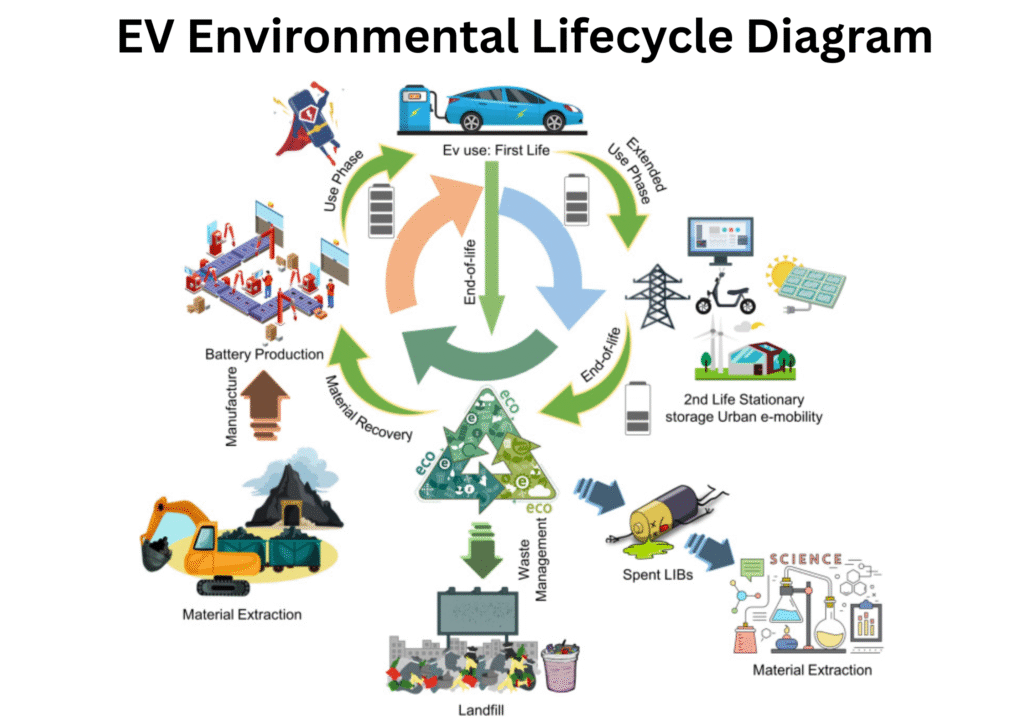
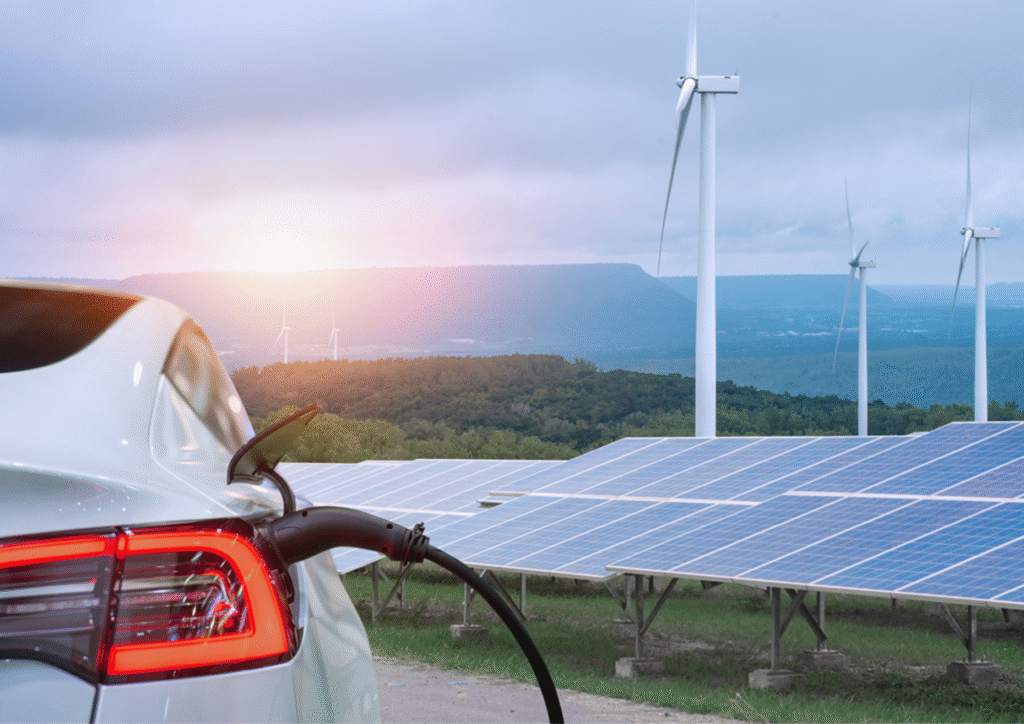
The greenhouse gas emissions by electric vehicles are very low compared to gasoline cars. The Emission of greenhouse gases further lowers if EVs are charged from clean energy sources like wind or solar. However, if the EVs are also charged from coal-dependent grids, EVs still emit less lifetime CO₂.
EVs don’t burn fuel. So, they don’t emit smog-forming pollutants that are linked to respiratory diseases. Electric motors are much quieter than combustion engines. This results in noise pollution reduction.
The EV batteries can be recycled. This not only reduces environmental impact but also slows demand for new raw materials.
Building electric vehicles releases more emissions. The main reason behind it is battery production. Because of the large and complex battery pack, manufacturing electric vehicles requires more energy and releases more greenhouse gases compared to conventional cars. EV batteries use materials such as lithium, nickel, and cobalt. Extraction of these materials can be energy-sensitive.
Reference: Would More Electric Vehicles Be Good for the Environment
Are EVs Good or Bad for the Environment?
Electric vehicles (EVs) are better for the environment than diesel and gasoline cars. The lower life cycle greenhouse gas emissions, zero tailpipe emissions, and high energy efficiency make EVs good for the environment. When used with cleaner electricity and supported by better battery recycling, EVs offer a sustainable future.
Conclusion
Electric vehicles convert stored electrical energy inside the battery into motion. The major parts of an EV include the battery, inverter, electric motor, and controller. EVs are a smart choice for many, as they are environmentally friendly, offer a better driving experience, and are future-ready technology. EVs also come with some significant challenges, such as higher upfront cost, limited range, longer charging time, expensive replacement of batteries, and loss of resale value over time. However, EVs are a major step towards a sustainable future.
FAQS:
- Which types of battery are used by electric vehicles?
The battery is the heart of an electric vehicle. Most of the EVs use Lithium-ion batteries. The batteries store electrical energy and supply it to the powertrain when needed. The capacity of a typical EV battery ranges between 40 kWh and over 100 kWh.
- Are EVs Good or Bad for the Environment?
Electric vehicles (EVs) are better for the environment than diesel and gasoline cars. The lower life cycle greenhouse gas emissions, zero tailpipe emissions, and high energy efficiency make EVs good for the environment.
Also Read:
- How Hybrid Solar-Battery Systems Are Changing Renewable Energy?
- How Proven Wind Power Deals Reshape Europe’s Energy Future
- Solar Panels: Latest Technology and Current Price Trends
- Solar Rebates Explained: How Solar Rebates Can Save You Money?
- For the First Time, Renewables Beat Coal
- The Global Clean Energy Race: Who’s Ahead and Why?
- Liquid Air Energy Storage: How Liquid Air Can Store Renewable Energy for the Grid?
- Bikaner 1.4 G Solar Project by Tata Power in Rajasthan
- Solar Farms on Old Landfills: How Unused Lands Are Powering Solar Energy Projects?
- Payback Period for Residential Wind Power: What Homeowners Can Expect
- Incentives and Rebates for Home Wind Turbine Installation
- What Are the Most Efficient Small-Scale Wind Turbines for Home Use?
- Where can I buy residential wind turbines with installation services?
- AI-Powered Wind Turbine: How It Optimizes Power Output?
- How Smart Wind Turbine Blades Are Redefining the Future of Wind Energy?
- A Technical Look at Offshore Wind Farms
- Can Wind Turbines Operate Efficiently in Low-Wind Regions? What You Need to Know?
- Why Taller Wind Turbines Produce More Power? The Real Reason Behind It
- A Step-by-Step Guide to Design a Small Wind Turbine System
- Can a Small Wind Turbine System Power Your Entire House? A Practical Guide